






If you train hard, you already know recovery is where progress actually happens. Between heavy lifts, grappling sessions, and long workdays, my body takes a beating, and managing soreness and inflammation has become just as important as programming my workouts. That’s where red light therapy fits in.
It’s one of the few “recovery trends” that isn’t just hype. The science behind it shows that specific light wavelengths can stimulate mitochondrial function, boost circulation, and reduce inflammation.
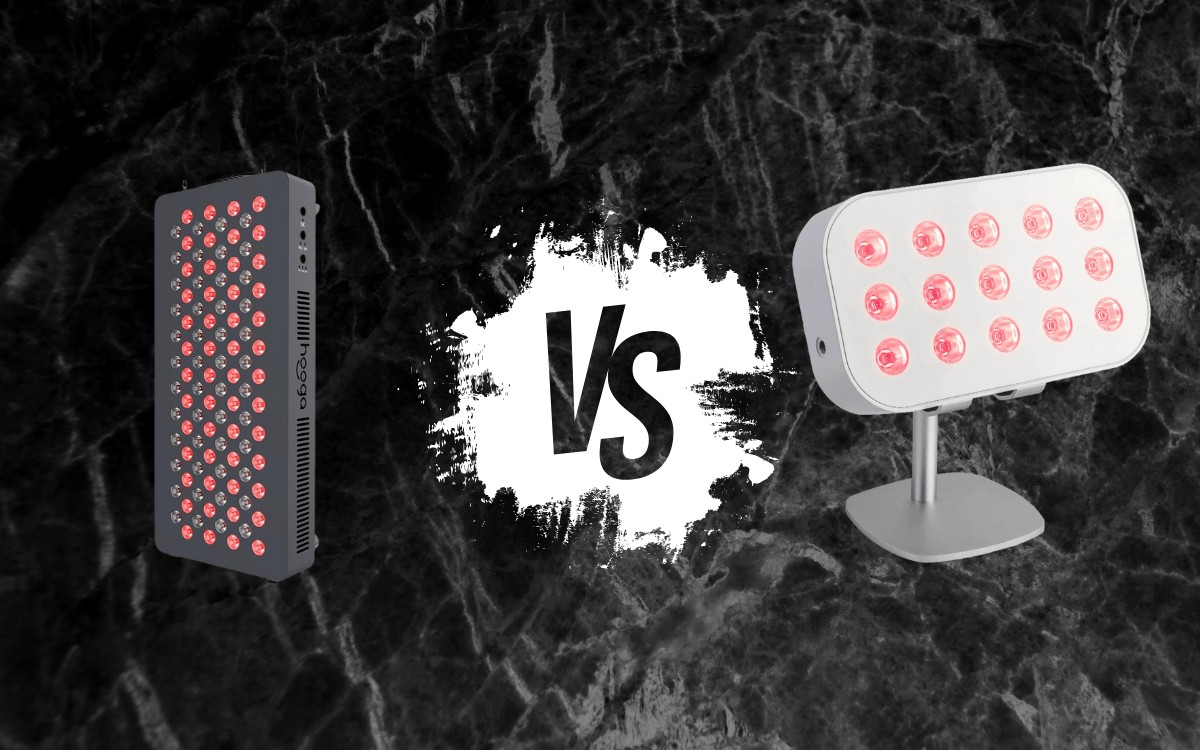
Over the past year, I’ve tested a lineup of these devices, from full-body panels to portable belts, to see which ones actually make a difference. Two that often come up in conversations among athletes and recovery enthusiasts are the Hooga Red Light Therapy Belt and the Lumebox 2.0. Both aim to bring clinical-level light therapy into your home but take totally different design paths.
After weeks of testing both, here’s how they compare, and which one is worth your time, money, and trust.
| Feature | Winner |
|---|---|
| Performance & Effectiveness | Lumebox |
| Wavelengths | Lumebox |
| Design & Build Quality | Lumebox |
| Ease of Use | Hooga |
| Battery | Hooga |
| User Reviews | Draw |
| Price | Hooga |
Quick Verdict
After several weeks of testing both devices, the Hooga Red Light Therapy Belt is the more practical and affordable choice for everyday users. It’s lightweight, portable, and ideal for localized soreness or joint discomfort.
The Lumebox 2.0 delivers more raw power and professional-level irradiance, but it’s corded, less mobile, and not as convenient for active users.
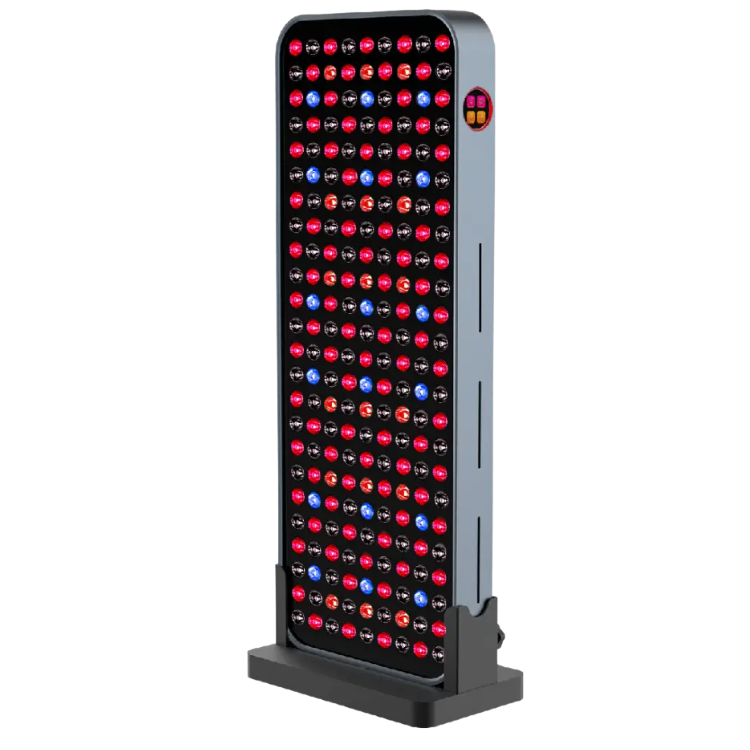
However, for most athletes and fitness enthusiasts serious about maximizing recovery, I’d actually recommend the Red Light Therapy Home TotalSpectrum Compact over both options.
The TotalSpectrum delivers superior therapeutic benefits with its comprehensive 7-band wavelength system (630nm, 660nm, 810nm, 830nm, 850nm, 940nm, and 1070nm) that provides significantly deeper tissue penetration and broader cellular benefits than either the Hooga’s or Lumebox’s dual-wavelength setups.
Its modular design combines the hands-free convenience and portability of the Hooga with clinical-grade power that exceeds the Lumebox, while offering true versatility for targeting specific joints, large muscle groups, or full-body recovery sessions.
What Is the Hooga Red Light Therapy Belt?
The Hooga Red Light Therapy Belt is a compact, battery-powered wrap designed for targeted recovery. It combines 660nm red and 850nm near-infrared light.
The gold-standard wavelengths for stimulating cell repair, improving circulation, and easing muscle soreness. Unlike bulky panels, this belt wraps around your body like a compression sleeve, allowing you to move around while it works.
I first tried it after heavy squat sessions and noticed less stiffness by day three. The warming sensation is pleasant, the design is simple, and setup takes seconds.
The main issue compared to more expensive units is that it lacks adjustable intensity, app control, and the velcro straps may show wear after months of daily use. You can read my Hooga review for my experience.
Pros
- Effective dual wavelengths (660nm & 850nm) for muscle and joint recovery
- Lightweight, portable, and cordless (battery-powered)
- Simple one-button operation with auto shut-off
- Noticeable results for soreness, stiffness, and mild pain
- Competitive price at $299
Cons
- No intensity control or app connectivity
- Velcro straps can wear out over time
- Coverage area is small — requires repositioning
- Can get warm during longer sessions
- Lacks extra wavelength options or advanced customization
The Hooga belt isn’t flashy. It’s the kind of straightforward recovery tool you actually end up using daily. For the price, it delivers consistent, real-world benefits, especially for lifters, runners, or grapplers dealing with localized soreness.
What Is the Lumebox 2.0?
The Lumebox 2.0 sits on the opposite end of the spectrum as a powerful handheld red light therapy unit, feeling more like a professional clinical device.
It combines 660nm red and 850nm near-infrared light with high irradiance output (125 mW/cm² for red and 140 mW/cm² for NIR). That’s roughly 80% higher NIR output than most competitors in its class, which translates to strong, consistent energy delivery.
From the moment you unbox it, the build quality makes an excellent first impression. It’s sturdy, sleek, and clearly made from premium materials.
The ergonomically designed handle and even light distribution make it feel substantial. It’s plug-and-play simple with no apps, no Bluetooth pairing, just a timer button (6 or 12 minutes) and a power switch.
However, it’s corded. You need an outlet nearby, which limits mobility. While it’s technically portable and does come with a great padded case, you’re still tethered during sessions. That makes it better for static treatments (e.g., knees, face, or back) than for multitasking recovery.
You can read my Lumebox review for my experience.
Pros
- Excellent power output and irradiance levels
- Premium build quality and professional design
- Simple operation with preset timer (6 or 12 minutes)
- Effective for muscle soreness, minor pain, and skin health
- Stays cool during use thanks to solid heat management
Cons
- Corded design restricts movement
- No wireless or battery option
- Not ideal for joint-specific precision therapy
- Expensive at $629
- Lacks smart features or app support
The Lumebox 2.0 is impressive for its raw performance and craftsmanship. It’s a solid investment if you want a long-lasting, clinic-grade tool for home use. But for athletes or anyone looking for hands-free, mobile therapy, its corded nature is a real limitation.
Hooga vs. LumeBox Main Differences
When you put the Hooga Red Light Therapy Belt and Lumebox 2.0 side by side, it’s immediately clear they’re built for different purposes. The Hooga is all about convenience and mobility. It’s a “strap it on and get back to life” kind of tool. The Lumebox, on the other hand, is about raw performance and output and is closer to what you’d expect from a professional-grade recovery clinic.
The question is less about which is “better,” and more about which fits your needs. Let’s break it down by category.
Performance and Effectiveness
Both devices deliver clinically proven wavelengths (660nm red and 850nm near-infrared), but the delivery makes all the difference.
The Lumebox 2.0 hits hard in terms of intensity. With an irradiance output of 125 mW/cm² for red and 140 mW/cm² for near-infrared, it’s one of the strongest portable red light devices on the market.
That means the light energy penetrates deeper into muscle tissue and joints, stimulating cellular activity more efficiently.
When I used the Lumebox post-leg day, it reduced soreness by the next morning. The effect was subtle at first but noticeable after about two weeks of regular use.
However, because it’s not hands-free, it requires setting aside time specifically for therapy, which is not always easy when juggling work, training, and family life.
The Hooga Belt, in comparison, trades power for usability. Its LEDs aren’t as intense, but the benefit is that you can actually wear it while doing other things. ‘
I’d use it after training while stretching, cooking, or checking emails, without needing to sit perfectly still or find wall space for a panel. The effect on muscle soreness was real, especially for localized pain in the knees and lower back.
In pure output, the Lumebox wins. But in consistency of use, the Hooga often comes out ahead because it’s so easy to integrate into your day.
Wavelengths
Both devices use 660nm red light and 850nm near-infrared, which are the gold-standard wavelengths in photobiomodulation research.
Red light targets surface-level tissues and helps with skin health, blood flow, and inflammation control, while near-infrared penetrates deeper into muscles and joints, triggering cellular repair and ATP production.
The Lumebox 2.0 drives these wavelengths with higher irradiance, meaning it delivers more energy per square centimeter of skin.
This deeper stimulation is ideal for muscle recovery and joint stiffness. However, its beam spread is narrower, making it great for small target zones but not for broad coverage.
The Hooga Belt, while using the same wavelength pair, has a larger treatment surface and gentler output. This makes it better for longer, repeated sessions without risk of overheating or skin irritation. For broader soreness, the belt’s wraparound design offers even coverage, even if each diode is weaker individually.
Design and Build Quality
Design philosophy is where these two devices couldn’t be more different.
The Hooga Belt is built for movement since it’s flexible, lightweight, and comfortable. The materials feel sturdy, the LEDs are well integrated, and the belt contours nicely to different body areas.
It’s under a pound, which makes it easy to wear around the house. My only real gripe is the velcro. It’s functional but tends to fray over time, especially with daily use. I’d love to see a future version with magnetic clasps or improved strap material.
The Lumebox 2.0, meanwhile, feels like a professional-grade instrument. It weighs around 2.5 pounds and uses solid materials throughout. The new handle design feels balanced and ergonomic, and the overall construction is excellent. The device stays cool thanks to a well-engineered ventilation system, something you appreciate during 12-minute sessions.
Between the two, the Lumebox clearly wins on build quality, while the Hooga wins on comfort and flexibility.
Ease of Use
For me, this is where practical differences really show up.
The Hooga Belt is plug-and-play simplicity. One button, one timer, one task. Strap it on, press start, and you’re hands-free for 20 minutes. That frictionless usability means you’ll actually stick with it. There’s no app, no learning curve, and no setup time.
The Lumebox, while not complicated, demands your attention. You have to hold or position it properly, stay within 6–12 inches of the skin, and remain relatively still.
The 6- and 12-minute timers are convenient, but the corded design means you’re anchored to an outlet. For people who like structure, that might be fine. For anyone who prefers multitasking, it’s a dealbreaker.
Battery Life and Hardware
Battery life is one of the biggest functional dividers between these two.
The Hooga Belt runs on a rechargeable lithium battery that lasts about 4–6 sessions (80–120 minutes total) on a single charge. That’s roughly a week of daily use before recharging. It uses a USB-C cable, which is quick and convenient. For travel or gym use, it’s perfect.
The Lumebox doesn’t use a battery at all. It’s a corded unit, meaning you get constant, full-power output with no dips or degradation, but zero mobility. You’re tied to a wall outlet for the duration of every session. While this guarantees consistent intensity, it sacrifices portability entirely.
Price
| Device | Price (USD) | Type | Wavelengths | Power | Portability |
| Hooga Red Light Therapy Belt | $299 | Wearable | 660nm + 850nm | Moderate | Excellent |
| Lumebox 2.0 | $629 | Handheld | 660nm + 850nm | High | Limited |
| Kineon MOVE+ Pro (recommended) | $499 | Modular wearable | 660nm + 808nm (LED + Laser) | Very High | Excellent |
At $299, the Hooga offers strong value for a portable, entry-level device. The Lumebox sits in premium territory — it’s expensive but well built. The Kineon MOVE+ Pro, priced between the two, delivers the best balance of power, design, and versatility, which is why it remains my top recommendation.
My Experience Using Hooga & LumeBox
I spent several weeks rotating between the Hooga Red Light Therapy Belt and the Lumebox 2.0, using each after lifting sessions, grappling practice, and long days. My main test areas were my knees and lower back, both frequent trouble spots from heavy lifts and mat work.
With the Hooga Belt, the biggest advantage was convenience. I could strap it on right after training and go about my evening, while it quietly did its job.
The gentle warmth felt soothing, and after a few days, the difference was noticeable. My lower back tightness faded faster, and soreness after squats or cleans didn’t linger into the next morning.
After a particularly heavy lifting session, I used it daily for 15–20 minutes over three days and felt a clear reduction in stiffness. Over time, I also noticed subtle improvements in skin texture on my knees and elbows, likely from the increased circulation.
Switching to the Lumebox 2.0 was a different experience. It’s more powerful, but also more structured, and you have to sit down, plug it in, and commit to your 10–12 minutes.
The light intensity is noticeably stronger, producing a deeper, denser warmth that penetrates past surface muscle. When I used it on my quads or shoulders, recovery from heavy sessions felt quicker, and the next-day muscle fatigue was lighter.
It’s the kind of device that rewards consistency, but because it’s corded, it’s less flexible. I used it less frequently, but when I did, it worked very well, especially for deep muscle soreness and stubborn joint stiffness.
Should You Choose Hooga or LumeBox
Choose the Hooga Red Light Therapy Belt if you want an easy, portable, and affordable solution that fits seamlessly into your daily routine.
It’s perfect for athletes, gym-goers, and busy parents who want something practical and effective without overcomplicating things. The hands-free design and wireless operation make it ideal for multitasking recovery.
Go with the Lumebox 2.0 if you value high performance, clinical precision, and premium construction, and you don’t mind setting aside dedicated time for treatments.
It’s best for people who want a stationary setup with pro-level light intensity and are willing to pay a premium for superior build quality and irradiance.
However, if you’re serious about maximizing recovery and want the most effective device available, the Red Light Therapy Home TotalSpectrum Compact is the superior investment over both options.
Its 7-band wavelength technology (630nm, 660nm, 810nm, 830nm, 850nm, 940nm, and 1070nm) delivers significantly deeper tissue penetration and more comprehensive cellular benefits than either the Hooga’s or Lumebox’s dual-wavelength systems.
The modular design provides the hands-free convenience and portability of the Hooga with clinical-grade power that exceeds even the Lumebox’s impressive irradiance, while offering superior versatility for targeting specific joints, large muscle groups, or full-body recovery.
Unlike the Hooga’s limited coverage or the Lumebox’s corded restrictions, the TotalSpectrum gives you true flexibility to recover exactly how and where you need it.
RLT Home Total Spectrum COMPACT
RLT Home Total Spectrum COMPACT
The most powerful red light therapy device with 7 wavelengths designed for deep penetration and healing.
CHECK CURRENT DEALS