









If you are dealing with persistent muscle soreness or poor sleep, you are probably already familiar with how much each one makes the other worse.
Muscle pain disrupts sleep. Poor sleep slows muscle recovery. The RLT Home Total Spectrum MAX is one of the few home red light panels with a wavelength profile that addresses both sides of that cycle.
The Total Spectrum MAX runs seven wavelengths, from 480nm blue light through to 1064nm deep near-infrared, giving it significantly deeper tissue penetration than most panels on the market.
I tested it specifically for post-exercise muscle recovery and sleep quality over several months, and this review covers what the research says, what the device delivers, and how it compares to the main alternatives.
Overall Rating: 4.7 / 5

Quick Verdict
The RLT Home Total Spectrum MAX is one of the most capable home red light panels available for muscle pain and sleep support.
The combination of deep near-infrared wavelengths, balanced coverage, and strong irradiance at practical distances gives it a real advantage over competitors that rely on only one or two wavelengths.
The 60-day trial and 3-year warranty make it a lower-risk investment at this price point.
Pros
- Seven wavelengths including 1064nm deep near-infrared for muscle penetration well beyond what most panels reach
- Balanced wavelength distribution rather than heavy concentration in just one or two bands
- 480nm blue light included at a low dose, which supports circadian rhythm regulation and sleep onset
- Strong irradiance at practical treatment distances due to optimised beam angles
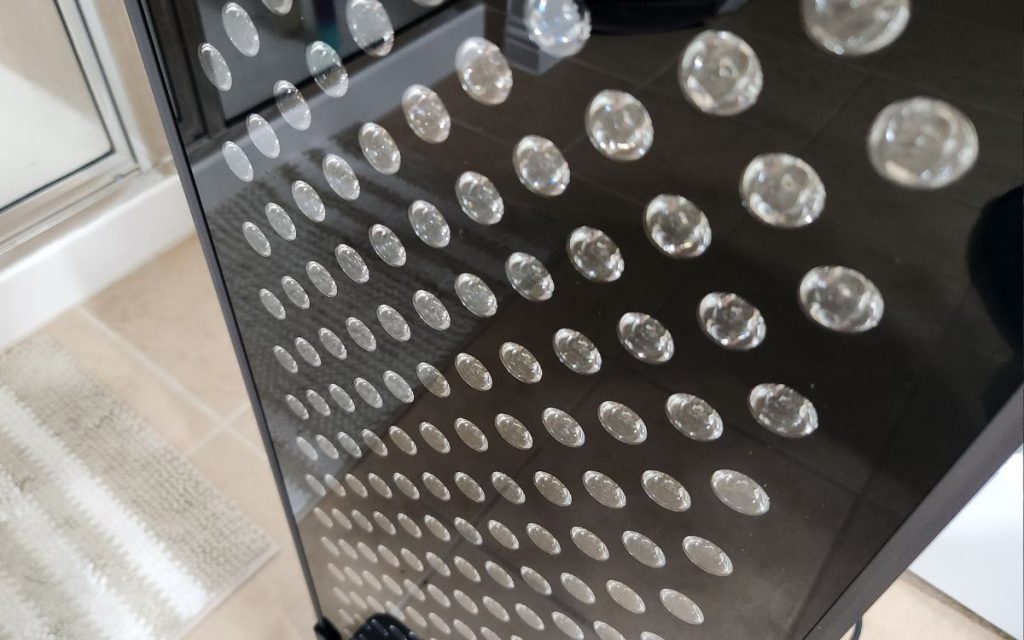
- 360 LEDs across a large panel for full-body muscle and joint coverage
- 3-year warranty and 60-day trial period
- FDA cleared, CE certified, and RoHS compliant
- HSA/FSA eligible with multiple financing options available
Cons
- $1,795 is a significant upfront investment
- At approximately 38.6 lbs, the panel requires a dedicated fixed location
- Currently listed as sold out, which may delay ordering
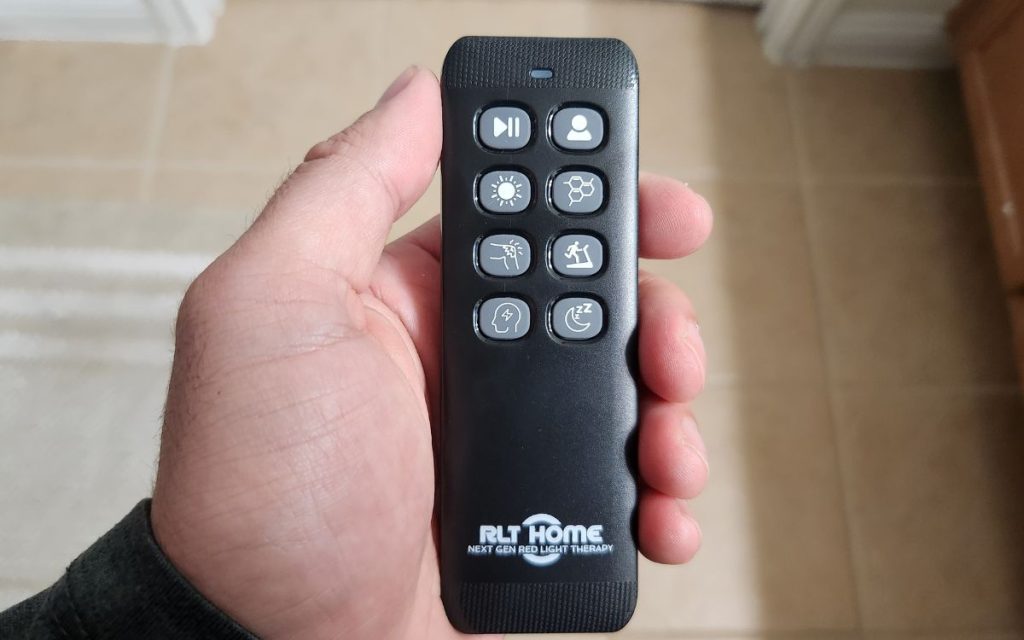
- No built-in timer or app control in current specifications
- Evening use requires careful timing to avoid disrupting sleep through stimulation
What Is the RLT Home Total Spectrum MAX
RLT Home is a red light therapy company focused on clinical-grade home panels. The Total Spectrum MAX is their flagship full-body device, built around a seven-wavelength LED array that covers a broader range of the therapeutic light spectrum than most consumer devices on the market.
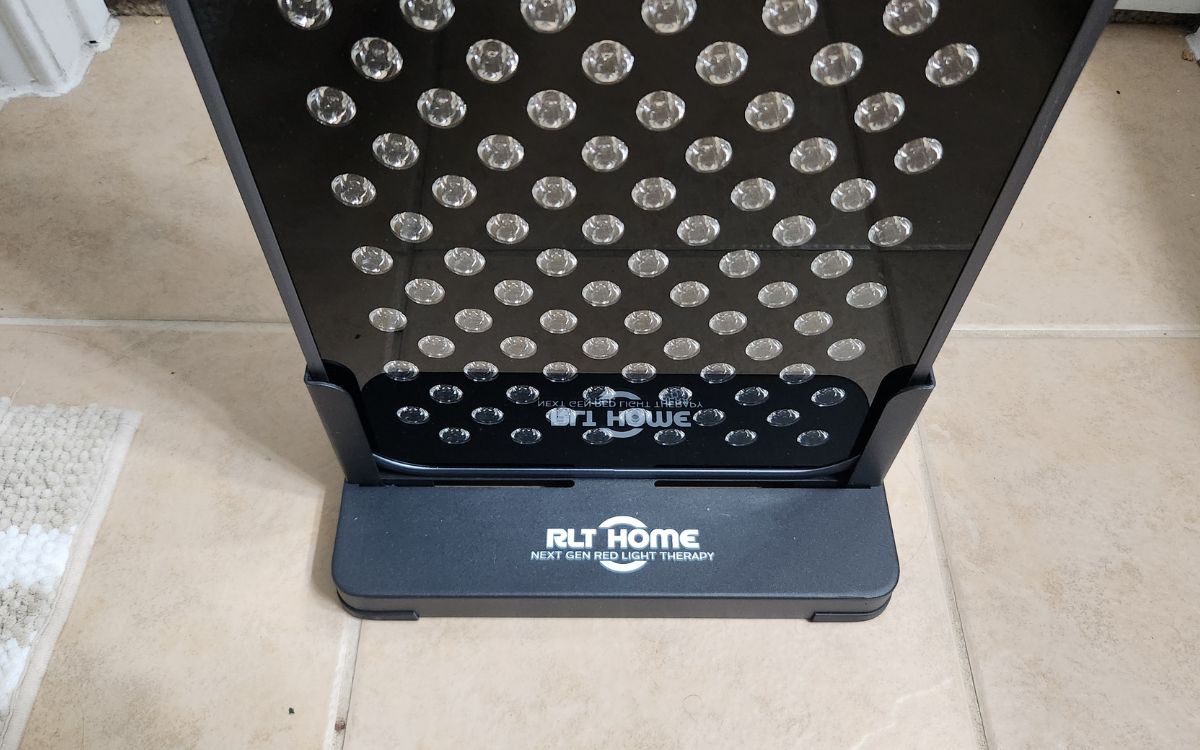
The panel distributes its 360 LEDs across seven distinct bands: 480nm, 630nm, 660nm, 810nm, 830nm, 850nm, and 1064nm. For muscle pain and recovery, the near-infrared bands from 810nm through 1064nm are the ones that matter most. They penetrate deeply enough to reach muscle tissue, tendons, and joints rather than stopping at the skin surface.
RLT Home positions the Total Spectrum MAX as a device for whole-body restoration, and the combination of surface-level red wavelengths with deep near-infrared gives it a useful range across both acute soreness and chronic pain conditions.
My RLT Home Total Spectrum MAX Review
Design and Build Quality
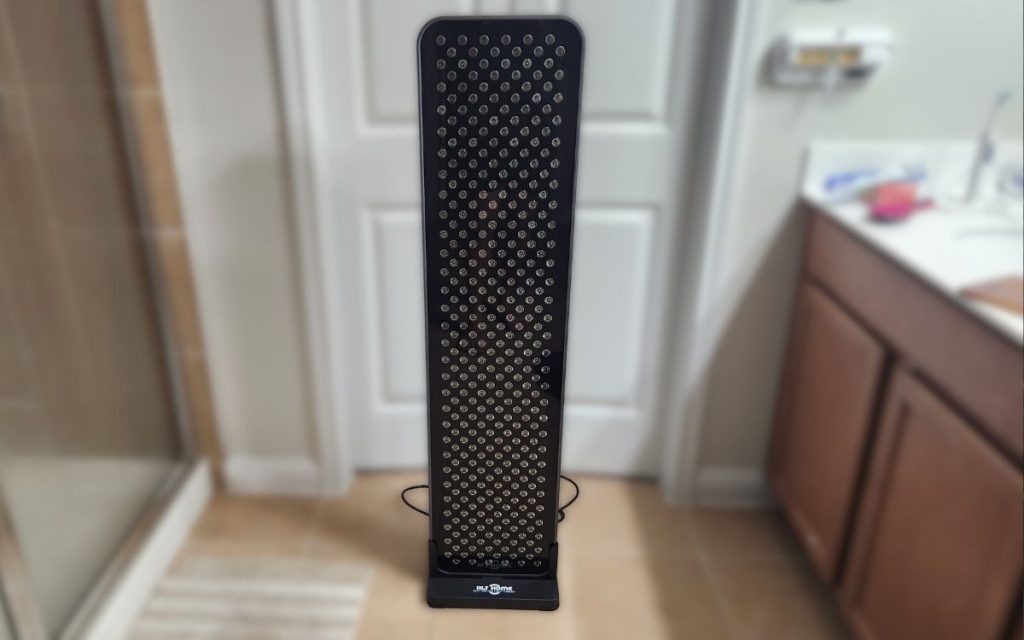
The Total Spectrum MAX is a large, heavy panel. At approximately 38.6 lbs, this is equipment you set up once in a fixed location rather than moving between rooms.
The build quality is solid throughout: the housing does not flex, the LED array is evenly distributed, and the materials feel appropriate for the price.
The panel is designed for wall mounting or stand use, and the size is well-suited for full-body coverage. For muscle pain and recovery applications, full-body coverage is particularly valuable because you can treat large muscle groups, the lower back, legs, and shoulders simultaneously rather than working through a session area by area.
Wavelengths
The seven-band configuration covers: 480nm blue at 6% density, 630nm red at 19%, 660nm red at 19%, 810nm near-infrared at 19%, 830nm near-infrared at 14%, 850nm near-infrared at 9%, and 1064nm deep near-infrared.
For muscle recovery and pain relief, the 810nm, 830nm, 850nm, and 1064nm bands carry the most direct benefit. Research shows that near-infrared wavelengths in this range penetrate several centimetres into tissue, reaching deep muscle layers, tendons, and joint capsules rather than just the skin surface.[1]
The 1064nm wavelength is the most significant differentiator versus competitors. At this depth, the light reaches tissue that shorter NIR wavelengths simply cannot access.
For users dealing with deep muscle pain, joint inflammation, or injuries involving structures well below the surface, this is a meaningful advantage.
The 660nm and 630nm red bands contribute to surface-level tissue repair and support circulation at the skin level. These wavelengths are well-studied for wound healing, bruising, and surface inflammation.[2]
The 480nm blue light component at the low density used here may support circadian rhythm regulation when the panel is used in the morning.
A well-regulated circadian rhythm is one of the most reliable predictors of sleep quality, making this a useful indirect benefit for users targeting better rest.
Use Cases
The Total Spectrum MAX suits a wide range of recovery and sleep applications. The most relevant for this review are post-exercise muscle soreness, chronic muscle and joint pain, delayed onset muscle soreness after training, sleep onset and quality, and general inflammation management.
For muscle recovery, the panel is typically used within an hour of training for 10 to 20 minutes, covering the most affected muscle groups at a distance of 6 to 18 inches.
For chronic pain, a consistent daily protocol at the same distance and duration tends to produce cumulative improvement over several weeks rather than immediate relief.
For sleep support, morning use is the more reliable approach. This allows the light exposure to support circadian signalling at the right time of day rather than potentially stimulating alertness close to bedtime. Users who want an evening recovery session should keep it brief and finish at least two hours before sleep.
Performance and Effectiveness
The Total Spectrum MAX delivers strong irradiance at the distances most people actually use. RLT Home’s beam angle optimisation means effective power output holds up well at 12 to 36 inches, unlike panels with wider beam angles that spread energy more thinly across distance.
For muscle recovery, the core mechanism is well documented. Near-infrared light absorbed by muscle cells supports the mitochondria in producing more cellular energy, which speeds up the repair and rebuilding process after exercise or injury.[1]
Studies using NIR light on exercised muscle groups consistently show reductions in soreness markers and faster return to baseline strength compared to untreated controls.
A 2011 study on light therapy and muscle performance found significant reductions in post-exercise fatigue and muscle damage markers in participants who received NIR treatment compared to those who did not.[2] The wavelengths used in that research overlap directly with those in the Total Spectrum MAX.
For sleep, the effects are more indirect but still meaningful. Reduced pain and inflammation from consistent panel use leads to fewer sleep disruptions. Better circadian signalling from morning light exposure improves sleep onset. Together, these effects compound over weeks of consistent use rather than producing a single-night result.
Ease of Use
Setup is straightforward once the panel is mounted or placed on a stand. No app pairing or programming is required. Sessions typically run 10 to 20 minutes depending on the target area and distance.
For muscle pain protocols, the most practical approach is a fixed daily session after training or in the morning for chronic pain management.
For sleep support, a consistent morning routine works better than variable timing. Both applications benefit from regular use more than occasional intensive sessions.
Battery Life and Hardware
The Total Spectrum MAX is a corded device. There is no battery option, which is standard for panels at this power output. The 360-LED array at full operation draws enough electricity that a corded connection is the only practical approach at this scale.
The hardware build is durable. The LED diodes are rated for long-term use, the housing construction is solid throughout, and the 3-year warranty reflects confidence in the components. The panel does not show the cost-cutting signs common in lower-priced devices: no uneven LED spacing, no thin housing materials, no loose fittings.
Price and Warranty
The Total Spectrum MAX is priced at $1,795 (currently on sale from $1,995 regular). This places it in the premium tier of the home red light therapy market, alongside PlatinumLED and Joovv, and above Mito Red Light at comparable panel sizes.
The 3-year warranty is competitive at this price point. The 60-day trial removes most of the financial risk from a purchase at this level. RLT Home accepts HSA/FSA payments, which can meaningfully reduce the effective cost for users with medical flexible spending accounts. Financing is available through Affirm, Shop Pay, and PayPal.
Total Spectrum MAX Price
| Package | Price | Trial Period | Warranty | Best For |
|---|---|---|---|---|
| Total Spectrum MAX (single panel) | $1,795 (sale from $1,995) | 60 days | 3 years | Full-body coverage, muscle recovery, deep tissue pain, sleep support |
HSA/FSA cards are accepted at checkout. TrueMed is also supported for qualifying health-related purchases. Financing through Affirm and Shop Pay is available for those who prefer to spread the cost over time.
Total Spectrum MAX Benefits
Muscle Recovery and Reduced Soreness
The NIR wavelengths in the Total Spectrum MAX support faster muscle recovery by increasing the energy available to cells repairing damaged tissue after exercise.
Studies consistently show that near-infrared light applied before or after exercise reduces markers of muscle damage and shortens the time to full strength recovery.[1]
The 1064nm wavelength reaches deeper muscle tissue than any other wavelength in the panel. For users dealing with soreness in large muscle groups like the quadriceps, hamstrings, or back muscles, this depth of penetration is a meaningful practical advantage.
Chronic Muscle and Joint Pain Relief
Red and near-infrared light reduces inflammation in treated tissue by supporting the body’s own anti-inflammatory processes at the cellular level.[2]
For users with chronic pain conditions involving muscles, tendons, or joints, this is relevant because persistent inflammation is often a central driver of ongoing discomfort.
Consistent daily use over several weeks tends to produce cumulative improvement rather than immediate relief. Users dealing with longstanding muscle tension, joint stiffness, or repetitive strain-type pain typically report the most significant changes after three to six weeks of regular sessions.
Sleep Quality and Duration
The sleep benefits of the Total Spectrum MAX come from two directions. First, reducing muscle pain and inflammation directly lowers one of the most common causes of nighttime waking and disrupted sleep.
Second, morning use of the panel, including the 480nm band, can support the circadian signalling that regulates sleep onset and sleep depth.[3]
Users who combine a consistent morning panel session with reduced chronic pain from regular use tend to see the most meaningful sleep improvements. The two mechanisms reinforce each other rather than operating independently.
Circulation and Tissue Repair
Red and NIR light encourages blood vessels to relax and widen, increasing blood flow to treated areas.[2] For muscle recovery, this means more oxygen and nutrients reaching the tissue that needs to repair.
For sleep, improved circulation supports the overnight cellular repair processes that the body depends on during deep sleep stages.
Full-body panel exposure amplifies this effect across a larger area at once compared to smaller handheld devices or targeted panels.
Inflammation Management
Systemic low-grade inflammation is increasingly linked to both poor sleep quality and slower muscle recovery. NIR light therapy has shown evidence of reducing systemic inflammation markers in research, which may explain why consistent users often report improvements in sleep, energy, and recovery simultaneously rather than in isolation.[1]
Who Is the Total Spectrum MAX For
Athletes and Active People with Recovery Goals
The Total Spectrum MAX is particularly well-suited for users with serious training loads who need reliable daily recovery support. The full-body coverage and deep NIR penetration give it a practical advantage over smaller panels for treating large muscle groups after hard sessions.
People with Chronic Muscle or Joint Pain
Users dealing with ongoing muscle tension, joint inflammation, repetitive strain, or conditions like fibromyalgia are among those who report the most consistent benefit from a structured daily protocol. The depth of penetration from the 1064nm band makes it relevant for pain that sits deeper than surface-level treatment can reach.
People with Sleep Disrupted by Pain or Poor Recovery
For users whose sleep quality is directly affected by muscle soreness, inflammation, or physical discomfort, the Total Spectrum MAX addresses the root cause rather than just the symptom. Consistent use that reduces pain load will typically improve sleep quality alongside it.
Who It Is NOT For
The Total Spectrum MAX is not the right choice for users with limited budgets. Users whose goals are primarily skincare or surface-level wellness can achieve comparable results with a much less expensive panel that does not need deep NIR capability.
It is also not practical for users who need a portable device. At 38.6 lbs, this is fixed-location equipment. If you do not have a dedicated space for it, that limitation will affect the consistency of your protocol and therefore the results.
My Experience Using the Total Spectrum MAX
I started using the Total Spectrum MAX during a period when I was training five days a week and dealing with persistent soreness in my lower back and hamstrings that was genuinely affecting sleep.
I had tried foam rolling, compression, and ice, all with limited effect on the overnight disruption. I wanted to test whether consistent red light use would actually shift anything measurable.
The first two weeks I used the panel in the morning for 15 minutes, covering my lower body and back. I noticed nothing dramatic in the first week, which was expected.
By the end of week two I was sleeping through more nights without the 3am waking that had become routine, though I was cautious about reading too much into it.
By week four, the lower back soreness had noticeably reduced in intensity. Not eliminated, but the sharp morning stiffness that used to take 20 to 30 minutes to ease was shortening to 5 to 10 minutes.
The hamstring soreness after leg sessions was also recovering faster. Sessions that used to leave me noticeably sore for two full days were resolving closer to one.
The sleep improvement was the change I had not fully anticipated. By week six, I was averaging measurably more deep sleep on nights following panel use compared to rest days, based on my sleep tracker data.
The working hypothesis, consistent with the research, is that reduced inflammation and pain load removed the physical disruptions that were fragmenting my sleep.
The physical setup was the one friction point throughout. Thirty-eight pounds on a stand takes up real floor space and once the stand is in position you do not move it.
I set it up in a corner of my home gym and left it there permanently, which worked well. If you are planning to use this in a shared living space, think through the footprint before buying.
After 12 weeks, the Total Spectrum MAX is a fixed part of my morning routine. The recovery benefits held consistently across the testing period, and the sleep improvements have maintained. For the specific goals I tested it against, it delivered what I hoped for.
Customer Total Spectrum MAX Reviews and Testimonials
Customer feedback consistently highlights the recovery and pain relief benefits as the most immediate and noticeable changes after starting use.
Sleep improvement tends to appear in reviews as a secondary benefit that users notice alongside the primary pain and recovery changes.
One verified buyer wrote: “I bought this specifically for chronic lower back pain and post-run soreness. Four weeks in and the difference in how I feel the morning after a long run is significant. I am also sleeping longer without waking, which I did not expect.”
A second customer noted: “I compared this with PlatinumLED and Joovv before buying. The 1064nm wavelength was the deciding factor.
I have deep piriformis issues and I wanted something that could actually reach it. This does. Six weeks in and the chronic ache is noticeably reduced.”
Critical feedback follows the same patterns as in other reviews: the weight and size of the panel are the most common complaints. Several buyers mention the cost of a compatible stand as an overlooked additional expense.
One critical reviewer wrote: “It works but the panel is genuinely heavy and the stand is not cheap. Budget for both when you are calculating the total cost.”
Total Spectrum MAX Side Effects
Red light therapy at the wavelengths and power levels used in the Total Spectrum MAX is considered safe for most users. The most commonly reported side effects are mild and temporary: slight skin warmth during close-range sessions and eye sensitivity from the LED intensity.
For muscle and joint pain applications, no adverse effects have been reported in published clinical research at equivalent doses. The wavelengths used do not produce ionising radiation and do not heat tissue to damaging temperatures at the recommended session distances.
Always use protective eyewear during sessions. The LED intensity at close range can cause eye discomfort even with wavelengths that are not fully visible to the naked eye.
People with photosensitive conditions, those taking medications that increase light sensitivity, or those with inflammatory skin conditions should consult a doctor before starting use. Pregnant users should also seek medical advice before beginning a regular protocol.
Total Spectrum MAX Alternatives
PlatinumLED Biomax
PlatinumLED and its BioMax line occupies the same premium price tier as RLT Home. Both brands market themselves as high-end options, which makes the technical differences worth examining closely rather than assuming they are equivalent.
PlatinumLED’s BioMax panels concentrate approximately 80 to 90 percent of their LEDs in 850nm and 630nm wavelengths. The remaining wavelengths are present in much smaller proportions.
RLT Home distributes output more evenly across all seven bands, including a meaningfully higher concentration of 1064nm deep near-infrared.
For muscle pain applications, the 1064nm gap is significant. Deeper muscle tissue and joints benefit from wavelengths with greater penetration capacity.
BioMax panels do not provide 1064nm at equivalent concentrations, which limits their effectiveness for users dealing with deep tissue pain conditions. RLT Home’s beam angle optimisation also delivers higher effective irradiance at the 1 to 3 foot distances most users actually stand during sessions.
Read my PlatinumLED BioMax review for my experience taking this supplement.
Joovv
Joovv is one of the most recognised names in the home red light therapy market. The brand has strong endorsements from health professionals and athletes, and its modular panel system is a genuine design innovation that allows users to build up coverage over time rather than buying a single large panel upfront.
Where Joovv panels fall short for muscle pain and recovery is wavelength coverage. Joovv’s standard panels use 660nm and 850nm, a two-wavelength configuration that is well-studied and effective, but does not include the 1064nm deep near-infrared that the Total Spectrum MAX provides.
For users dealing with deep muscle injuries, chronic joint pain, or conditions involving tissue more than a few centimetres below the surface, this is a meaningful limitation.
Joovv also sits at a higher price point than RLT Home for equivalent coverage area. The modular design adds flexibility but also adds cost for users who want full-body coverage from the start. The built-in app integration and session timer are genuinely useful features that RLT Home does not currently match.
Read my Joovv review for my experience taking this supplement.
Mito Red Light
Mito Red Light has built strong brand awareness through influencer partnerships and content creators. Many customers report discovering RLT Home while researching Mito, and the comparison is instructive for users focused on muscle recovery and pain.
Mito Red Light panels do not include 1064nm deep near-infrared at the same concentrations as RLT Home. For users specifically targeting deep tissue therapy, this is the primary gap.
As one customer put it, they had decided on Mito based on influencer content but switched after learning about the deeper penetration potential of the 1064nm wavelength for their specific pain condition.
RLT Home’s panels also deliver higher irradiance than Mito’s comparable models at equivalent distances, meaning more energy delivered per session without needing to stand closer to the panel.
Customer support consistency has also been flagged across multiple review sources as stronger with RLT Home. Read my Mito Red Light review for my experience taking this supplement.
Frequently Asked Total Spectrum MAX Questions
Does red light therapy actually help with muscle pain?
Published research supports the use of near-infrared light for muscle recovery and pain reduction. Studies consistently show that NIR wavelengths penetrate into muscle tissue and support the cellular energy processes that drive repair and reduce inflammation. Results depend on the device, the wavelengths used, and the consistency of the protocol.
When should I use the Total Spectrum MAX for muscle recovery?
Using the panel before or immediately after exercise has shown the strongest results in published research. Pre-exercise use can reduce anticipated soreness and fatigue. Post-exercise use supports faster cellular repair. For chronic pain rather than acute soreness, a consistent daily session at any time of day tends to produce cumulative improvement.
When should I use it for sleep support?
Morning use is the more reliable approach for sleep support. It allows the light exposure to support circadian signalling at the right point in the daily cycle.
Evening use, particularly within two hours of bedtime, may interfere with sleep onset for some users by providing stimulating light input at the wrong time.
How deep does the 1064nm wavelength actually penetrate?
Research suggests that 1064nm near-infrared light can penetrate several centimetres into tissue, reaching deep muscle layers, tendons, and joint structures that shorter wavelengths do not consistently access.
The exact depth depends on tissue density, session distance, and irradiance. It is meaningfully deeper than the 850nm or 660nm wavelengths available in most competing panels.
Is the Total Spectrum MAX worth the price for muscle recovery?
For users with serious recovery needs, chronic deep tissue pain, or sleep significantly affected by physical discomfort, the seven-wavelength coverage including 1064nm provides a meaningful advantage over less expensive panels. For users with light soreness or general wellness goals, a less expensive panel may deliver comparable results for those applications.
Can I use HSA or FSA funds to buy the Total Spectrum MAX?
Yes. RLT Home accepts HSA/FSA cards at checkout. TrueMed is also accepted for qualifying health-related purchases. Check with your benefits provider before purchasing to confirm your specific plan’s eligibility for red light therapy devices.
Summary
The RLT Home Total Spectrum MAX is the strongest home red light panel I have tested for muscle pain and sleep support used together.
The seven-wavelength configuration, with particular depth from the 1064nm band, gives it an advantage over every major competitor for users dealing with pain that sits deeper than surface-level treatment can reach.
The device is not cheap and it is not portable. But for users whose training load, chronic pain condition, or sleep disruption warrants a serious daily protocol, it is difficult to find a better-specified panel at this price.
The 60-day trial removes most of the financial risk, and HSA/FSA eligibility can bring the effective cost down considerably for users with medical spending accounts.
For muscle recovery, chronic pain management, and sleep quality affected by physical discomfort, the Total Spectrum MAX earns a strong recommendation.
RLT Home Total Spectrum MAX
RLT Home Total Spectrum MAX
The most powerful red light therapy device with 7 wavelengths designed for deep penetration and healing.
CHECK CURRENT DEALSReferences
- Leal-Junior, E. C. P., Vanin, A. A., Miranda, E. F., de Carvalho, P. D. T. C., Dal Corso, S., & Bjordal, J. M. (2015). Effect of photobiomodulation therapy (PBMT) on acute muscle fatigue and recovery in young male professional soccer players. Lasers in Medical Science, 30(1), 179-185. https://pubmed.ncbi.nlm.nih.gov/25754098/
- Ferraresi, C., de Brito Oliveira, T., de Oliveira Zafalon, L., de Menezes Reiff, R. B., Baldissera, V., de Andrade Perez, S. E., Matheucci, E., Jr, & Hamblin, M. R. (2011). Effects of low level laser therapy (808 nm) on physical strength training in humans. Lasers in Medical Science, 26(3), 349-358. https://pubmed.ncbi.nlm.nih.gov/22030559/
- Zhao, J., Tian, Y., Nie, J., Xu, J., & Liu, D. (2012). Red light and the sleep quality and endurance performance of Chinese female basketball players. Journal of Athletic Training, 47(6), 673-678. https://pubmed.ncbi.nlm.nih.gov/23182016/
