







If you train hard while working full-time and raising a family, you know recovery often feels like the missing piece. You can lift heavy, grapple, push through long days at work, and still have something left for your kids, but only if your body keeps up. That’s where recovery tools earn their keep.
Red light therapy has become one of those tools I keep coming back to. It’s not flashy, it doesn’t require much effort, and it fits into a packed schedule better than ice baths, saunas, or hour-long recovery routines.
Over the past month, I tested the Vital Red Light Pro, one of the company’s most popular devices. I used it after heavy lifting sessions, grappling practices, and long workdays to see how well it fit into real life. In this review, I’ll walk you through the full lineup of Vital devices, how the Pro performed for me, where it shines, and where I think other tools still do a better job.
Quick Verdict
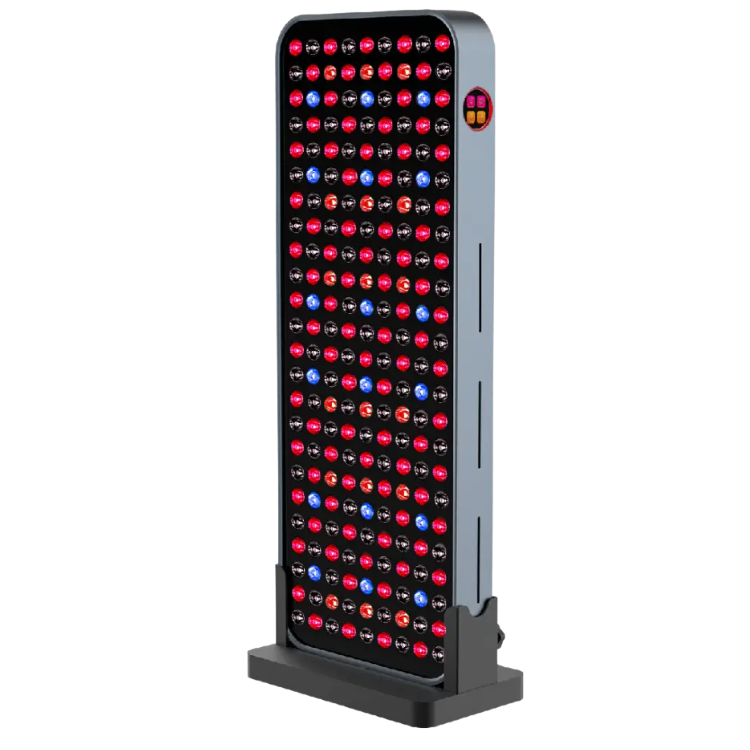
After a solid month with the Vital Red Light Pro, I’d call it a well-built, straightforward panel that delivers on the fundamentals.
It hits the right therapeutic wavelengths, the sessions are short and easy to stick with, and the results, while not life-changing, are noticeable.
However, for serious athletes and anyone committed to maximizing recovery, I’d actually recommend the Red Light Therapy Home TotalSpectrum Compact instead.
The TotalSpectrum outperforms the Vital Pro with its comprehensive 7-band wavelength system (630nm, 660nm, 810nm, 830nm, 850nm, 940nm, and 1070nm) that delivers deeper tissue penetration and broader therapeutic benefits than Vital’s standard 4-wavelength setup.
Its modular, portable design gives you the flexibility to target specific problem areas or treat larger muscle groups, while its clinical-grade power output ensures faster, more consistent recovery results that actually move the needle on performance.
Pros
- Backed by research-supported red (660 nm) and near-infrared (850 nm) light
- Easy to use with simple 10-minute sessions
- Multiple device options: handheld, panel, or full-body unit
- Noticeable improvements in soreness, stiffness, and recovery rhythm
Cons
- Less convenient for joints compared to hands-free wearables
- Pricing climbs quickly on the newer models
- Fewer independent reviews than legacy brands like Joovv
What Is Vital Red Light
Vital Red Light is a U.S.-based company making red light therapy devices designed to be simple, accessible, and backed by the core research in photobiomodulation. Instead of selling one oversized panel that may or may not fit your lifestyle, they’ve put together a lineup that covers different needs—from a handheld you can toss in a backpack to a full-body unit that turns your bedroom into a recovery booth.
The device I tested, the Vital Red Light Pro, sits right in the middle of the range. It’s a tabletop panel that uses a blend of red (630 and 660 nm) and near-infrared (830 and 850 nm) light, two pairs of wavelengths that cover both surface-level effects like skin and circulation, and deeper-penetrating benefits like muscle recovery and joint support.
The Pro comes with a built-in tabletop stand, a ten-minute auto shutoff timer, and it’s designed to run up to 50,000 hours of use. Vital also adds a few peace-of-mind features here: zero EMF output from the treatment distance, a three-year warranty, and a 30-day risk-free trial if you want to test it yourself. In practice, that means you can set it up on a desk or nightstand, hit the power button, and let it do its work without fiddling with settings.
Outside of the Pro, Vital’s other models give you different ways to approach the same therapy:
- Vital Charge – a handheld, battery-powered device you can take on the road. It’s small, portable, and built for guys who travel or want quick sessions on smaller areas like the face, forearms, or neck.
- Vital Pro 2.0 – the updated version of the panel I tested. It builds on the Pro by adding nine total wavelengths, including blue and yellow light for skin applications, plus a touchscreen and multiple preset modes. It’s more versatile but also more expensive.
- Vital Elite – the flagship, full-body panel. This is the option for people who want to stand in front of a wall of light and treat their entire body at once, whether for recovery, sleep, or overall wellness.
What all the devices share is Vital’s emphasis on safe, research-backed wavelengths and ease of use.
Vital Red Light Review
Performance and Effectiveness
The heart of any red light device is its wavelengths and power output. With the Vital Pro, you’re getting a mix of red (630, 660 nm) and near-infrared (830, 850 nm) light, which are the most studied bands. Red light supports skin health, surface-level blood flow, and even collagen production. Near-infrared penetrates deeper, reaching muscle tissue and joints where it can influence recovery, stiffness, and inflammation.
In practice, I noticed the biggest impact when I used the Pro consistently after tough training days. Squat sessions left me less sore the next morning. My chronically tight right shoulder felt a bit looser after grappling practices. The effect wasn’t dramatic, but it was noticeable, and it stacked up over weeks.
Where panels like this fall short is in targeted pain relief. If you’re dealing with one specific knee or shoulder, a wearable like the Kineon MOVE+ still gets closer to the source and does the job better. But as a general-purpose recovery and wellness tool, the Pro holds its ground.
Design and Build Quality
The Pro is a compact, tabletop unit built with a sturdy metal housing and a free-standing base that feels stable whether it’s on a desk, a nightstand, or a shelf in the home gym.
It’s clearly designed to last, with a rated 50,000-hour lifespan on the LEDs, which is more than you’ll ever realistically use it for. I also liked that the panel runs quietly and doesn’t throw off extra heat or hums.
The company claims zero EMF at treatment distance, which is reassuring if you’re wary about long-term exposure. Overall, it feels more polished than some of the budget panels floating around on Amazon.
Ease of Use
One of the best things about the Pro is that it’s dead simple. You set it up, sit or stand in front of it, and hit the power button. The built-in 10-minute timer means you don’t have to keep checking your watch or phone, and it automatically shuts off when the session’s done.
Because the panel isn’t huge, it’s easy to move around the house if you want to use it in different spots. This is where Vital has nailed the balance: it’s not overloaded with features, but it’s also not stripped down to the point of feeling cheap.
Battery Life and Hardware
The Pro itself is AC-powered, so you’ll need to keep it near an outlet. That’s fine for a stationary panel, but it does mean you can’t just grab it and go like you can with the Vital Charge. The Charge is the only fully portable device in the lineup, running on battery power with up to a few hours of continuous use between charges.
For me, that wasn’t a huge downside since I used the Pro mostly in the same two spots, but if you travel often or want therapy while sitting on the couch, the handheld is more flexible.
Price
Vital positions itself below the ultra-premium brands like Joovv but above the cheap knock-offs. Here’s the current pricing:
| Device | Type | Price |
| Vital Charge | Handheld, battery-powered | $299 |
| Vital Pro | Tabletop/desktop panel | $479 |
| Vital Pro 2.0 | Enhanced panel (9 wavelengths, presets) | $599 |
| Vital Elite | Full-body panel | $1,129 |
At $479, the Pro sits in a fair middle ground. You’re paying for solid build quality, safe and proven wavelengths, and a company that offers a 3-year warranty plus a 30-day trial. It’s not cheap, but in the world of red light therapy, it feels like you’re getting what you pay for—reliable hardware without the brand-name markup that pushes some competitors well over the $1,000 mark.
How To Use The Vital Red Light Therapy Panel
The nice thing about red light therapy is that it doesn’t require complicated setups or long sessions. With the Vital Pro, most of my use came down to three simple rules: stay consistent, keep the right distance, and don’t overthink it.
The sweet spot for the Pro is about 6–12 inches from your skin. Any closer and the light can feel a little too intense; any farther and you lose some of the therapeutic power. I typically set the panel on a desk or table, then lean in slightly so the light hits whatever area I’m focusing on. Quads after squats, my shoulder after grappling, or sometimes my lower back if I’d had a long day sitting at the computer.
Each session runs on a built-in 10-minute timer, which makes it easy to build into a routine. I’d finish training, shower, and then sit in front of the panel for one or two rounds, depending on how I felt. On days when time was tight, I’d still squeeze in a single 10-minute round while answering emails or scrolling through my phone. That’s the beauty of it, you don’t need to carve out an extra hour like you do with the sauna or drive to a recovery studio.
Consistency is what really makes the difference. After about three weeks of near-daily use, I noticed the effects stacking up. My sleep felt deeper, my shoulder was less cranky in the mornings, and muscle soreness didn’t linger as long.
It’s not a miracle device, you still need to train smart, eat well, and sleep, but it’s a tool that slots into the recovery puzzle without asking much in return.
Vital Red Light Benefits
Pain and Inflammation
Most guys who start looking into red light therapy do it because something hurts. For me, it was a nagging shoulder from years of grappling and barbell work. The Vital Pro doesn’t make pain vanish overnight, but it does take the edge off. By shining near-infrared light into muscles and joints, you’re essentially nudging your cells to produce more energy (ATP) and modulating inflammatory pathways.
The result is subtle but noticeable: less morning stiffness, easier warm-ups, and fewer “creaky” days. If you deal with sore knees, shoulders, or a stiff lower back, that cumulative relief can make training more sustainable.
Muscle Recovery and Performance
After a heavy squat session or pulling a lot of heavy snatches, the usual next-day soreness can slow down how quickly you’re back to full capacity. With the Vital Pro, I felt like my recovery window shortened.
The DOMS was still there, but it wasn’t as sharp, and I was able to train again without feeling beat down. The science shows that red and near-infrared light increase blood flow and oxygen delivery to tissues, which helps flush waste products and support faster repair. For athletes or anyone training several days a week, that small advantage adds up.
Skin and Surface-Level Health
This is where the red light side of the spectrum (630 and 660 nm) shines. While my main focus was recovery, I did notice my skin looking a little healthier after consistent use. Research shows red light can stimulate collagen production and improve skin tone. If you or your partner are interested in the cosmetic angle, this is a nice bonus that comes with the recovery benefits.
Energy and Sleep
One of the less talked-about perks of consistent red light therapy is how it influences overall energy and sleep. Ten minutes in front of the panel in the evening had a calming effect, almost like a wind-down ritual. I’d sit quietly, sometimes with music or a podcast, and by the time the light shut off I felt more relaxed.
There’s also evidence that exposure to certain wavelengths can help regulate circadian rhythm and improve mitochondrial function, which ties back to feeling more alert in the mornings.
Who Is Vital Red Light Therapy It For?
Men Who Train Hard and Want Faster Recovery
If you’re lifting, grappling, running, or just pushing your body several times a week, recovery tools are worth their weight. The Vital Pro isn’t going to replace good sleep and smart programming, but it does help shave down soreness and stiffness so you can show up more consistently.
Professionals and Busy Parents Looking for Low-Effort Wellness
Not everyone has the time or space for a sauna or cold plunge setup, and that’s where the Vital lineup comes in. You can keep a panel in your office or bedroom, hit the button, and get a 10-minute session while you’re answering emails or winding down before bed. There’s no mess, no prep, no excuses. If you’re stretched thin, it’s one of the easiest recovery habits to maintain.
People Interested in Skin and Longevity Benefits
Plenty of men don’t care about skincare until they start seeing changes in the mirror. Red can also improve skin tone, reduce dryness, and support collagen production. On top of that, the deeper wavelengths tie into energy and cellular health, which feeds into the bigger picture of longevity. If you’re someone who wants to invest in both performance and how you look and feel long-term, Vital fits that lane.
Who It’s Not For
If your main concern is deep, chronic joint pain, a panel probably isn’t your best bet. Panels work well for general recovery and surface-level issues, but they’re less efficient at targeting pain inside the knee or shoulder. For that, a wearable like the Kineon MOVE+ Pro is simply better. It straps right onto the joint, stays in place, and delivers light directly to the problem area without you having to sit still in front of a panel. If pain relief is your number-one priority, skip the panel and go with something more targeted.
My Experience With Vital Red Light Therapy
I ran the Vital Pro for just over a month, using it almost daily. My typical routine was to set it up in my office after evening training sessions or, on non-training days, before winding down for bed. Each session was one 10-minute round, sometimes two if I had extra time and wanted to hit both my legs and shoulders.
The first week didn’t feel all that different. I’d sit in front of the panel, check emails, and let the timer do its thing. Around week two is when I started noticing small changes. My quads weren’t as sore the day after heavy squats, and my shoulder, which has been my most stubborn joint since my twenties, felt looser in the mornings. It wasn’t a dramatic shift, more like the volume knob on discomfort was turned down a notch or two.
By the end of the month, the biggest difference was consistency. Normally, I’ll wake up after grappling nights with my shoulder feeling like it’s glued shut, and it takes a long warm-up to get moving. With the panel, I still felt it, but it wasn’t as sharp and it didn’t hang around as long. I also noticed my sleep improving.
I’d finish a session in the evening, lights dimmed, and it had a calming effect, almost like my body was getting a signal that it was time to shut things down. For a dad with two young kids who don’t always cooperate with bedtime, that’s not a small thing.
There were downsides too. The Pro isn’t hands-free, so if you’re trying to treat your knee, you either have to sit still with the panel aimed just right or move it around until you find the right angle. That’s where I missed the convenience of a wearable red light device, which straps right on and lets you move around.
Customer Reviews & Testimonials
Trustpilot & Company Reviews
Vital’s Trustpilot page is full of glowing reviews (4.8/5 average) with users praising skin changes, reduced pain, and better sleep. Here are some quoted comments:
- “I’ve been using the Pro model for about 3–4 weeks … my skin looks so amazing.”
- “I purchased the Vital Red Light Pro at least three years ago now and the unit is still functioning great!”
- “Vital red light has helped my family … daily usage helps with my mood, skin, and chronic pain.”
- On the flip side: “I was charged $140 extra because of customs taxes (Europe). They said the shipment was free … shock.”
So even on the company review page, you see both the results people love and the frustrations related to shipping, support, or hidden costs.
Independent / Third-Party Reviews
- The Good Trade reviewed Vital Red Light and noted that the setup was easy, the device is compact, and that the smaller Vital Charge is appealing as a nightly wind-down tool. The Good Trade Their writer said the panel “gives me an energy boost and helps me de-stress from the day.”
- On ThingTesting, one user praised the “high-quality, sturdy, extremely quiet” build, noting that it “does not overheat” and “is cool to the touch.” But others raised complaints about delayed shipping or poor customer responsiveness.
- On Reddit (r/redlighttherapy), a user noted:
“It has 4 wavelengths and I like that it has simple buttons on the back and a 10 minute timer.”
Another thread compared Vital versus other brands (e.g. PlatinumLED), where users weighed price vs power.
What Aligns with My Experience
- Skin and appearance: Multiple users report skin improvements, and I saw mild positive shifts in my skin (tone, brightness, less winter dryness). That matches what people are saying online.
- Joint/comfort improvement: Many report reduction of pain or stiffness. For me, shoulder and general stiffness were eased. I wouldn’t call it miraculous, but the consistency of feedback suggests there is something real happening.
- Durability & long-term use: Users who owned the device for years say it still works solidly. That aligns with Vital’s 50,000-hour LED rating.
- Customer & shipping issues: Several complaints center on delays, support slowdowns, or surprise import/customs fees for international buyers. That’s something I’d warn someone about—don’t assume “free shipping” means “no extra costs.”
Vital Red Light Therapy Alternatives
Joovv
Joovv is probably the best-known name in red light therapy. They’ve been around longer than most and carry a certain prestige in the space.
I’ve used Joovv panels before, and the first thing you notice is how polished they feel with their sleek design, modular options, Bluetooth integration, and an ecosystem that makes you feel like you’re buying into the Tesla of red light therapy.
The problem is the price. For the wavelengths and output it provides, Joovv charges a significant premium. That’s not to say their devices don’t work, they absolutely do.
I felt many of the same recovery and sleep benefits with Joovv as I did with the Vital Pro. But when you look at the numbers, you’re paying several hundred dollars more for essentially the same therapeutic ranges.
Unless brand recognition or modular expandability are must-haves for you, Vital offers very similar performance for less. My Joovv review goes into detail about my experience.
Kineon MOVE Pro+

If your main goal is joint pain relief, this is the device I recommend over any panel. I’ve used the MOVE+ Pro on my knees and shoulders, and the difference compared to a panel is night and day.
Because it straps directly onto the joint, the light is delivered right where you need it, without having to sit still in front of a stationary unit. For grapplers, lifters, or anyone with beat-up knees, the convenience and targeted effect are huge.
That doesn’t mean it replaces a panel. The MOVE+ is fantastic for joints, but it doesn’t cover big areas like quads, back, or chest so well.
That’s where something like the Vital Pro or Elite has the edge. In a perfect world, you’d have both: a panel for full-body recovery and a wearable for problem joints. But if I had to choose one strictly for pain relief, Kineon wins for me.
Mito Red Light

Mito Red Light has carved out a strong spot in the market by balancing affordability and performance. Their panels are powerful, they hit all the core wavelengths, and they’ve built a solid reputation in the red light community.
When I tested a Mito panel, I found the recovery benefits to be very comparable to Vital’s Pro—DOMS eased faster, and I noticed better shoulder comfort.
Where Mito shines is price. They often undercut both Vital and Joovv, and for guys who want maximum output for minimum spend, that’s attractive. The trade-off is that the build quality and user experience feel a bit more utilitarian.
Vital, in my hands, felt cleaner and more refined. If you’re chasing raw value and don’t care about design, Mito is a great pick. If you want something that blends into your home or feels more polished, Vital edges ahead.
My Mito Red Light Therapy review goes into detail about my experience.
Vital Red Light Therapy Frequently Asked Questions
Which wavelengths does the device use and what do they target?
The Vital Pro I tested runs on 630 nm, 660 nm (red light) and 830 nm, 850 nm (near-infrared). The red light works at the surface level, supporting skin health, circulation, and collagen production.
The near-infrared penetrates deeper into muscle and connective tissue, where it can influence recovery, inflammation, and joint comfort. The newer Pro 2.0 model expands that into nine wavelengths, including blue and yellow light for skin-specific applications.
How long are typical sessions and how often should I use it?
Most people stick with 10-minute sessions per area, which is exactly why the device has a built-in timer. That’s the sweet spot: enough exposure to get results, not so long that it becomes a chore. I used it daily for a month and found that consistency mattered more than trying to overload any single session.
Does the panel relieve deep chronic pain?
This is where expectations matter. The panel does help with soreness, stiffness, and surface-level aches. For chronic joint pain it’s not as effective because the light disperses over a larger area. You’ll still get some relief, but for laser-focused pain management, something like the Kineon MOVE+ Pro is simply better because it sits flush on the joint and directs light exactly where you need it.
Is the Vital Red Light worth the price compared to competitors?
If you’re weighing it against Joovv, Vital gives you the same therapeutic wavelengths for less money. If you’re comparing to Mito Red Light, Vital is more polished but usually costs a bit more. To me, the value is in the balance: solid build quality, simple interface, and a warranty that shows they stand behind the product. For most people, the Pro or Pro 2.0 is fairly priced for what you get.
Summary
After a month with the Vital Red Light Pro, my impression is simple: it’s a reliable, well-built panel that does what it’s supposed to.
The red and near-infrared wavelengths are backed by research, the build quality is solid, and the sessions are easy to stick with. I noticed less soreness after lifting, a looser shoulder after grappling, and even some subtle improvements in sleep and skin health.
That said, if you’re serious about recovery and want the best therapeutic results available, the Red Light Therapy Home TotalSpectrum Compact is the better investment.
Its 7-band wavelength technology (630nm, 660nm, 810nm, 830nm, 850nm, 940nm, and 1070nm) provides significantly deeper tissue penetration and broader cellular benefits than Vital’s 4-wavelength system.
The modular design gives you true versatility, whether you need targeted joint relief or full-body recovery, while the clinical-grade power output delivers faster, more noticeable improvements in pain relief, muscle recovery, and overall performance.
For athletes, lifters, grapplers, or anyone dealing with chronic pain who wants a device that will genuinely enhance their training and longevity, the TotalSpectrum is worth the investment over standard panels like the Vital Pro.
RLT Home Total Spectrum COMPACT
RLT Home Total Spectrum COMPACT
The most powerful red light therapy device with 7 wavelengths designed for deep penetration and healing.
CHECK CURRENT DEALS