








As a strength and conditioning coach in my mid-30s, my relationship with recovery has shifted significantly over the last decade. Back in my early 20s, “recovery” meant a protein shake and a few extra hours of sleep after a heavy squat session or a grueling hour on the mats.
Now, between training, producing content for the channel, and chasing two young kids around the house, my time is a non-renewable resource.
I don’t have the luxury of sitting in a cold plunge for twenty minutes every morning or spending an hour on a foam roller. I need tools that are effective, practical, and, most importantly, fit into the chaotic dad-life schedule.
Red light therapy (photobiomodulation) has been a staple in my routine for years because it’s one of the few modalities backed by legitimate science that actually moves the needle on tissue repair and inflammation.
But as the market has exploded, I’ve seen everything from cheap, flickering “beauty” masks to high-end clinical panels. Choosing the right gear usually comes down to a trade-off between raw power and practical convenience.
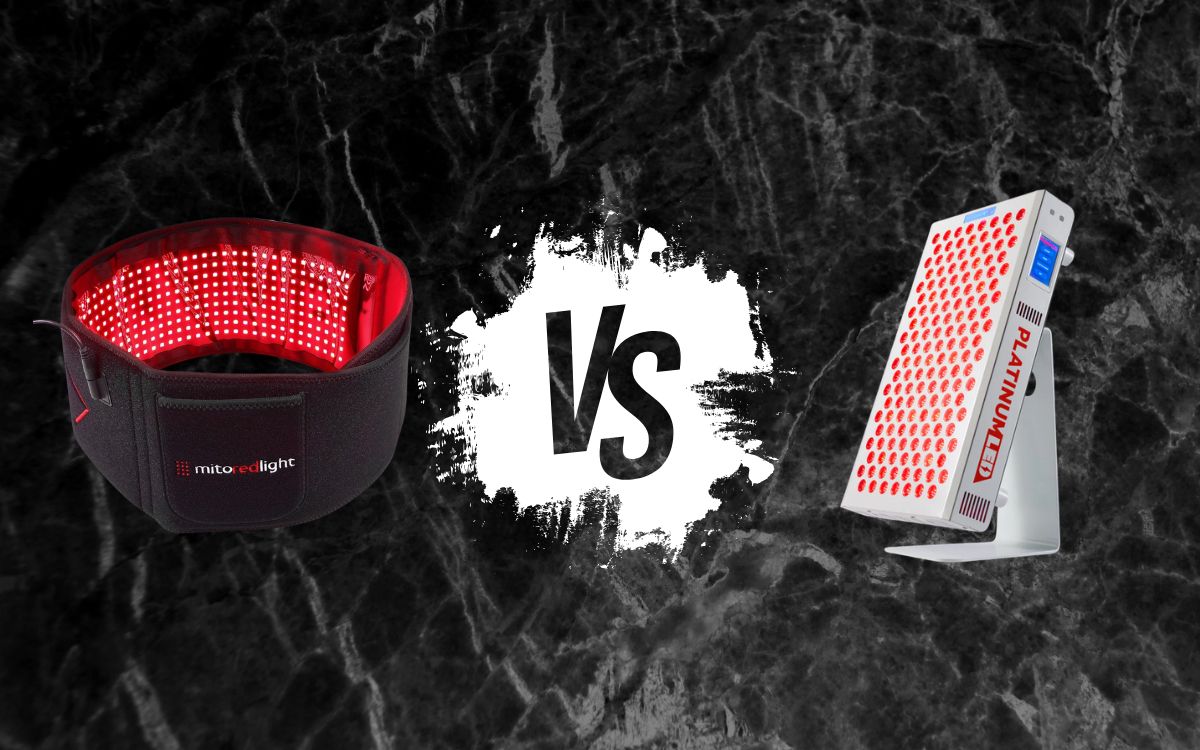
Today, I’m breaking down two heavy hitters in the space: the MitoQUAD Wavelength Belt and the Platinum LED BioMax 300.
I’ve spent over a month with each of these devices, putting them through the ringer after heavy deadlift days and late-night grappling sessions. Here is how they stack up when you stop looking at the marketing and start looking at the real-world performance.
Quick Verdict
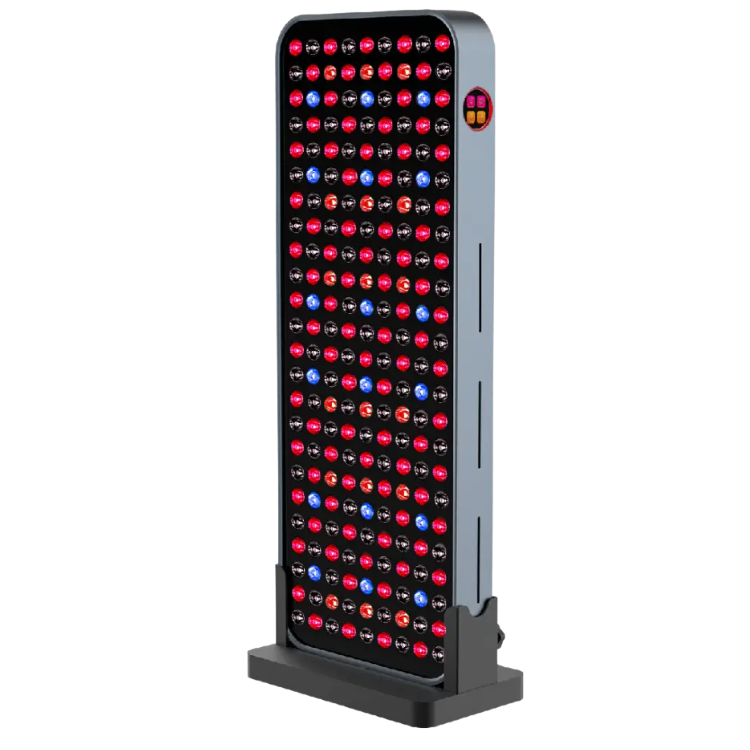
If you’re looking for the absolute best balance between effectiveness and real-world utility for a busy lifestyle, the Red Light Therapy Home TotalSpectrum Compact is the clear winner over both of these options.
While the Platinum LED BioMax 300 is an undisputed powerhouse in terms of raw light output and the MitoQUAD offers excellent hands-free convenience, the TotalSpectrum Compact delivers superior therapeutic benefits with its comprehensive 7-band wavelength system (630nm, 660nm, 810nm, 830nm, 850nm, 940nm, and 1070nm) that provides significantly deeper tissue penetration than either device.
The TotalSpectrum’s modular design combines the portability and hands-free advantages of the MitoQUAD with clinical-grade power that exceeds even the BioMax 300’s impressive output.
Unlike the BioMax’s stationary setup that requires you to stand still, or the MitoQUAD’s fixed belt design that limits coverage, the TotalSpectrum gives you complete flexibility to target specific problem areas or treat larger muscle groups efficiently.
For the modern, time-strapped athlete who needs professional-grade recovery without sacrificing convenience, the TotalSpectrum Compact is that tool.
Because you can position it precisely where needed and continue with your daily routine, the compliance factor goes through the roof. In the world of recovery, the best tool is the one that delivers superior results and actually fits into your life.
What is MitoQUAD?
The MitoQUAD Wavelength Belt is a significant departure from the traditional panel-based red light setups we’ve seen for years. Instead of asking you to stand naked in a dark room for twenty minutes, the MitoQUAD is designed to be worn. It’s a flexible, medical-grade wrap that houses a staggering 1,215 high-output LED chips.
The “QUAD” in the name refers to its four-wavelength approach. It utilizes two red wavelengths (630nm and 660nm) for surface-level issues like skin health and inflammation, and two near-infrared (NIR) wavelengths (810nm and 850nm) designed to penetrate deeper into the muscle tissue, tendons, and joints.
What makes the MitoQUAD unique in the wearable category is its sheer density. Many belts on the market feel like glorified heating pads with a few LEDs scattered inside.
This, however, feels like a piece of professional equipment. It’s thick, sturdy, and the light output is intense enough that you feel the therapeutic warmth almost immediately.
It’s powered by an external battery pack, which means you aren’t tethered to a wall outlet. For someone like me, who might be scripting videos while trying to rehab a localized lower back strain from a heavy set of snatch high pulls, this portability is a massive practical advantage.
My Mito Red Light review goes into detail about my experience using this red light therapy device.
Pros:
- High LED Density: With 1,215 chips, the light coverage is incredibly uniform with no “dead spots.”
- Hands-Free Portability: The battery-powered design allows you to move around the house or gym while treating yourself.
- Direct Skin Contact: Because it’s a wrap, there is zero light reflection or “waste.” You get the full dose directly into the tissue.
- Targeted Compression: The belt itself provides a bit of structural support and compression, which feels great on a cranky lower back.
- Four Wavelengths: Provides a comprehensive range of light for both superficial and deep tissue recovery.
Cons:
- Charging Requirements: You have to remember to keep the battery pack charged; if it’s dead, you’re not getting a session in.
- Surface Area Limitation: While great for the torso, back, or wrapped around a leg, it’s not designed for “full body” systemic treatment in one go.
- Bulk: It’s a heavy-duty belt, so don’t expect to wear it discreetly under a fitted shirt while out at dinner.
What is Platinum LED?
The Platinum LED BioMax 300 is often cited as the gold standard for compact red light panels. Platinum LED has been in the game longer than almost anyone else, and the BioMax series is their flagship line.
The 300 is the smallest panel in that series, making it ideal for targeted treatment or for someone who wants a high-powered entry point into the ecosystem.
The BioMax 300 is a sophisticated piece of optical engineering. It uses a patented R+ and NIR+ spectral output that includes six different wavelengths: 630, 660, 810, 830, 850, and the rare 1060nm.
That 1060nm wavelength is particularly interesting to me as a coach because it’s designed to penetrate even deeper than standard NIR light, reaching deep into the brain or the thickest muscle groups.
The build quality is industrial. It’s a heavy, metal-cased panel with high-velocity cooling fans and a digital control center on the side. You can adjust the intensity, set precise timers, and even link it to other BioMax panels if you decide to build a full-body array later.
However, unlike the MitoQUAD, this is a stationary device. It has to be plugged into a wall, and you have to position yourself correctly in front of it to get the benefits.
My Platinum LED BioMax review goes into detail about my experience using this red light therapy device.
Pros:
- Superior Wavelength Spectrum: The inclusion of 830nm and 1060nm offers a more complete therapeutic range than almost any other device.
- Extreme Power (Irradiance): The light intensity is high enough that you only need 10–15 minutes to get a clinical dose.
- Modular Design: You can start with the 300 and eventually bolt it onto larger panels to create a full-body setup.
- Digital Controls: The built-in timer and independent Red/NIR controls allow for very specific session customization.
- Long-Term Durability: These panels are built like tanks and designed for years of daily professional use.
Cons:
- Stationary Use: You are “tethered” to the wall. You have to stand or sit still, which can be hard to fit into a busy morning.
- Light Spillage: Since the light travels through the air to your skin, you lose some intensity due to distance and reflection.
- Requires Protective Eyewear: The light is so bright that you really shouldn’t use it without the provided goggles, limiting what else you can do during your session (like reading).
MitoQUAD vs. Platinum LED Main Differences
Performance and Effectiveness
When we talk about performance in red light therapy, we usually focus on two things: irradiance (the intensity of the light) and coverage.
The BioMax 300 has the upper hand in terms of raw irradiance. Because it draws significant power from a wall outlet and uses high-output diodes with cooling fans, it can project a massive amount of energy from a distance. This means you don’t necessarily need to be touching the device to get a clinical dose.
However, this intensity comes with “light spillage”, or light that bounces off your skin or illuminates the room instead of being absorbed.
The MitoQUAD takes a different approach to effectiveness. By using 1,215 LED chips in a flexible wrap, it ensures that almost every photon emitted is delivered directly to the skin.
There is virtually no waste. In my experience, the contact method of the MitoQUAD feels more efficient for localized issues like lower back stiffness or abdominal recovery after a heavy core session. You feel a deep, soothing warmth much faster with the belt than you do standing 6 inches away from the BioMax.
Wavelengths
This is where the Platinum LED BioMax 300 technically flexes its muscles. It utilizes a 6-wavelength “R+ / NIR+” spectrum (630, 660, 810, 830, 850, and 1060nm).
The inclusion of the 1060nm wavelength is a standout feature, as it is designed to penetrate deeper than the standard 850nm NIR light. If you are looking for deep-seated joint therapy or potentially even systemic benefits, this spectrum is as complete as it gets.
The MitoQUAD is no slouch, offering a quad-wavelength approach (630, 660, 810, and 850nm). For 95% of users, like athletes looking to reduce muscle soreness and improve skin health, this is more than enough. It hits the sweet spots that have the most clinical research backing them.
While it lacks the 1060nm “deep-tissue” edge of the BioMax, its high LED density ensures that the wavelengths it does have are delivered with extreme consistency across the entire treated area.
Design and Build Quality
The BioMax 300 is an industrial-grade piece of equipment. It features a heavy-duty metal housing, glass optics, and internal fans. It feels like something you would find in a professional sports team’s training room. It’s built to be mounted to a door or stand on a table and stay there for a decade.
The MitoQUAD is built for the human body. It uses medical-grade, flexible silicone that is easy to wipe down and contours to your midsection or legs.
It feels substantial (weighing about 1.2 lbs due to the LED density) but is comfortable enough to wear for a 20-minute session. It meets IEC 60601 safety standards, which gives me peace of mind as a coach that I’m not just wrapping a cheap LED strip around my waist.
Ease of Use
The BioMax is simple: flip a switch, set a timer, and stand still. The “standing still” part is the hurdle. For a dad with two kids, fifteen minutes of standing still in front of a bright red light is a luxury I rarely have.
The MitoQUAD is the clear winner for real-world use. Because it’s a wearable belt, I can strap it on and continue to do 90% of my tasks.
I’ve used it while reviewing training footage, answering emails, and cooking dinner. This “passive” recovery makes it much easier to stay consistent, and in the world of red light, consistency is the only thing that actually produces results.
Battery Life and Hardware
It’s important to clarify a common misconception: both of these units are high-power devices that typically require AC (wall) power to deliver their full intensity.
The BioMax 300 must be plugged in at all times to operate its high-output LEDs and cooling fans. It is a stationary hardware piece.
The MitoQUAD is also a corded device. However, because it is a belt, you aren’t “tethered” in the same way. You can wear it while sitting on the couch or at your desk as long as you are near a power outlet.
While I would love to see a version with a high-capacity battery pack for true roaming, the corded design ensures that the light intensity never dips, a common problem with smaller, battery-powered budget wraps.
Price
When looking at the investment, there is a clear divide. The MitoQUAD is a mid-tier investment, while the BioMax 300 is a premium, entry-level professional panel.
| MitoQUAD Wavelength Belt | $349.00 | Targeted, wearable recovery for core, back, and hips. |
| Platinum LED BioMax 300 | $659.00 | High-intensity stationary therapy for joints and skin. |
My Experience With MitoQUAD And Platinum LED
Testing these two devices over the last month has been an exercise in contrasting recovery styles.
My time with the Platinum LED BioMax 300 felt like a dedicated ritual. Because it’s a high-intensity panel, I usually set it up in the evenings after a shower.
Standing or sitting 8 to 12 inches away from the panel, it floods the room with a deep, professional-grade red light that immediately makes you feel like you’re in a high-end clinic rather than your spare bedroom.
I focused primarily on my knees and elbows, joints that take a beating during wrestling and heavy weightlifting sessions. By the second week of consistent use (3–5 times a week), I noticed a distinct reduction in that stiff feeling I usually get the morning after training.
Recovery felt smoother, and I wasn’t reaching for the ibuprofen as often. However, the 15-minute sessions often felt like a chore when I had emails to answer or kids to put to bed.
The MitoQUAD Wavelength Belt, on the other hand, integrated into my life almost seamlessly. I primarily used it to target lower back tension, the kind of deep ache that follows a heavy snatch day.
The immediate warming effect is far more pronounced than with the panel because the LEDs are in direct contact with the skin. The 1,215 LED chips deliver a very uniform heat that feels incredibly therapeutic.
The biggest game-changer for me was the hands-free design. I could strap the belt on, secure it snugly, and then go about my morning.
I’ve used it while editing a video at my desk and even while handling light household tasks. While I was still tethered to a wall outlet due to the corded design, being able to sit in a chair and work or stand at a counter while receiving treatment meant I almost never skipped a session.
The portability and targeted wrap design made it much easier to hit those 15–20 minute treatment protocols daily. For my lifestyle, the belt wasn’t just another piece of gear; it was a tool I actually looked forward to using because it didn’t demand I stop being productive.
Should You Buy MitoQUAD or Platinum LED?
After a month of back-to-back testing, both the MitoQUAD and the Platinum LED BioMax 300 proved themselves to be legitimate, high-performance tools that far outshine the budget red light gadgets found on Amazon.
The Platinum LED BioMax 300 is a masterpiece of engineering, offering a comprehensive 6-wavelength spectrum in a compact unit. It feels like bringing a piece of a professional sports clinic into your home.
The MitoQUAD Wavelength Belt solves the biggest practical problem with red light therapy by packing 1,215 LED chips into a wearable, medical-grade wrap.
Because you can wear it while working or handling household responsibilities, you never find an excuse to skip a session.
However, after extensive testing and comparison, the Red Light Therapy Home TotalSpectrum Compact emerges as the superior investment for serious athletes and active individuals.
Its 7-band wavelength technology (630nm, 660nm, 810nm, 830nm, 850nm, 940nm, and 1070nm) delivers significantly deeper tissue penetration and more comprehensive cellular benefits than either the BioMax’s 6-wavelength system or the MitoQUAD’s 4-wavelength setup.
The TotalSpectrum’s modular design provides the hands-free convenience of the MitoQUAD with clinical-grade power that matches or exceeds the BioMax 300, while offering superior versatility for targeting specific problem areas or treating larger muscle groups.
Unlike the BioMax’s requirement to stand stationary or the MitoQUAD’s fixed belt coverage, the TotalSpectrum adapts to your needs and your schedule.
For athletes, lifters, grapplers, or anyone dealing with chronic pain who wants a recovery tool that’s as practical as it is powerful, one that delivers professional-grade results without demanding you stop being productive, the TotalSpectrum Compact is the investment to make.
RLT Home Total Spectrum COMPACT
RLT Home Total Spectrum COMPACT
The most powerful red light therapy device with 7 wavelengths designed for deep penetration and healing.
CHECK CURRENT DEALS