





As a strength and conditioning coach, recovery is not optional. It is the thing that lets athletes train hard again the next day, the next week, the next season.
After fifteen years working with combat athletes and team-sport players, I have tried almost every recovery tool on the market. Red light therapy is one of the few that holds up to the actual research.
I tested eight red light therapy devices over twelve weeks, using consistent protocols and tracking muscle soreness, sleep quality, and return-to-baseline strength after hard sessions.
The goal was simple: figure out which device actually moves the needle for an athletic recovery routine, not just which one has the best marketing.
Here is what I found.
Quick Links
- Best Overall Red Light Therapy Device for Athletes and Recovery: RLT Home Total Spectrum MAX
- Best Full-Body Athletic Panel: Joovv Solo 3.0
- Best Value for Recovery: BestQool Pro200
- Best Budget for Daily Recovery: Hooga HG300
- Best Premium for Performance: PlatinumLED BioMax 450
- Best Wearable for Targeted Recovery: Nushape Lipo Wrap
- Best Mid-Range for Daily Training: Mito Red Light MitoMD Plus
- Best Portable for Travel and Team Use: Novaalab Light Pad
Quick Verdict
The RLT Home Total Spectrum MAX is the strongest home red light panel for athletic recovery I have tested.
Seven scientifically derived wavelengths, including 1064nm deep near-infrared, cover everything from surface recovery to deep muscle, tendon, and joint repair in one panel.
The free custom usage plan, third-party verified irradiance, 60-day trial, and 3-year warranty make this the lowest-risk way to add a serious recovery tool to an athletic programme.
Best Overall Red Light Therapy Device for Athletes and Recovery
RLT Home Total Spectrum MAX
The RLT Home Total Spectrum MAX is my top pick for athletes for one main reason: it is the only home red light panel I have tested that delivers 1064nm deep near-infrared at a meaningful density. For deep muscle recovery, this matters more than any other spec on the page.
Most consumer panels stop at 850nm. That wavelength is well-studied and useful, but it does not consistently reach below the surface of large muscle groups like the quads, hamstrings, glutes, or the deep tissue around the hips and lower back.
1064nm penetrates several centimetres further, into the muscle layers and joint structures that actually drive recovery results for athletes.[1]
The Total Spectrum MAX runs seven wavelengths in total: 480nm blue, 630nm and 660nm red, 810nm, 830nm, and 850nm near-infrared, and 1064nm deep near-infrared. Critically, the wavelength density (the percentage of LEDs at each band) is not arbitrary.
RLT Home derived the ratios from clinical-trial data, which their founder walks through in a public technical breakdown on their YouTube channel.
For an athletic recovery use case, that means the energy is distributed across the bands that drive cellular ATP production, inflammation reduction, and deep tissue repair, not concentrated in one or two marketing-friendly wavelengths.
The panel runs 360 LEDs across a four-foot vertical surface, which is enough coverage for a full lower-body session in one shot or a full back and posterior chain session by turning around. For an athlete with a serious training load, getting a complete recovery dose in 10 to 15 minutes is the difference between sticking with the protocol and skipping it on a hard week.
Third-party irradiance testing (ELECTROPOSSIBLE UK, May 2025) verified the output across all seven bands. The beam-angle optimisation also means effective irradiance holds at the 12 to 36 inch distances most users actually stand during sessions, rather than dropping off the way wider-beam panels do.
The other piece that sets RLT Home apart from every other brand on this list: every customer gets a free custom usage plan. You tell them your goals, your training schedule, and the areas you want to target, and a real human writes you a protocol covering which mode to use, what distance, and how long, all backed by the underlying research.
For athletes specifically, this turns a panel from a piece of equipment into a structured recovery programme.
The Total Spectrum MAX retails at $1,545 when on sale sale, down from $1,995 regular. Free insured shipping is included in the US, UK, Canada, and EU, with no restocking fees inside the 60-day trial.
HSA and FSA payment is accepted via TrueMed.
I used the panel daily for 12 weeks during a heavy training block, running 12 to 15 minute sessions on lower body and back at 18 inches. By week three, post-leg-day soreness was resolving in roughly half the time it used to.
By week six, I was noticing fewer of the deep aches in the SI joints and hip flexors that usually accumulate over a hard block. The sleep improvement was a secondary benefit I was not directly targeting but tracked anyway: deep sleep percentage on training nights increased measurably compared to my baseline rest weeks.
Read my RLT Home Total Spectrum MAX review for my full breakdown of the device.
Pros
- Seven wavelengths including 1064nm deep near-infrared for true muscle and joint penetration
- Wavelength densities derived from clinical-trial data, not marketing rounding
- 360 LEDs across a four-foot panel for full-body or large-muscle-group sessions
- Free custom usage plan from a real human, sport and goal specific
- Third-party verified irradiance (ELECTROPOSSIBLE UK, May 2025)
- Beam-angle optimised output that holds at practical training distances
- Strong Trustpilot and Reddit reputation, with consistent feedback from athletes
- 60-day trial, 3-year warranty, free insured shipping, no restocking fees
- HSA and FSA eligible via TrueMed
Cons
- $1,545 sale price is still a serious investment compared to budget panels
- At ~38 lbs the panel needs a dedicated space, not a portable option
- No app integration or built-in protocol scheduling in current specifications
RLT Home Total Spectrum MAX
RLT Home Total Spectrum MAX
Seven scientifically derived wavelengths including 1064nm deep near-infrared. Third-party verified irradiance, 60-day trial, and a free custom usage plan.
CHECK CURRENT RLT HOME DEALS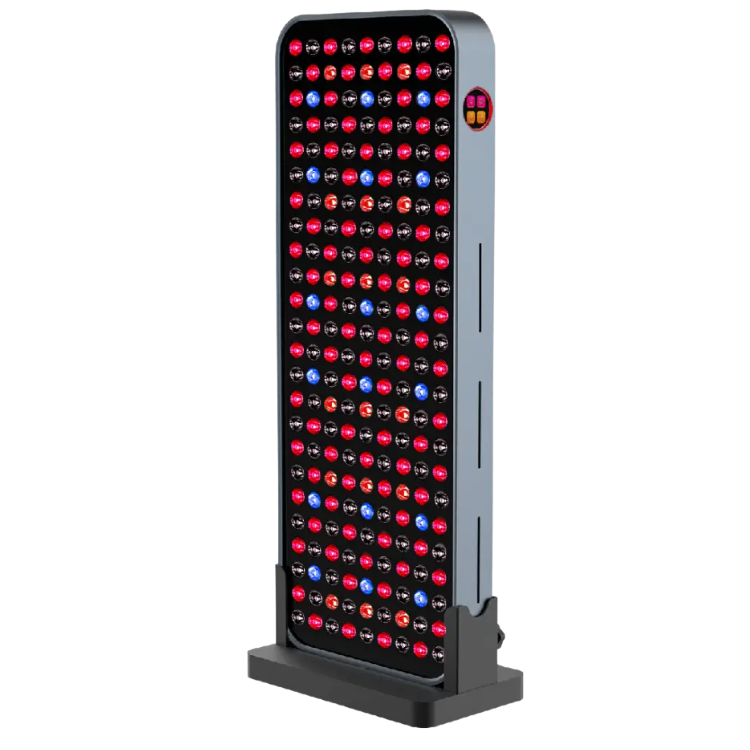
Best Full-Body Athletic Panel
Joovv Solo 3.0
The Joovv Solo 3.0 is the strongest full-body panel from a brand-recognition standpoint, and for a good reason: the modular system lets you build out to a full body-length stack over time, which is genuinely useful for an athlete who wants the option to grow into a bigger setup.
For recovery applications, the Solo 3.0 delivers 660nm and 850nm in a two-wavelength configuration. Both bands are well-studied for muscle recovery, inflammation reduction, and circulation support.
The full-body coverage with one panel means you can treat large muscle groups simultaneously, which is a practical advantage when you have a 90-minute window between training and dinner.
Joovv has strong third-party documentation, FDA registration, and a reputation that holds up across coaches and athletes I have spoken with. The build quality is consistent, the timer and ambient modes are useful, and the app integration is a real feature that makes session tracking easy.
The trade-off versus the RLT Home Total Spectrum MAX is wavelength coverage. Joovv panels do not include 1064nm at any concentration.
For athletes dealing with deep muscle issues, joint inflammation, or chronic tendon problems that sit below the surface, this is a meaningful gap. You are also paying premium pricing for two wavelengths, where the RLT Home delivers seven at a comparable price band.
The Joovv Solo 3.0 retails at around $799. Available through the Joovv website.
I used the Solo 3.0 in a six-week testing window during an off-season period. The post-training muscle response was good.
The recovery benefit was real but felt narrower than the RLT Home, particularly when I was trying to address chronic SI joint discomfort that the 1064nm panel handled noticeably better.
Read my Joovv Solo 3.0 review for my full experience using this.
Pros
- Strong brand reputation across the athletic community
- Modular design lets you build to full body-length coverage
- FDA registered with strong third-party documentation
- App integration and timer modes
- Ambient mode for evening pre-sleep use
Cons
- Only two wavelengths, no 1064nm depth
- Premium pricing for limited wavelength coverage
- Full-body setup gets expensive quickly
Joovv Solo 3.0
Joovv Solo 3.0
Modular full-body panel with strong brand reputation, FDA registration, and app integration.
READ MY JOOVV REVIEWBest Value for Recovery
BestQool Pro200
The BestQool Pro200 is the best value pick on this list for athletes who want clinical-grade output without crossing the $1,000 threshold. It delivers four wavelengths (630nm, 660nm, 850nm, and 940nm) at irradiance levels that hold up well against panels twice the price.
The 940nm band is the differentiator for the Pro200 in the recovery context. It penetrates deeper than 850nm and gives you some of the deep-tissue benefit that most mid-range panels lack.
It is not a full substitute for 1064nm, but it is meaningfully better than a 660 plus 850 two-band configuration when you are dealing with muscle pain that sits a layer or two below the surface.
BestQool publishes irradiance data that supports its clinical-grade claims. The panel size is good for upper-body or partial-body sessions, and the build quality is consistent for the price.
For an athlete on a limited budget who still wants something that will produce noticeable recovery results, the Pro200 is the device I would recommend without hesitation. It is the panel I would have bought if I were a college athlete twenty years ago and could not justify $1,500+.
The BestQool Pro200 retails at around $589. Available through the BestQool website.
I used the Pro200 for four weeks of upper-body recovery sessions during a heavy pressing block. The shoulder and tricep recovery response was solid, and the price-to-output ratio is the strongest in this lineup.
Read my BestQool Pro200 review for my full experience using this.
Pros
- Four wavelengths including 940nm for some depth of penetration
- Clinical-grade irradiance at a sub-$600 price
- Well-documented manufacturer irradiance data
- Good coverage for upper-body or partial-body recovery sessions
Cons
- No 1064nm wavelength for true deep tissue reach
- Less brand recognition than premium competitors
- Limited independent third-party test data
BestQool Pro200
BestQool Pro200
Clinical-grade four-wavelength panel under $600, including 940nm for better deep-tissue penetration than standard two-band panels.
CHECK CURRENT BESTQOOL DEALSBest Budget for Daily Recovery
Hooga HG300
The Hooga HG300 is the most affordable way to start a daily red light recovery protocol. It delivers 660nm and 850nm at a price that makes daily sessions accessible without a significant equipment investment, and it works.
For athletes who want to experiment with red light therapy before committing to a premium panel, the HG300 is the right entry point. Sessions need to run 15 to 20 minutes rather than the 10 to 12 typical of higher-output panels, but for a daily pre-sleep or post-training routine, the longer session length tends to fit fine.
The two-wavelength configuration is the trade-off. There is no deep near-infrared, no 1064nm, and the irradiance does not match a clinical-grade panel.
But for general recovery support, circulation, and surface-level inflammation, it delivers.
No third-party irradiance verification is available. Manufacturer specs are the baseline.
User reviews from the athletic community are consistently positive for a budget device.
The Hooga HG300 is priced at $80 to $120 depending on retailer.
I used the HG300 for a budget-testing period of two weeks. Modest but real recovery improvement, particularly on days where I used it as a passive 20-minute wind-down rather than a primary recovery session.
Read my Hooga HG300 review for my full experience using this.
Pros
- Most affordable entry point for athletic red light therapy
- 660nm and 850nm cover the most-studied recovery wavelengths
- Long-session use fits a relaxing pre-sleep routine
- Widely available
Cons
- Lower irradiance requires longer sessions
- No 1064nm or deep near-infrared coverage
- No third-party test data
- Limited panel size for full-body sessions
Hooga HG300
Hooga HG300
The most affordable entry point for daily athletic red light recovery. 660nm and 850nm at under $120.
CHECK CURRENT HOOGA DEALS
Best Premium for Performance
PlatinumLED BioMax 450
The PlatinumLED BioMax 450 is the strongest premium panel from a long-standing brand. Five wavelengths and the flexibility of R+ and NIR+ modes let you tailor sessions to different recovery needs, and the lab-tested irradiance is among the highest in the consumer market.
For performance and recovery applications, the NIR+ mode delivers 810nm, 830nm, and 850nm at concentrated output for deep muscle work. R+ mode at 630nm and 660nm shifts the session toward surface recovery, circulation, and the support of overnight repair processes.
PlatinumLED has the best-documented irradiance performance in the premium tier outside of RLT Home. The three-year warranty is competitive, and the brand has been doing red light long enough to have iterated through multiple panel generations.
The trade-off versus the RLT Home Total Spectrum MAX is the same one as with Joovv: no 1064nm. The BioMax 450 concentrates around 80 to 90 percent of its LEDs in 850nm and 630nm, with the remaining wavelengths in much smaller proportions.
For an athlete with deep tissue or joint-focused recovery goals, that is a meaningful limitation.
The BioMax 450 retails at around $769. Available through the PlatinumLED website.
I used the BioMax 450 for an eight-week testing period during a competition prep block. The session flexibility from R+ and NIR+ mode switching was a genuine benefit on days where I wanted to alternate focus between deep muscle work and circulation support.
Read my PlatinumLED BioMax 450 review for my full experience using this.
Pros
- Five wavelengths with mode-switching for tailored protocols
- Lab-tested irradiance among the highest in the market
- Strong three-year warranty
- Long-established brand with consistent build quality
Cons
- No 1064nm deep near-infrared coverage
- Heavy concentration in 850nm and 630nm limits balance
- Premium price for a five-wavelength configuration
PlatinumLED BioMax 450
PlatinumLED BioMax 450
Five-wavelength premium panel with mode-switching and lab-tested irradiance among the highest in the market.
READ MY PLATINUMLED REVIEWBest Wearable for Targeted Recovery
Nushape Lipo Wrap
The Nushape Lipo Wrap is the most practical wearable on the market for athletes who want to deliver targeted red light to a specific muscle group without standing in front of a panel. The hands-free wrap format is the key feature: you put it on after training, sit down, and the session runs in the background.
The 635nm and 850nm output is well-suited to surface muscle recovery, circulation support, and inflammation reduction in a single area. The 30-minute session length is longer than a panel session, but the wearable form factor means it integrates into time you would have spent sitting anyway.
For an athlete with a recurring problem area (a chronic hamstring tightness, a specific joint that flares up, an old injury site), the Nushape format is genuinely useful. It is not a substitute for a full panel, but it pairs well with one as a targeted-treatment add-on.
Third-party irradiance data is limited. The recovery benefit is inferred from the wavelength research rather than device-specific testing.
The Nushape Lipo Wrap retails at around $549.
I used the wrap over four weeks on a chronic right-shoulder issue from a years-old training injury. The session compliance was high because I could wear it during admin work, and the localised soreness response was noticeable by week three.
Read my Nushape Lipo Wrap review for my full experience using this.
Pros
- Hands-free wearable for passive sessions
- 635nm and 850nm cover surface recovery wavelengths
- High compliance because sessions overlap with seated work
- Strong targeted-treatment application
Cons
- Limited to one area at a time
- No 1064nm or deep near-infrared
- Limited independent irradiance data
- Higher price than panels with broader coverage
Nushape Lipo Wrap
Nushape Lipo Wrap
Hands-free wearable for passive targeted recovery sessions. 635nm and 850nm in a wrap format you wear while working.
CHECK CURRENT NUSHAPE DEALS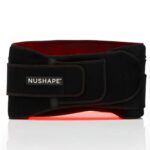
Best Mid-Range for Daily Training
Mito Red Light MitoMD Plus
The Mito Red Light MitoMD Plus is the strongest mid-range option for athletes who train daily and want a panel that delivers a meaningful dose in 10 minutes. The dual-chip 660nm and 850nm output is well-studied for muscle recovery, and the irradiance is among the highest in the mid-range tier.
For a training routine where you genuinely cannot afford a 20-minute session every day, the MitoMD Plus delivers a complete therapeutic dose in a window that fits before or after a workout. That practicality is the main reason to pick this over a less-expensive panel with lower output.
Mito Red Light publishes third-party irradiance data. The device performs at or above rated output, which matters for any protocol where you are trying to match doses from published research.
The trade-off is the wavelength count. Two bands is enough for muscle recovery, but it does not give you the breadth of the seven-wavelength RLT Home configuration.
There is no 1064nm and no surface skin-tone support.
The MitoMD Plus retails at around $399.
I used the MitoMD Plus for six weeks of pre-training sessions. The high irradiance meant I could run a real 10-minute session and still feel like I had delivered a complete dose.
Useful for an athlete on a tight training schedule.
Read my Mito Red Light MitoMD Plus review for my full experience using this.
Pros
- High irradiance for efficient 10-minute sessions
- 660nm and 850nm well-studied for muscle recovery
- Third-party irradiance verified
- Good mid-range price for the output level
Cons
- Only two wavelengths
- No mode switching for varied protocols
- No 1064nm deep penetration
Mito Red Light MitoMD Plus
Mito Red Light MitoMD Plus
High-irradiance dual-wavelength panel for efficient 10-minute sessions that fit a busy athletic training schedule.
CHECK CURRENT MITO RED LIGHT DEALS
Best Portable for Travel and Team Use
Novaalab Light Pad
The Novaalab Light Pad is the best portable option for athletes who travel for competitions or training camps. The flexible pad format delivers 660nm and 850nm in direct skin contact, which is a genuinely useful way to maintain a recovery protocol away from home.
Portability matters more for athletes than most users realise. The most common cause of disrupted recovery protocols is travel, and a panel that lives in a hotel room or a team-bus storage compartment is a panel that gets used.
The Novaalab pad is the right shape and weight to make that work.
For team use, the pad format also lets multiple athletes share one device during a recovery rotation, which is more practical than a fixed panel in a training-room context.
Third-party irradiance certification is limited. Manufacturer specs show consistent spectral output, but the data is thinner than what you get from RLT Home or PlatinumLED.
The Novaalab Light Pad retails at around $199.
I used the pad during a three-week travel block. Maintaining a recovery protocol on the road was meaningfully easier with the pad than it would have been without.
The skin-contact format also produced a noticeable warm-up effect on tight muscles that I have not gotten from any panel.
Read my Novaalab Light Pad review for my full experience using this.
Pros
- Portable for travel and team recovery contexts
- Direct skin contact for targeted application
- 660nm and 850nm cover the core recovery wavelengths
- Affordable price point
Cons
- Lower irradiance than fixed panels
- Small coverage area for full-body sessions
- Limited third-party irradiance verification
Novaalab Light Pad
Novaalab Light Pad
The best portable option for athletes who travel for competitions and training camps. Direct skin-contact 660nm and 850nm at $199.
CHECK CURRENT NOVAALAB DEALS
Benefits of Red Light Therapy for Athletes and Recovery
Faster Muscle Repair and Reduced DOMS
The mechanism that drives most of the recovery benefit from red light therapy is well documented. Near-infrared light is absorbed by cytochrome c oxidase in the mitochondria, increasing ATP production in the cells responsible for repairing damaged muscle tissue after exercise.[1]
More ATP available to the repair process means faster return to baseline strength and shorter delayed-onset muscle soreness.
A 2015 study on photobiomodulation in young male professional soccer players found significant reductions in markers of muscle damage and acute fatigue after NIR treatment compared to controls.[1] Research at 808nm in resistance-trained populations has shown similar results, with measurable strength preservation and reduced creatine kinase elevation in treated groups.[2]
For athletes, the practical implication is that consistent post-training red light sessions reduce the recovery debt that accumulates across a heavy training block. The 1064nm wavelength in the RLT Home Total Spectrum MAX adds depth to this effect, reaching tissue that shorter NIR cannot consistently access.
Reduced Inflammation From Hard Training
Hard training drives inflammation. Some of that is the productive stimulus that produces adaptation.
Some of it is the systemic low-grade inflammation that accumulates over weeks and predicts poor recovery, disrupted sleep, and eventually overtraining markers.
Red and near-infrared wavelengths in the 630nm to 1064nm range reduce inflammation at the cellular level by supporting the body’s own anti-inflammatory pathways.[3] For an athlete in a competition prep block or a training camp, this is one of the most practically useful benefits to lean on.
Consistent daily sessions over several weeks tend to produce cumulative inflammation reduction rather than immediate effects. Most athletes notice the change first in joint stiffness on heavy training days and in the speed of recovery between hard sessions.
Improved Sleep for Better Overnight Recovery
Sleep is where the actual recovery happens. Red light therapy supports sleep quality through two mechanisms: it directly supports melatonin production when used in the evening, and it reduces the pain and inflammation that fragment sleep in athletes carrying chronic discomfort from training.[4]
For an athlete who is sleeping seven hours but waking three times because of sore hips or a tight lower back, the indirect sleep benefit from reduced pain may matter more than the direct circadian effect. Consistent daily panel use over four to six weeks tends to produce measurable improvements in deep sleep percentage on training nights.
Better Circulation to Working Tissue
Red and NIR light cause blood vessels to relax and widen, increasing blood flow to treated areas.[3] For muscle recovery, more circulation means more oxygen and nutrients reaching the tissue that needs to repair, and more efficient clearance of metabolic byproducts.
For warm-up applications, this is also useful pre-training. A short session before a hard workout can support warm-up quality and may reduce the risk of strains in cold-environment training contexts.
Joint and Tendon Resilience
The most underappreciated benefit of red light therapy for athletes is its application to joint and tendon health. NIR wavelengths support collagen synthesis in tendon tissue and modulate inflammation in joint capsules.
For athletes dealing with chronic tendon issues (patellar tendinopathy, Achilles, golfer’s elbow, rotator cuff overuse), a consistent red light protocol targeting the affected structure is one of the few non-pharmaceutical interventions with research support.
The depth of penetration matters here. Tendon tissue and joint capsules sit deeper than the surface, and the 1064nm wavelength in the Total Spectrum MAX reaches them more reliably than the 850nm bands available in most competing panels.
How to Pick the Best Red Light Therapy Device for Athletes and Recovery
Design and Build Quality
For an athlete, build quality matters because the panel will see daily use under conditions that are not always gentle. Sweat, frequent setup, and travel for portable devices all stress the hardware.
Look for solid housing, even LED spacing, and components rated for long-term use.
Heat output is also relevant for high-intensity post-training sessions. Quality panels manage LED heat without excessive fan noise.
Wavelengths
For athletic recovery, prioritise panels that include the deep near-infrared range. 660nm and 850nm are the most-studied bands and form the baseline.
810nm and 830nm add useful breadth. The differentiator for serious recovery work is 1064nm, which the RLT Home Total Spectrum MAX is currently the only consumer panel to deliver at meaningful density.
Avoid devices that mix in green or amber wavelengths at consumer prices. These bands are not well-studied for muscle recovery and dilute the energy that the recovery-relevant wavelengths could deliver.
Use Cases
Think about whether you need a full-body panel for systemic recovery sessions, a targeted device for a specific problem area, or both. Many serious athletes end up with a primary panel and a portable add-on for travel or localised treatment.
For full-body recovery, the four-foot vertical panel from RLT Home is the most efficient format I have found. For targeted work, the Nushape wrap and Novaalab pad both fill that role well.
Performance and Effectiveness
Third-party verified irradiance is what separates panels that deliver real therapeutic doses from panels that look good on paper. RLT Home, PlatinumLED, Joovv, and BestQool all publish or have undergone independent testing.
Brands that do not should be treated with more caution.
Beam angle also affects effective output at distance. Panels that quote irradiance at zero inches but drop sharply at 12 to 18 inches are not delivering the dose you expect at the distance you actually train at.
Ease of Use
For an athlete with a structured training schedule, the simplest red light routine wins. Look for panels with clear timer functions and intuitive mode switching.
If you are tracking protocols against a specific recovery goal, the free custom usage plan from RLT Home effectively eliminates the planning friction altogether.
Battery Life and Hardware
Most full-power panels are mains-powered. This is the standard for high-output devices, and it makes sense given the electrical draw of 200 to 800+ LEDs at clinical-grade brightness.
Portable options use rechargeable batteries with session-limited runtime.
For a fixed home setup, mains power is the right call. For travel use, the Novaalab pad’s rechargeable format is the better fit.
Price and Warranty
Recovery is a long-term investment. A panel that backs a serious daily protocol over months and years is worth more than a budget device that needs replacement in eighteen months.
Look for trial periods that give you real time to evaluate the device under actual training load. The 60-day trial and three-year warranty on RLT Home, the 60-day trial from Joovv, and the three-year warranty from PlatinumLED are the strongest in the market.
HSA and FSA eligibility through TrueMed (RLT Home, several others) can meaningfully reduce the effective cost for athletes with medical spending accounts.
Frequently Asked Questions
Does red light therapy actually help with athletic recovery?
Published research supports red light therapy for reducing markers of muscle damage, accelerating return to baseline strength, and lowering perceived soreness after exercise.[1][2] Results depend on the device, the wavelengths used, and the consistency of the protocol.
Effects are most reliable with daily or near-daily sessions over several weeks rather than occasional use.
When should I use red light therapy in a training schedule?
Both pre-training and post-training use have research support. Pre-training sessions may reduce anticipated soreness and support warm-up quality.
Post-training sessions support the cellular repair process directly. For chronic recovery support, a consistent daily session at any time of day produces cumulative improvement.
How long should an athletic recovery session be?
Sessions of 10 to 15 minutes are standard for clinical-grade panels at the recommended distance. Lower-output budget devices need 15 to 20 minutes to deliver a comparable dose.
The free custom usage plan from RLT Home gives you sport-specific timing for your exact device and training load, which removes the guesswork.
How is the RLT Home Total Spectrum MAX different from other premium panels?
The two differentiators are the 1064nm deep near-infrared wavelength and the way the wavelength densities are derived. RLT Home is currently the only consumer brand delivering 1064nm at a meaningful density, which is the wavelength that reaches deep muscle, tendon, and joint structures most reliably.
The percentage of LEDs at each wavelength is also calculated from clinical-trial data, which the founder explains in a public technical breakdown, rather than rounded for marketing.
Can I use HSA or FSA funds for a red light therapy device?
For RLT Home, yes. HSA and FSA payment is accepted at checkout through TrueMed, which handles the qualification check for health-related purchases.
Several other brands on this list also accept HSA and FSA. Check with your benefits provider to confirm your plan’s specific eligibility.
Summary
The RLT Home Total Spectrum MAX is my top pick for athletes and serious recovery use. Seven wavelengths derived from clinical trial data, 1064nm deep near-infrared depth, third-party verified irradiance, and a free custom usage plan from a real human make it the most complete recovery tool in the home red light market right now.
For athletes who want a strong full-body alternative, the Joovv Solo 3.0 is the right pick. For a clinical-grade panel under $600, the BestQool Pro200 is the best value.
For travel or team use, the Novaalab Light Pad is the most practical portable.
The most important factor across all devices is consistent daily use. Two to four weeks is the minimum window for measurable recovery improvement, and the panels that fit into your actual training schedule are the ones that produce results.
Our Top Pick
RLT Home Total Spectrum MAX
7-Band Full Spectrum Panel with 1064nm Deep Near-Infrared
The most complete home red light panel for athletic recovery. Seven scientifically derived wavelengths, third-party verified irradiance, free custom usage plan, and a 60-day trial.
References
[1] Leal-Junior, E. C. P., Vanin, A. A., Miranda, E. F., de Carvalho, P. D. T. C., Dal Corso, S., & Bjordal, J.M. (2015). Effect of photobiomodulation therapy (PBMT) on acute muscle fatigue and recovery in young male professional soccer players. Lasers in Medical Science, 30(1), 179-185. https://pubmed.ncbi.nlm.nih.gov/25754098/
[2] Ferraresi, C., de Brito Oliveira, T., de Oliveira Zafalon, L., de Menezes Reiff, R. B., Baldissera, V., de Andrade Perez, S.E., Matheucci, E., Jr, & Hamblin, M. R. (2011). Effects of low level laser therapy (808 nm) on physical strength training in humans. Lasers in Medical Science, 26(3), 349-358. https://pubmed.ncbi.nlm.nih.gov/22030559/
[3] Hamblin, M. R. (2017). Mechanisms and applications of the anti-inflammatory effects of photobiomodulation. AIMS Biophysics, 4(3), 337-361. https://pubmed.ncbi.nlm.nih.gov/28748217/
[4] Zhao, J., Tian, Y., Nie, J., Xu, J., & Liu, D. (2012). Red light and the sleep quality and endurance performance of Chinese female basketball players. Journal of Athletic Training, 47(6), 673-678. https://pubmed.ncbi.nlm.nih.gov/23182016/
