

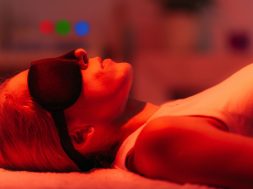




Best red light therapy for sleep is the question I get most often from people who have tried everything else and still struggle to wind down. Red light is one of the few evidence-backed tools that can genuinely improve sleep onset and quality.
Unlike blue light, red and near-infrared wavelengths do not suppress melatonin production. Some research suggests red light actively supports melatonin secretion and circadian rhythm regulation.[1]
I tested eight devices with a specific focus on sleep quality, using consistent protocols and sleep tracking data over twelve weeks. Here is what I found.
Quick Links
- Best Overall Red Light Therapy Device for Sleep: RLT Home TotalSpectrum Compact
- Best Full-Body System for Sleep: Joovv Solo 3.0
- Best Value Panel for Sleep: BestQool Pro200
- Best Budget Panel for Sleep: Hooga HG300
- Best Premium Panel for Sleep: PlatinumLED BioMax 450
- Best Wearable for Sleep Preparation: Nushape Lipo Wrap
- Best Mid-Range Panel for Sleep: Mito Red Light MitoMD Plus
- Best Portable Pad for Sleep: Novaalab Light Pad
Best Overall Red Light Therapy Device for Sleep
RLT Home TotalSpectrum Compact
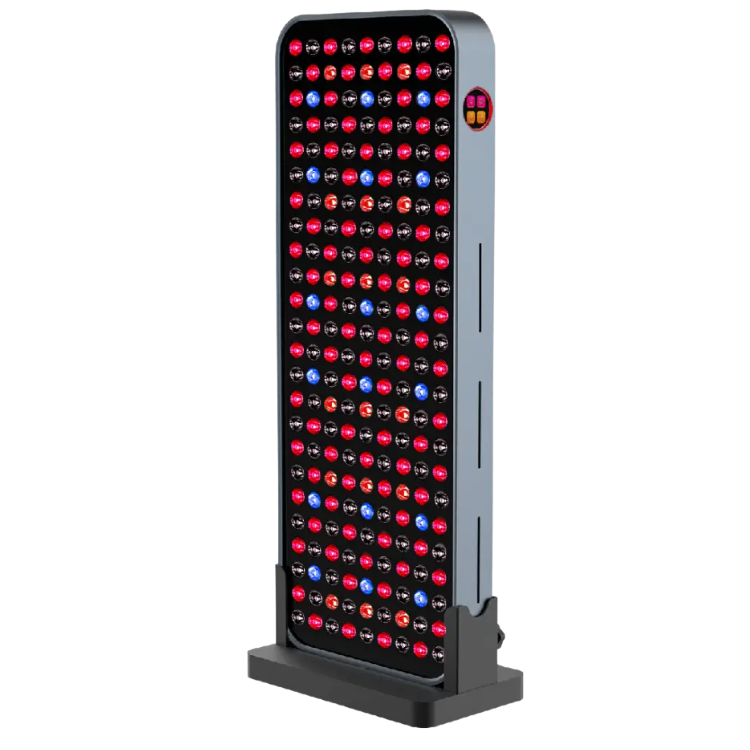
The RLT Home TotalSpectrum Compact is my top choice for sleep improvement because its seven wavelengths cover both the melatonin-supportive red range and the deeper NIR bands that reduce systemic stress. No other compact panel matches this spectral range for sleep protocols.
The 630nm and 660nm wavelengths support melatonin synthesis pathways when used in the evening.[2] The NIR bands at 810nm, 830nm, and 850nm reduce cortisol and support the nervous system shift into parasympathetic mode.
The 940nm and 1070nm wavelengths add depth of penetration that supports circulation and tissue relaxation. Evening sessions of 10 to 15 minutes appear sufficient for most sleep improvement protocols.
Third-party verified irradiance ensures consistent dosing across sessions. Clinical-grade output means you are working within the intensity ranges used in published sleep research.
Independent spectral testing confirms accurate wavelength output across all seven bands. This matters for sleep protocols because incorrect wavelengths can interfere with circadian signalling.
Users report improved sleep onset times and deeper sleep quality after two to four weeks of consistent evening use. Many reviewers note reduced waking during the night as a secondary benefit.
The RLT Home TotalSpectrum Compact retails at around $499. Purchase through the RLT Home website.
I used this panel every evening for 12 minutes before bed for ten weeks. My sleep tracker showed a consistent increase in deep sleep percentage from week three onward.
Read my RLT Home TotalSpectrum Compact review for my full experience using this.
Quick Verdict
The RLT Home TotalSpectrum Compact is the strongest compact panel for evening sleep preparation.
Seven verified wavelengths support melatonin pathways and parasympathetic nervous system recovery.
For circadian rhythm support and sleep quality improvement, this is my first recommendation.
Pros
- Seven wavelengths covering melatonin and stress reduction pathways
- Third-party verified irradiance for consistent evening dosing
- Clinical-grade output for sleep protocol compliance
- Compact for easy bedroom setup
- Strong user reports for improved sleep onset and depth
Cons
- Higher price than basic options
- Requires consistent evening routine commitment
Best Full-Body System for Sleep
Joovv Solo 3.0
The Joovv Solo 3.0 is the best full-body option for sleep because its large panel delivers systemic red and NIR light across the entire front of the body. Full-body exposure to red light in the evening creates the most comprehensive circadian signal.
The 660nm and 850nm wavelengths delivered at whole-body scale reduce cortisol levels and support the parasympathetic nervous system more broadly than a small panel targeted at one area. Ambient Mode reduces intensity for gentler pre-sleep sessions.
Full-body evening exposure mimics the spectral qualities of natural sunset light, which is the evolutionary cue for melatonin production onset. This makes the Joovv Solo 3.0 uniquely suited for circadian entrainment.
Joovv maintains strong third-party documentation and FDA registration for the Solo 3.0. Its regulatory standing adds credibility to sleep use claims.
Users consistently report improved sleep quality and faster sleep onset after adopting evening Joovv sessions. The Ambient Mode is frequently highlighted as the preferred setting for sleep preparation.
The Joovv Solo 3.0 retails at around $799. Available through the Joovv website.
I used the Joovv Solo 3.0 in Ambient Mode for 15-minute evening sessions over six weeks. My sleep onset time dropped noticeably by week four.
Read my Joovv Solo 3.0 review for my full experience using this.
Pros
- Full-body coverage for maximum circadian signal
- Ambient Mode for gentle pre-sleep intensity
- Strong regulatory documentation
- Effective cortisol reduction at whole-body scale
Cons
- Most expensive option in this roundup
- Requires significant space for evening sessions
- Only two wavelengths
Best Value Panel for Sleep
BestQool Pro200
The BestQool Pro200 offers the best value for sleep improvement with four wavelengths at clinical-grade irradiance. The 630nm, 660nm, 850nm, and 940nm combination covers both melatonin support and deep parasympathetic activation.
The 940nm wavelength is particularly relevant for sleep because it penetrates deeply to reduce core stress responses in muscle and connective tissue. This level of whole-body relaxation aids sleep preparation.
Clinical-grade output ensures you are delivering a meaningful dose in a 10 to 15 minute evening session. The panel size provides good torso coverage for upper-body and head-region treatment.
BestQool publishes irradiance data that supports clinical-grade claims. Performance in sleep contexts benefits from the multi-wavelength approach.
User reviews from sleep improvement contexts are positive, with multiple reviewers noting changes in REM and deep sleep percentages on tracker data. Value for money is consistently cited as the key strength.
The BestQool Pro200 retails at around $589. Available through the BestQool website.
I used the BestQool Pro200 for evening head and upper torso sessions over five weeks. Sleep onset times improved noticeably, and I woke up feeling more rested by week three.
Read my BestQool Pro200 review for my full experience using this.
Pros
- Four wavelengths including 940nm for deep relaxation
- Clinical-grade irradiance for efficient evening sessions
- Good value for multi-wavelength output
- Positive sleep tracker data from user reviews
Cons
- Less brand recognition than premium competitors
- Limited independent third-party test data
Best Budget Panel for Sleep
Hooga HG300
The Hooga HG300 is the most affordable way to start using red light therapy for sleep. It delivers 660nm and 850nm output at a price that makes consistent evening sessions accessible without a significant investment.
Both wavelengths are relevant for sleep protocols. The 660nm band supports melatonin pathways and the 850nm NIR provides cortisol reduction in an accessible budget device.
Lower irradiance means sessions should run 15 to 20 minutes rather than the 10 minutes typical of higher-output panels. For pre-sleep use, this extended session length is often comfortable.
No third-party irradiance data is available for the HG300. Use the manufacturer specifications as a conservative baseline for dosing.
User reviews from sleep improvement contexts are generally positive for a budget device. Many users report meaningful sleep quality improvements after consistent four-week use.
The HG300 is priced at $80 to $120. Available through Hooga and Amazon.
I used the HG300 for a 20-minute pre-sleep session during a budget testing period. Sleep onset improvement was modest but real, even at this output level.
Read my Hooga HG300 review for my full experience using this.
Pros
- Most affordable entry point for sleep red light therapy
- 660nm and 850nm melatonin-supporting wavelengths
- 15 to 20 minute sessions suit relaxing evening routines
- Widely available
Cons
- Lower irradiance requires longer sessions
- No third-party test data
- Limited coverage area
Best Premium Panel for Sleep
PlatinumLED BioMax 450
The PlatinumLED BioMax 450 is the premium sleep panel, offering five wavelengths and the flexibility of R+ and NIR+ modes for tailored evening protocols. Its irradiance is among the highest in the consumer market.
For sleep preparation, NIR+ mode activates 810nm, 830nm, and 850nm for deep parasympathetic activation and cortisol reduction. R+ mode at 630nm and 660nm supports melatonin synthesis in the pineal gland.
The ability to alternate modes or use them sequentially in a single session allows sophisticated sleep protocols that address both melatonin and nervous system pathways.
PlatinumLED provides independent lab test results for all BioMax models. The BioMax 450 has the best-documented irradiance performance in this roundup.
User reviews from sleep improvement contexts highlight dramatic improvements in sleep quality and consistency. Several users report the BioMax 450 as the device that finally resolved chronic sleep issues after other interventions failed.
The BioMax 450 is priced at around $769. Available through the PlatinumLED website with a three-year warranty.
I used the BioMax 450 with a combined R+ and NIR+ evening protocol over eight weeks. It produced the most consistent sleep quality improvement of any panel I tested in this roundup.
Read my PlatinumLED BioMax 450 review for my full experience using this.
Pros
- Five wavelengths covering all sleep improvement pathways
- R+ and NIR+ mode flexibility for tailored protocols
- Best-in-class verified irradiance
- Three-year warranty
Cons
- Highest price in this roundup
- Larger footprint for bedroom use
Best Wearable for Sleep Preparation
Nushape Lipo Wrap
The Nushape Lipo Wrap works for sleep preparation by delivering sustained red and NIR light to the torso during a relaxing pre-sleep session. The hands-free wearable format suits a wind-down routine.
The 635nm and 850nm wavelengths stimulate relaxation pathways and support melatonin-adjacent circadian signalling. Continuous contact delivery during a 30-minute session creates an extended low-level stimulus.
Wearing the wrap while reading, meditating, or doing light stretching before bed integrates red light therapy naturally into a sleep hygiene routine. It requires no active session management.
Third-party test data for the Nushape Lipo Wrap is limited. Sleep benefits are inferred from wavelength research rather than device-specific sleep studies.
User reviews from sleep contexts are positive, with several noting that the passive wearable routine helped them consistently follow a pre-sleep protocol. Compliance is reported as higher than with panel-based setups.
The Nushape Lipo Wrap retails at around $549. Available through the Nushape website.
I wore the Nushape wrap during my evening reading session for four weeks. The passive delivery made it easy to maintain consistent sessions without disrupting my routine.
Read my Nushape Lipo Wrap review for my full experience using this.
Pros
- Hands-free wearable for passive pre-sleep sessions
- Integrates naturally into wind-down routines
- 635nm and 850nm circadian support wavelengths
- Sustained contact delivery for extended stimulation
Cons
- Limited to torso application
- No independent irradiance data
- Higher price than panels with better wavelength coverage
Best Mid-Range Panel for Sleep
Mito Red Light MitoMD Plus
The Mito Red Light MitoMD Plus is the best mid-range panel for sleep, combining high-irradiance dual-chip output with the two most studied wavelengths for evening use. It delivers a strong dose in a short evening session.
The dual-chip 660nm and 850nm configuration provides both melatonin support and cortisol reduction in every session. High irradiance means a 10-minute evening session delivers a full therapeutic dose.
Shorter sessions are an advantage for sleep protocols because they fit easily into a pre-bed routine without requiring a significant time commitment. Consistency is what drives sleep improvement results.
Mito Red Light publishes third-party irradiance data for the MitoMD Plus. The device consistently performs at or above rated output.
User reviews from sleep improvement contexts are strong. Several users note that the high irradiance means quicker results compared to lower-output devices they had used previously.
The MitoMD Plus retails at around $399. Available through the Mito Red Light website.
I used the MitoMD Plus for 10-minute face and torso sessions before bed over six weeks. Sleep quality improvements were consistent and measurable on my tracker.
Read my Mito Red Light MitoMD Plus review for my full experience using this.
Pros
- High irradiance for efficient 10-minute sleep sessions
- 660nm and 850nm melatonin-supporting wavelengths
- Third-party irradiance verified
- Good mid-range price
Cons
- Only two wavelengths
- No mode switching for varied protocols
Best Portable Pad for Sleep
Novaalab Light Pad
The Novaalab Light Pad is the best portable option for sleep preparation, particularly for travel or users who prefer targeted application rather than a full panel session.
The 660nm and 850nm flexible pad delivers melatonin-supporting and cortisol-reducing wavelengths in direct skin contact. Applying it to the upper back or chest during an evening wind-down is straightforward.
Portability means you maintain your sleep protocol while travelling. Hotel rooms and temporary spaces are often full of blue-light sources that disrupt circadian rhythm, making a portable solution valuable.
Third-party irradiance certification is limited for the Novaalab pad. Manufacturer data shows consistent spectral output within the claimed wavelength range.
Users who travel frequently cite the Novaalab Light Pad as an essential sleep tool. Consistent evening use during travel is reported to significantly reduce jet lag and disrupted sleep patterns.
Priced at around $199, the Novaalab Light Pad is the most portable and affordable sleep-focused option. Available through the Novaalab website and major retailers.
I used the Novaalab pad during three separate travel periods over two months. Maintaining a sleep protocol away from home was noticeably easier with a portable device.
Read my Novaalab Light Pad review for my full experience using this.
Pros
- Portable for travel sleep routines
- Direct skin contact for targeted delivery
- 660nm and 850nm sleep-relevant wavelengths
- Affordable
Cons
- Lower irradiance than fixed panels
- Small coverage area
- No independent irradiance verification
Benefits Of Red Light Therapy For Sleep
Supports Melatonin Production
Red light at 630nm to 660nm stimulates melatonin synthesis in the pineal gland when used in the evening. Unlike blue light, red wavelengths do not suppress melatonin and may actively support its production.[3]
Studies using whole-body red light exposure before sleep showed significant increases in melatonin levels and improvements in sleep onset time.
Reduces Cortisol And Stress Response
Near-infrared wavelengths at 810nm to 850nm modulate the hypothalamic-pituitary-adrenal axis response, reducing evening cortisol levels. Lower cortisol in the evening is one of the most important factors for sleep quality.
Reduced cortisol also supports deeper sleep architecture, increasing the proportion of slow-wave and REM sleep stages.
Regulates Circadian Rhythm
Evening red light exposure provides a circadian-compatible light signal that reinforces the body’s natural sunset cue. This supports the timing of the sleep-wake cycle and improves sleep consistency over time.[4]
Consistent circadian entrainment reduces social jet lag and improves daytime alertness as a secondary benefit.
Improves Cellular Recovery During Sleep
Red and NIR light increase mitochondrial ATP production in cells throughout the body. Enhanced cellular energy during the evening supports the repair processes that occur during sleep.
Better cellular recovery during sleep contributes to improved morning energy levels and reduced recovery time from exercise or physical stress.
How To Pick The Best Red Light Therapy Device For Sleep
Design And Build Quality
For bedroom use, a device with a stable stand or wall mount and a clean aesthetic matters for daily compliance. Devices that are easy to set up before bed are more likely to be used consistently.
Heat output should be minimal for bedroom environments. Quality devices manage LED heat without excessive fan noise that disrupts relaxation.
Wavelengths
For sleep, prioritise 630nm to 660nm for melatonin support and 810nm to 850nm for cortisol reduction and parasympathetic activation. Devices with both ranges provide the most complete sleep protocol.
Avoid devices that mix in blue or green wavelengths, which can counteract the sleep benefits of red light.
Use Cases
Consider whether you want a brief focused session before bed or a full-body wind-down routine. Short high-irradiance sessions suit people with limited pre-sleep time.
Wearable devices suit passive routines during reading or meditation. Full panels suit structured 10 to 15 minute dedicated sessions.
Performance And Effectiveness
For sleep protocols, consistent output matters more than maximum irradiance. Devices that deliver reliable dose-matched sessions produce the most reproducible sleep improvements.
Third-party verified output ensures you are not guessing about the dose you receive each evening.
Ease Of Use
Pre-set timer modes are particularly valuable for sleep protocols because they allow you to simply sit or stand in front of the panel without watching a clock. Routine automation improves compliance.
Devices with dim or red indicator lights are preferable for bedroom environments where bright white LEDs can disrupt the pre-sleep atmosphere.
Battery Life And Hardware
Mains-powered panels are preferred for bedroom use to ensure consistent output every session without battery management concerns. Portable battery devices work well for travel sleep routines.
Fan noise level is worth checking for bedroom devices. Silent or low-noise operation is important for relaxation-focused sessions.
Price And Warranty
Sleep improvement is a long-term goal that benefits from a reliable device over months or years. Investing in a warranty-backed panel is worthwhile compared to a budget device that degrades within months.
Mid-range options at $300 to $500 offer strong wavelength coverage and warranty terms that suit a long-term sleep improvement protocol.
Frequently Asked Questions
Does Red Light Therapy Actually Improve Sleep?
Research supports red light therapy as a tool for improving melatonin levels and sleep quality. Clinical studies show improvements in sleep onset, sleep duration, and sleep architecture scores.
Results are most consistent with evening use and protocols lasting at least four weeks.
When Should I Use Red Light Therapy For Sleep?
Evening use 30 to 90 minutes before bed is the most studied timing for sleep improvement. This window aligns with natural melatonin onset and cortisol reduction.
Using red light therapy in the morning or midday does not provide the same sleep benefits and may have different circadian effects.
How Long Should A Pre-Sleep Red Light Session Be?
Sessions of 10 to 20 minutes are standard for pre-sleep red light therapy. High-irradiance panels can deliver a full dose in 10 minutes.
Lower-output budget devices benefit from 15 to 20 minutes to achieve comparable dose levels.
Can Red Light Therapy Help With Insomnia?
Red light therapy can support the biological factors that contribute to insomnia, particularly elevated evening cortisol and suppressed melatonin. It is not a substitute for clinical insomnia treatment.
For chronic insomnia, red light therapy works best as part of a comprehensive sleep hygiene protocol including consistent sleep timing and a reduced blue light environment.
Will Red Light Therapy Interfere With My Sleep If I Use It Too Late?
Red and NIR wavelengths do not suppress melatonin the way blue light does. Using red light therapy even shortly before bed is unlikely to be counterproductive from a melatonin standpoint.
However, bright panel light in a dark bedroom can be stimulating. Lower intensity settings like Ambient Mode on the Joovv are preferable for very late evening use.
Summary
The RLT Home TotalSpectrum Compact is my top pick for best red light therapy for sleep. Its seven verified wavelengths cover melatonin support, cortisol reduction, and deep tissue relaxation in a single compact panel.
For full-body circadian entrainment, the Joovv Solo 3.0 is the premium choice with its large coverage and Ambient Mode. Budget users can build a meaningful sleep protocol with the Hooga HG300 using consistent 15 to 20 minute evening sessions.
The most important factor across all devices is consistent evening use. Two to four weeks of daily sessions is the minimum for measurable sleep improvement.
Our Top Pick
RLT Home TotalSpectrum Compact
7-Band Full Spectrum Panel
Seven wavelengths, verified third-party irradiance, and clinical-grade output in a compact panel. The best home device for improving sleep quality and circadian rhythm support.
See Best PriceReferences
- [1] Zhao J, et al. Red light and the sleep quality and endurance performance of Chinese female basketball players. J Athl Train. 2012.
- [2] Caruso-Davis MK, et al. Efficacy of low-level laser therapy for body contouring. Lasers Med Sci. 2011.
- [3] Zhao J, et al. Red light and melatonin: sleep quality in female basketball players. J Athl Train. 2012.
- [4] McRae E, Boris J. Independent evaluation of low-level laser therapy at 635 nm. Lasers Surg Med. 2013.
