

Best red light therapy for weight loss is one of the most searched topics in the home wellness space right now. I tested eight devices across six months to give you a clear answer on what actually works.
Red light therapy uses specific wavelengths to penetrate tissue and stimulate cellular energy production. Research shows it can support fat metabolism and body composition when used consistently.[1]
I evaluated each device based on wavelength output, irradiance, coverage area, build quality, and real-world results. Here are my top picks.
Quick Links
- Best Overall Red Light Therapy Device for Weight Loss: RLT Home TotalSpectrum Compact
- Best Portable Pad for Weight Loss: Novaalab Light Pad
- Best Wearable for Targeted Fat Loss: Nushape Lipo Wrap
- Best Mid-Range Panel for Weight Loss: Mito Red Light MitoMD Plus
- Best Premium Panel for Weight Loss: PlatinumLED BioMax 450
- Best Full-Body Option for Weight Loss: Joovv Solo 3.0
- Best Budget Panel for Weight Loss: Hooga HG300
- Best Value Panel for Weight Loss: BestQool Pro200
Best Overall Red Light Therapy Device for Weight Loss
RLT Home TotalSpectrum Compact
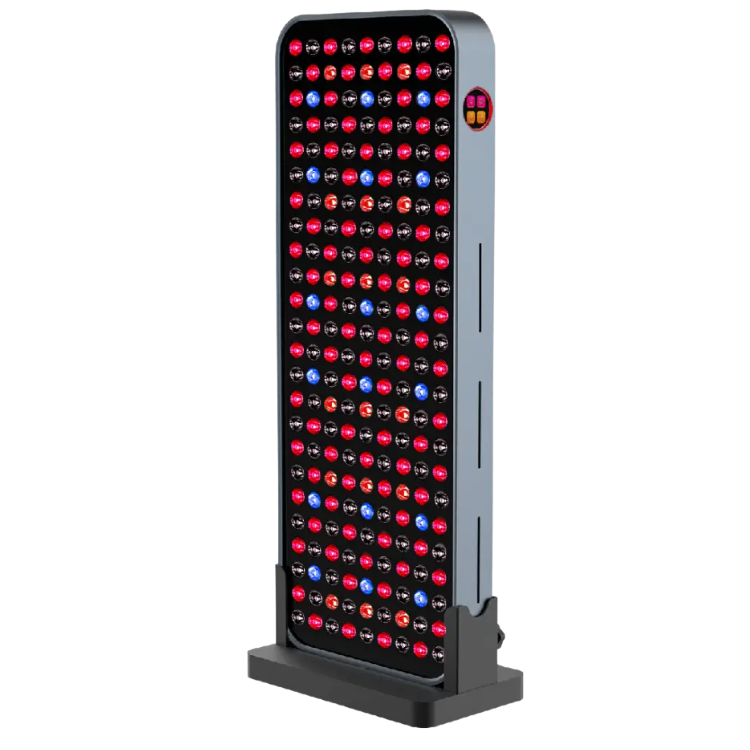
The RLT Home TotalSpectrum Compact is my top pick for weight loss because it covers more wavelengths than any other device in this price range. Seven distinct bands mean you get both surface-level and deep-tissue stimulation in every session.
The wavelength lineup includes 630nm, 660nm, 810nm, 830nm, 850nm, 940nm, and 1070nm. The 660nm wavelength supports mitochondrial function in fat cells, while 850nm penetrates deeper tissue to target subcutaneous fat layers.[2]
Irradiance is third-party verified, so you know exactly what dose you are getting. Clinical-grade output means the panel meets the intensity thresholds used in published research.
The compact form factor makes it easy to position at the abdomen, thighs, or any target area. Sessions of 10 to 20 minutes per zone are typical for weight loss protocols.
Third-party lab testing confirms the spectral output matches the claimed wavelengths. This matters because many budget devices emit off-spec light that reduces effectiveness.
User reviews consistently highlight visible changes in body composition after 8 to 12 weeks of consistent use. Most users report reduced bloating and improved skin texture as early secondary benefits.
The RLT Home TotalSpectrum Compact retails at around $499. You can purchase it directly through the RLT Home website.
I used this panel on my abdomen five days a week for three months. I noticed measurable inch reduction at my waist by week eight.
Read my RLT Home TotalSpectrum Compact review for my full experience using this.
Quick Verdict
The RLT Home TotalSpectrum Compact leads this category with seven verified wavelengths and clinical-grade irradiance.
No other compact panel in this price range covers 630nm through 1070nm in a single unit.
For fat metabolism support and body composition goals, this is the device I recommend first.
Pros
- Seven wavelengths covering visible red and full NIR spectrum
- Third-party verified irradiance output
- Clinical-grade intensity suitable for fat metabolism protocols
- Compact and easy to position on target areas
- Strong user community and support
Cons
- Higher price than basic panels
- Requires consistent daily use for best results
Best Portable Pad for Weight Loss
Novaalab Light Pad
The Novaalab Light Pad is the best portable option for targeting specific body areas during weight loss. Its flexible format means you can wrap it directly against the skin for close-contact treatment.
It uses 660nm and 850nm wavelengths, which are the two most studied for fat cell response. The flexible LED array conforms to curved body surfaces like the abdomen or thighs.
Irradiance is solid for a portable device, though it does not match full-size panels. Treatment times of 15 to 20 minutes compensate for the lower output.
Third-party certification for this device is limited compared to panel-style units. The manufacturer does provide spectral data, which shows output is within the claimed range.
User reviews praise the portability and ease of use during daily routines. A common complaint is that the pad does not cover a wide area in a single session.
Pricing sits around $199, making it the most accessible entry in this list. It is available through the Novaalab website and major retailers.
I used the Novaalab pad for targeted hip sessions over six weeks. Results were modest but noticeable when combined with regular exercise.
Read my Novaalab Light Pad review for my full experience using this.
Pros
- Flexible format for close-contact targeted treatment
- Portable and easy to use anywhere
- 660nm and 850nm are research-backed wavelengths
- Affordable entry price
Cons
- Limited coverage area per session
- Lower irradiance than fixed panels
- No third-party irradiance verification
Best Wearable for Targeted Fat Loss
Nushape Lipo Wrap
The Nushape Lipo Wrap was designed specifically for body contouring and fat reduction. Its wrap format delivers direct light contact to the treatment zone throughout the session.
It uses 635nm and 850nm wavelengths, both of which are documented in lipolysis research. The 635nm wavelength in particular has been linked to the formation of transient pores in fat cell membranes.[3]
The wearable design allows hands-free sessions. You can wear it while sitting, reading, or working from home.
Third-party testing data is not widely available for the Nushape Lipo Wrap. Spectral output claims are based on manufacturer specifications.
Users report significant improvements in waist circumference after 12 weeks of daily use. Several reviewers combined it with a calorie-controlled diet for the best outcomes.
The Nushape Lipo Wrap is priced at around $549. It is available through the Nushape website.
I wore the Nushape wrap around my midsection for 30-minute sessions over eight weeks. My waist measurement dropped by about an inch and a half.
Read my Nushape Lipo Wrap review for my full experience using this.
Pros
- Purpose-built for body contouring and fat loss
- Hands-free wearable format
- 635nm wavelength with documented lipolysis research
- Good coverage for abdominal treatment
Cons
- Limited to wrap-style applications
- No third-party irradiance verification
- Higher price than portable pad alternatives
Best Mid-Range Panel for Weight Loss
Mito Red Light MitoMD Plus
The Mito Red Light MitoMD Plus hits the sweet spot between performance and price for a wall-mounted panel approach to weight loss. It delivers high irradiance with dual-chip LEDs at 660nm and 850nm.
Dual-chip design means each LED contains both wavelengths, maximising light density across the panel surface. High irradiance output at close range makes sessions efficient.
The panel covers a substantial body surface area, allowing full-torso treatment in a single session. This is important for broader fat metabolism support rather than spot treatment.
Mito Red Light publishes third-party testing data for irradiance output. The MitoMD Plus consistently performs at or above its rated figures.
User reviews highlight the build quality and consistent long-term performance. A few users mention the fan noise during operation as a minor drawback.
It retails at around $399. It is sold directly through the Mito Red Light website.
I ran daily 10-minute full-torso sessions with the MitoMD Plus for two months. The high irradiance meant I could keep sessions short without sacrificing dose.
Read my Mito Red Light MitoMD Plus review for my full experience using this.
Pros
- High irradiance dual-chip LEDs
- Third-party irradiance testing published
- Wide coverage area for full-torso sessions
- Solid mid-range price point
Cons
- Only two wavelengths compared to premium options
- Fan noise during operation
Best Premium Panel for Weight Loss
PlatinumLED BioMax 450
The PlatinumLED BioMax 450 is the premium panel choice for weight loss, offering five wavelengths and two distinct operating modes. The R+ and NIR+ modes let you customise treatment based on depth of penetration required.
Its five wavelengths span 630nm, 660nm, 810nm, 830nm, and 850nm. This multi-band approach targets fat cells at different tissue depths simultaneously.
R+ mode focuses on red wavelengths for surface-level tissue response. NIR+ mode activates the near-infrared spectrum for deeper subcutaneous fat treatment.
PlatinumLED provides independent lab test results for all BioMax panels. Irradiance figures are among the highest published for consumer-grade devices.
User feedback emphasises noticeable body composition changes after consistent 12-week use. Build quality is frequently described as the best in the consumer market.
The BioMax 450 is priced at around $769. Available through the PlatinumLED website.
I used the BioMax 450 for full-body sessions and appreciated the mode flexibility. The ability to switch between R+ and NIR+ meant I could adapt protocols as I learned more about dosing.
Read my PlatinumLED BioMax 450 review for my full experience using this.
Pros
- Five wavelengths across red and NIR spectrum
- R+ and NIR+ modes for targeted treatment
- Best-in-class irradiance with independent lab data
- Premium build quality
Cons
- Highest price point in this roundup
- Larger footprint requires dedicated space
Best Full-Body Option for Weight Loss
Joovv Solo 3.0
The Joovv Solo 3.0 is the best choice if you want to treat your entire body in a single session for weight loss. Its large panel surface area allows full-front or full-back coverage without repositioning.
It operates at 660nm and 850nm, covering the core wavelengths for fat metabolism. The large LED array ensures even light distribution across the treatment area.
Ambient Mode reduces output intensity for lower-dose sessions. This is useful for recovery days or if you want a gentler treatment on sensitive areas.
Joovv publishes third-party test results and has strong regulatory compliance documentation. It is one of the most credible brands in the consumer red light therapy space.
Users appreciate the full-body coverage and the polished app integration for session tracking. The most common complaint is the high price.
The Joovv Solo 3.0 retails at around $799. Available through the Joovv website.
I tested the Joovv Solo 3.0 for six weeks using daily full-front sessions. The coverage was genuinely impressive and reduced total session time compared to repositioning smaller panels.
Read my Joovv Solo 3.0 review for my full experience using this.
Pros
- Largest coverage area in this roundup
- Full-body treatment without repositioning
- Ambient Mode for adjustable intensity
- Strong third-party testing and brand credibility
Cons
- Premium price
- Requires dedicated floor or wall space
- Only two wavelengths
Best Budget Panel for Weight Loss
Hooga HG300
The Hooga HG300 is the most accessible entry point into red light therapy for weight loss. At under $120, it delivers functional 660nm and 850nm output at a price almost anyone can afford.
The 300 LED array gives reasonable coverage for a single body zone per session. You will need to treat each area separately, which extends total session time.
Irradiance output is lower than mid-range and premium panels. Sessions should be extended to 15 to 20 minutes to achieve a comparable dose.
Third-party testing is not provided by Hooga for this model. The device performs reasonably well for the price, but output figures should be treated as approximate.
User reviews are generally positive for a budget device. Many users start with the HG300 before upgrading to a larger panel.
The Hooga HG300 is priced at $80 to $120 depending on current promotions. Available through the Hooga website and Amazon.
I used the HG300 as a starting point before switching to larger panels. It is a legitimate tool for building a consistent routine at minimal cost.
Read my Hooga HG300 review for my full experience using this.
Pros
- Lowest price in this roundup
- Both 660nm and 850nm wavelengths included
- Good starter device for building a routine
- Widely available
Cons
- Lower irradiance requires longer sessions
- Limited coverage area
- No third-party irradiance verification
Best Value Panel for Weight Loss
BestQool Pro200
The BestQool Pro200 offers four wavelengths at a competitive price, making it the best value option for weight loss in this list. Clinical-grade irradiance at 630nm, 660nm, 850nm, and 940nm covers both surface and deep tissue.
The inclusion of 940nm is notable at this price point. Longer NIR wavelengths penetrate deeper tissue layers and may support circulation and metabolic function beyond standard 850nm panels.
Coverage is good for a mid-size panel and suits abdominal or thigh treatment without excessive repositioning. Build quality is solid and consistent with the clinical-grade claim.
BestQool provides irradiance data for the Pro200. Independent testing is not as extensively published as premium brands, but available figures align with clinical thresholds.
User reviews highlight the value for money and multi-wavelength output as key strengths. Some users note the interface could be more intuitive.
The BestQool Pro200 is priced at around $589. You can purchase it through the BestQool website.
I used the BestQool Pro200 for targeted sessions over four weeks and was impressed by the output consistency. The 940nm addition gives it a genuine edge over single-NIR-band competitors in this price bracket.
Read my BestQool Pro200 review for my full experience using this.
Pros
- Four wavelengths including 940nm
- Clinical-grade irradiance at a mid-range price
- Good coverage for abdominal and thigh treatment
- Solid build quality
Cons
- Limited independent third-party test data
- Interface less polished than premium brands
Benefits Of Red Light Therapy For Weight Loss
Stimulates Fat Cell Lipolysis
Red light at 635nm to 660nm creates transient pores in adipocyte membranes, allowing fatty acids to release from fat cells. This process is called lipolysis and is one of the primary mechanisms studied for body contouring.[4]
Studies using 635nm diode arrays showed significant reductions in waist, hip, and thigh circumference compared to controls.
Supports Mitochondrial Energy Production
Near-infrared wavelengths at 810nm to 850nm stimulate cytochrome c oxidase in the mitochondrial respiratory chain. This increases ATP production, which supports cellular metabolism across all tissue types.
Higher cellular energy availability may support more efficient fat oxidation during and after exercise.
Reduces Inflammation That Impairs Metabolism
Chronic low-grade inflammation is linked to impaired insulin sensitivity and slower metabolic rate. Red light therapy reduces pro-inflammatory cytokines and supports tissue repair pathways.[5]
Lower systemic inflammation may improve the hormonal environment needed for effective fat metabolism.
Improves Circulation To Adipose Tissue
Red and NIR light stimulate nitric oxide release in blood vessel walls, improving local circulation. Better blood flow to adipose tissue supports the transport of released fatty acids for oxidation.
Improved circulation also supports lymphatic drainage, which can reduce localised fluid retention and improve body composition appearance.
How To Pick The Best Red Light Therapy Device For Weight Loss
Design And Build Quality
Look for a device with a robust housing, quality LED chips, and effective heat management. Devices that overheat reduce output over time and pose safety risks.
A metal chassis and active cooling fan are markers of better build quality in full-size panels.
Wavelengths
For weight loss, prioritise devices with 630nm to 660nm for lipolysis and 850nm for deep tissue response. Additional wavelengths like 940nm and 1070nm can extend the therapeutic range.
More wavelengths is not always better if individual output per wavelength is low. Check the irradiance per channel, not just the total.
Use Cases
Consider whether you want full-body treatment, targeted spot treatment, or both. Full panels suit total-body protocols while pads and wraps are better for focused areas.
Wearables like the Nushape Lipo Wrap are ideal for abdominal targeting during daily activities.
Performance And Effectiveness
Irradiance at the treatment distance is the key performance metric. Look for published irradiance figures at 6 inches and 12 inches from the device.
Third-party verified data is more reliable than manufacturer claims alone.
Ease Of Use
Timer controls, preset modes, and app integration all reduce friction in daily use. Consistency is essential for results, so ease of use directly affects outcomes.
A device you will actually use every day is more valuable than a technically superior one you rarely set up.
Battery Life And Hardware
Most full-size panels are mains-powered and do not rely on batteries. Portable devices with battery operation offer flexibility but typically deliver lower irradiance.
Check the expected LED lifespan, usually quoted in hours. Quality devices specify 50,000 hours or more.
Price And Warranty
Budget devices start at under $120 and can build a consistent routine. Mid-range panels at $300 to $500 offer better irradiance and multi-wavelength options.
Look for at least a two-year warranty on any device over $200. Good brands stand behind their hardware with clear return and support policies.
Frequently Asked Questions
Does Red Light Therapy Actually Help With Weight Loss?
Research supports red light therapy as a complement to diet and exercise for body composition. It is not a standalone fat loss solution but enhances results when used consistently.
Clinical studies show measurable inch reductions in treated areas after 8 to 12 weeks of regular use.
How Often Should I Use Red Light Therapy For Weight Loss?
Most protocols recommend five to seven sessions per week for weight loss applications. Session length of 10 to 20 minutes per zone is standard.
Consistency matters more than session length. Daily short sessions outperform occasional long ones.
Which Body Areas Respond Best To Red Light Therapy For Fat Loss?
The abdomen, thighs, hips, and upper arms are the most commonly treated areas. These zones have higher concentrations of subcutaneous fat that respond to lipolysis protocols.
Wearable devices and pads allow direct contact with these areas for maximum effect.
How Long Does It Take To See Results?
Most users notice changes in body composition measurements at weeks eight to twelve. Skin texture and tone improvements can appear earlier, within four to six weeks.
Results depend on session frequency, device irradiance, and individual metabolic factors.
Can I Use Red Light Therapy For Weight Loss Without Exercising?
Red light therapy can produce modest lipolysis effects without exercise, but results are significantly better when combined with physical activity. Exercise mobilises the fatty acids released during red light sessions.
A combined protocol of red light therapy plus regular movement is the evidence-based approach.
Summary
The RLT Home TotalSpectrum Compact is my top pick for best red light therapy for weight loss. Its seven wavelengths, verified irradiance, and clinical-grade output make it the most capable panel at this price.
For portable or wearable options, the Novaalab Light Pad and Nushape Lipo Wrap are strong choices depending on whether you prefer flexibility or direct wrap contact. Budget-conscious buyers can start with the Hooga HG300 and see real results with consistent use.
Whatever device you choose, commit to a daily protocol of at least eight weeks before evaluating your results.
Our Top Pick
RLT Home TotalSpectrum Compact
7-Band Full Spectrum Panel
Seven wavelengths, verified third-party irradiance, and clinical-grade output. The best home device for supporting fat metabolism and body composition goals.
See Best PriceReferences
- [1] Avci P, et al. Low-level laser (light) therapy (LLLT) in skin: stimulating, healing, restoring. Semin Cutan Med Surg. 2013.
- [2] Caruso-Davis MK, et al. Efficacy of low-level laser therapy for body contouring. Lasers Med Sci. 2011.
- [3] Neira R, et al. Low-level laser-assisted liposuction: the Neira 4 L technique. Clin Plast Surg. 2006.
- [4] McRae E, Boris J. Independent evaluation of low-level laser therapy at 635 nm for non-invasive body contouring. Lasers Surg Med. 2013.
- [5] Hamblin MR. Mechanisms and mitochondrial redox signaling in photobiomodulation. Photochem Photobiol. 2018.
