










Red light therapy has exploded in popularity over the last few years, and for good reason. From faster recovery and better joint mobility to improved skin and sleep quality, the science behind photobiomodulation isn’t just hype anymore.
But as the market fills up with sleek, premium-priced devices all promising the same benefits, figuring out which one actually delivers can get confusing fast.
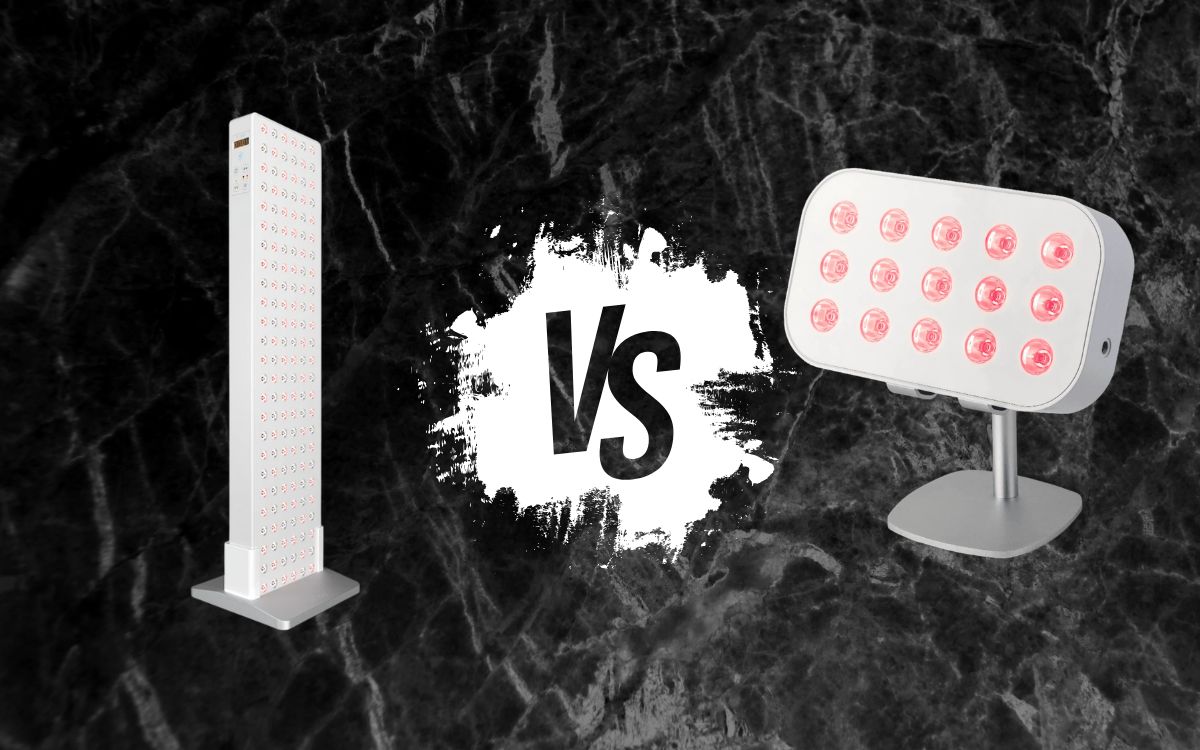
Two names that promise clinical-grade performance, portability, and convenience are Joovv Solo 3.0 and Lumebox 2.0, but they go about it in very different ways. The Joovv Solo 3.0 leans on its premium build, Bluetooth control, and polished brand ecosystem, while the Lumebox takes a simpler, plug-and-play approach focused on raw power output.
I’ve tested both extensively to be able to accurately break down how they perform, what each does best (and worst), and which one’s actually worth investing in if you’re serious about recovery and performance.
Comparison Table
- Performance and effectiveness: Lumebox
- Wavelengths: Draw
- Design and build Quality: Draw
- Ease of Use: Lumebox
- Battery: Joov
- Price: Joov
Quick Verdict
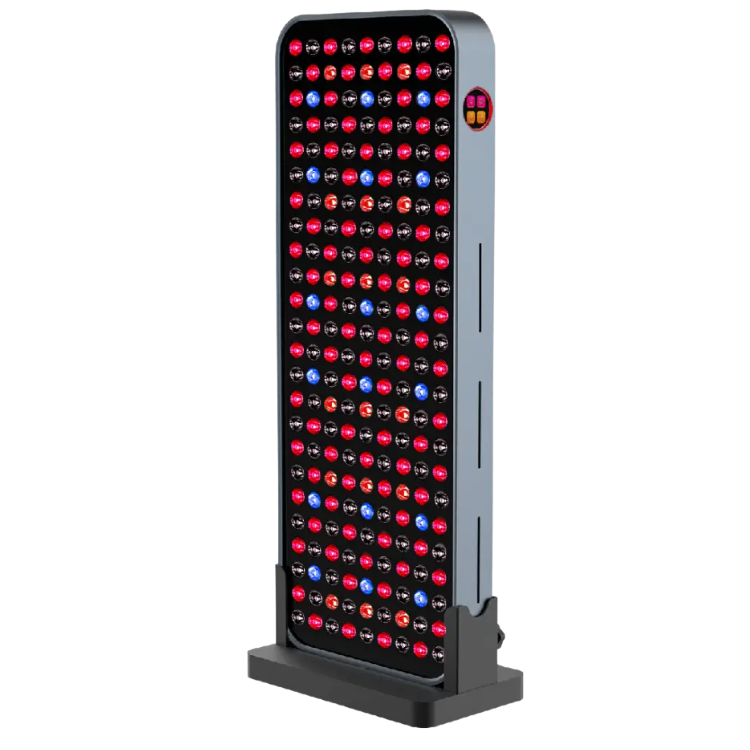
The Lumebox 2.0 delivers more output and session flexibility than the Joovv Solo 3.0 at a lower price point. For the best home panel combining seven wavelengths with verified irradiance, the RLT Home TotalSpectrum Compact is the clear step up.
Quick Verdict
The Lumebox 2.0 edges the Joovv on irradiance output and session length control. The Joovv wins on build quality and travel-friendly design.
Both are solid devices, but neither covers the full spectrum that the RLT Home TotalSpectrum Compact delivers.
Seven wavelengths, third-party verified irradiance, and clinical-grade output make the TotalSpectrum Compact the strongest home panel at this price range.
What Is the Joovv Solo 3.0?
If you’ve spent any time researching red light therapy, you’ve probably seen Joovv. The company helped put this category on the map with its polished design, strong clinical backing, and “Apple-of-wellness” branding.
Joovv Solo 3.0 is their smallest model, a premium handheld red and near-infrared light device designed for targeted recovery.
It combines 660 nm red light (for surface-level tissue and skin) and 850 nm near-infrared light (for deeper muscle and joint penetration) into one compact unit. You control it through the Joovv mobile app, where you can select between different modes: red only, NIR only, or both.
There’s also a Recovery+ pulsed mode designed to enhance circulation and cellular activation, and even an Ambient mode for low-intensity background light.
The Joovv Solo 3.0 fits easily in one hand, feels more like a professional tool than a gadget, and delivers reliable, research-backed wavelengths in a 10-minute automatic session. Its portability makes it perfect for use after the gym, on business trips, or even while watching TV, as long as you don’t mind holding it in place.
Pros
- Compact and travel-friendly design; easy to use anywhere
- Premium build quality and ergonomic silicone grip
- Dual wavelengths (660 nm + 850 nm) supported by solid research
- “Recovery+” pulsed mode adds a therapeutic edge
- Medical-grade safety certification
- Works well for post-workout soreness, joint tightness, and skin rejuvenation
Cons
- High price for a handheld device ($499–$599)
- Small treatment area; not suitable for full-body use
- Fixed 10-minute timer with no manual control
- Bluetooth app can be glitchy
- Needs cooldown between sessions
What Is the Lumebox 2.0?
Lumebox 2.0 is another premium red light therapy device, but instead of going ultra-compact, it takes the form of a portable mini-panel that plugs directly into the wall. It delivers 125 mW/cm² of red light (660 nm) and 140 mW/cm² of near-infrared (850 nm), both strong outputs for a consumer-grade device.
In plain terms, it’s one of the more powerful compact lights you can buy without spending thousands on a full-body panel.
Lumebox skipped the app, wireless charging, and flashy ecosystem in favor of simplicity. You just plug it in, select 6- or 12-minute sessions, and let it run.
It’s refreshingly straightforward: no Bluetooth pairing, no setup process, and no firmware updates.
The design has been refined since the first version, with a sturdy handle, improved ergonomics, and better cooling management. It stays surprisingly cool even during longer sessions, and the LED layout is even and well-distributed.
While it’s not battery-powered, it comes with a padded travel case, making it reasonably portable for trips or gym use, as long as you have an outlet nearby.
Pros
- Strong power output (125 mW/cm² red, 140 mW/cm² NIR)
- Simple, intuitive interface with no app needed
- Premium construction with durable materials
- Great heat management during long sessions
- Noticeable improvements in muscle soreness and skin texture
- FDA-registered Class II medical device
Cons
- Corded design limits mobility
- Heavier than handheld alternatives (~2.5 lb)
- No battery or wireless option
- Limited precision for small joints or hard-to-reach areas
- High price for a corded device ($629 regular)
Joovv Solo 3.0 vs Lumebox 2.0: Main Differences
Performance and Effectiveness
When it comes to real-world results, both devices deliver noticeable benefits, including reduced muscle soreness, better joint mobility, and improved skin texture after consistent use.
The Joovv Solo 3.0 excels in targeted relief. Because it’s handheld, you can position it exactly where you need it: on your shoulder after pressing, your knees post-squat, or even your neck after long hours at a desk.
The pulsed Recovery+ mode adds a layer of therapeutic depth that seems to enhance blood flow and speed up recovery in smaller muscle groups. It’s not a magic fix, but it’s consistently helpful when used daily.
The Lumebox 2.0, on the other hand, feels stronger in overall intensity. The higher irradiance levels (125 mW/cm² red, 140 mW/cm² NIR) translate to slightly deeper warmth and a faster sensation of relief, especially when used on larger muscle groups like quads or hamstrings.
For me, it worked best as a recovery station at home. I’d position it on my desk or floor stand and use it passively while stretching or reading.
Wavelengths
Both devices use clinically proven wavelengths 660 nm (red) and 850 nm (near-infrared). These are the gold-standard frequencies for stimulating mitochondrial function, enhancing blood flow, and reducing inflammation.
Where they diverge is in delivery consistency. Joovv’s LEDs combine both wavelengths in each diode, giving you even exposure across the small treatment area.
Lumebox separates its red and NIR diodes in alternating rows, allowing for higher irradiance per area, but with a more focused beam pattern.
In practice, Joovv’s combined-lens system feels slightly gentler and more balanced, better suited for facial or neck treatments. Lumebox’s higher NIR output penetrates deeper into joints and larger muscles and feels more like a compact performance tool than a wellness light.
If you’re chasing raw power and deeper recovery effects, Lumebox has the edge. If you’re more interested in safe, even coverage across small zones, Joovv’s setup is the smarter pick.
Design and Build Quality
Both are premium products, but the execution reflects different philosophies.
The Joovv Solo 3.0 feels like a carefully engineered personal device. The silicone grip is ergonomic and comfortable to hold, the housing has that matte-finish sturdiness you expect from something in the $500+ range, and the magnetic charging dock gives it a polished, professional presence on your desk.
The optional carrying case makes it genuinely portable.
The Lumebox 2.0, in contrast, is heavier and more industrial in feel with a solid metal casing, improved handle, and robust LED layout. It’s built for daily, stationary use rather than on-the-go sessions.
It also stays impressively cool during long runs thanks to its efficient thermal design. The trade-off is mobility: you’ll always need to stay within range of a wall outlet.
Ease of Use
Ease of use comes down to how much tech you want to deal with.
The Joovv Solo 3.0 integrates with an app for tracking, settings, and firmware updates. When it works, it’s great, letting you customize modes, view session history, and even get usage reminders.
But the app connection can be glitchy, and the fixed 10-minute timer feels restrictive when you want more control.
The Lumebox 2.0 is the complete opposite: no app, no setup, no nonsense. You plug it in, choose between 6- or 12-minute sessions, and start.
It’s refreshingly simple, and in some ways, I preferred it for that reason. The physical buttons give it a tactile, reliable feel that’s missing from Joovv’s digital ecosystem.
If you like smart tracking and a sleek app interface, Joovv wins. If you just want something that works every time without pairing or troubleshooting, Lumebox takes the lead.
Battery Life and Hardware
The Joovv Solo 3.0 runs on a rechargeable internal battery. You’ll get around 6–8 sessions per charge, depending on settings, and the magnetic dock makes recharging seamless.
For travel or gym use, that’s more than enough. The downside is that you need a cooldown time between sessions because the internal components run warm and can’t sustain back-to-back treatments indefinitely.
The Lumebox 2.0 skips the battery altogether. It’s corded, which means you get consistent power output every time without worrying about charge cycles or degradation.
The LEDs and cooling fans are well-built and show no signs of wear even after weeks of heavy use. The only real drawback is mobility: you’re stuck near an outlet, and at around 2.5 pounds, it’s not ideal for long holds.
So while Joovv is more convenient for travel, Lumebox offers more reliable hardware longevity.
Price
| Device | Type | Wavelengths | Power Output | Portability | Price (USD) |
| Joovv Solo 3.0 | Handheld | 660 nm / 850 nm | Moderate | Battery-powered, compact | $499 – $599 |
| Lumebox 2.0 | Corded mini-panel | 660 nm / 850 nm | 125–140 mW/cm² | Plug-in only | $629 |
| Kineon MOVE+ Pro | Wearable laser-assisted | 650 nm / 808 nm | Laser + LED | Fully portable, hands-free | $499 |
Both the Joovv and Lumebox fall into the premium range for consumer red light devices. The Joovv costs slightly less but covers less area, while the Lumebox gives you more intensity and longer runtime for a bit more money.
If you’re looking for hands-free functionality or deeper laser penetration, though, the Kineon MOVE+ Pro still offers the best value for performance-oriented users.
My Experience With Joovv Solo 3.0 and Lumebox 2.0
Joovv Solo 3.0
When I tested the Joovv Solo 3.0, I was training hard with five days a week between lifting, grappling, and dealing with the usual shoulder tightness that comes with that schedule. The Joovv Solo 3.0 quickly became part of my nightly recovery routine.
After heavy squats or upper-body sessions, I’d target sore areas like my knees, traps, or left shoulder for a 10-minute session.
The biggest thing I noticed was consistency. It didn’t deliver dramatic overnight results, but using it daily noticeably reduced next-day soreness and helped loosen up my shoulder.
The Recovery+ pulsed mode seemed to make the biggest difference when dealing with acute soreness, and the joint stiffness afterward was always lower.
The build quality is impressive and genuinely feels premium. The unit is solid in hand, with a comfortable silicone grip and a high-end finish that separates it from cheaper handheld devices.
Even after weeks of testing, it still looked and functioned like new.
Battery life was decent, usually giving me around six to eight sessions before needing the dock. The one frustration was the fixed 10-minute timer.
Some days I wanted a quick five-minute boost, other times I needed longer, but the device forces a cooldown after every session. And while the Bluetooth app works when it wants to, connection drops happened often enough that I stopped tracking through it.
Still, as a compact recovery tool, it did exactly what I needed: consistent, portable relief for muscle soreness and joint tension. I ended up using it more often than larger panels simply because it was easy to grab and use anywhere, whether watching film or unwinding at night.
Lumebox 2.0
Months later, I moved on to testing the Lumebox 2.0.
I used it consistently for about six weeks, mainly after intense leg and back days. The first few sessions didn’t feel like much, but by the third week, I started noticing less soreness the next day and quicker recovery between sessions.
The heat output is stronger than the Joovv’s, and that gentle warmth adds a noticeable comfort factor during use.
What I appreciated most was the simplicity. There’s no app, no pairing, no setup.
You plug it in, choose 6 or 12 minutes, and it just works. The physical buttons give a tactile feel that I actually prefer.
It’s also remarkably well-cooled, and even after several consecutive sessions, the housing never overheated.
Over time, I also noticed subtle skin improvements from evening facial sessions, though the main benefit was still reduced post-training soreness. The corded design is the only real limitation.
It’s not something you can easily move around with, but for home use, it’s reliable and consistent.
In terms of real recovery benefits, the Lumebox performed slightly stronger than the Joovv thanks to its higher irradiance and longer treatment options. It’s not a night-and-day difference, but it felt more powerful for deep muscle work, especially after heavy training weeks.
Should You Buy the Joovv Solo 3.0 or Lumebox 2.0?
If you’re investing in red light therapy for recovery, pain relief, or overall performance, both of these devices are legitimate tools.
The Joovv Solo 3.0 is best suited for people who value portability and design as much as performance. It’s compact, durable, and delivers reliable results for smaller treatment areas like joints, shoulders, or the neck.
If you travel often or want a recovery tool you can keep in your gym bag, it fits perfectly into that lifestyle. The premium materials, safety certification, and polished user experience give it a professional edge.
That said, the small coverage area and fixed session length limit its practicality for larger muscles or full-body work. It’s a great secondary recovery tool, but not a full solution.
The Lumebox 2.0 is better for users who want stronger power output and longer, more relaxed recovery sessions at home. It’s more powerful, simpler to operate, and built for durability.
The 12-minute timer option and higher irradiance make it particularly effective for larger areas like quads, hamstrings, or the back. The trade-off is mobility, as I mentioned several times.
So which one should you buy?
- Choose Joovv Solo 3.0 if you prioritize portability, premium design, and targeted use.
- Choose Lumebox 2.0 if you want stronger light output, longer sessions, and reliable home recovery.
Both the Joovv Solo 3.0 and the Lumebox 2.0 deliver real results, but the RLT Home TotalSpectrum Compact outperforms both on wavelength breadth and independently verified irradiance.
If you want the most capable home panel at this price point, the TotalSpectrum Compact covers more of the spectrum and backs its claims with third-party testing.
Our Top Pick
RLT Home TotalSpectrum Compact
7-Band Full Spectrum Panel
Seven wavelengths with third-party verified irradiance. Outperforms both the Joovv Solo 3.0 and the Lumebox 2.0 in coverage and output.
CHECK LATEST DEALS