







Red light therapy has become a regular part of my recovery routine, not because it’s trendy, but because it genuinely helps me train hard without feeling wrecked the next day. Between lifting, grappling, and chasing two kids around, my joints take a beating, and consistency with the right tools matters more than hype.
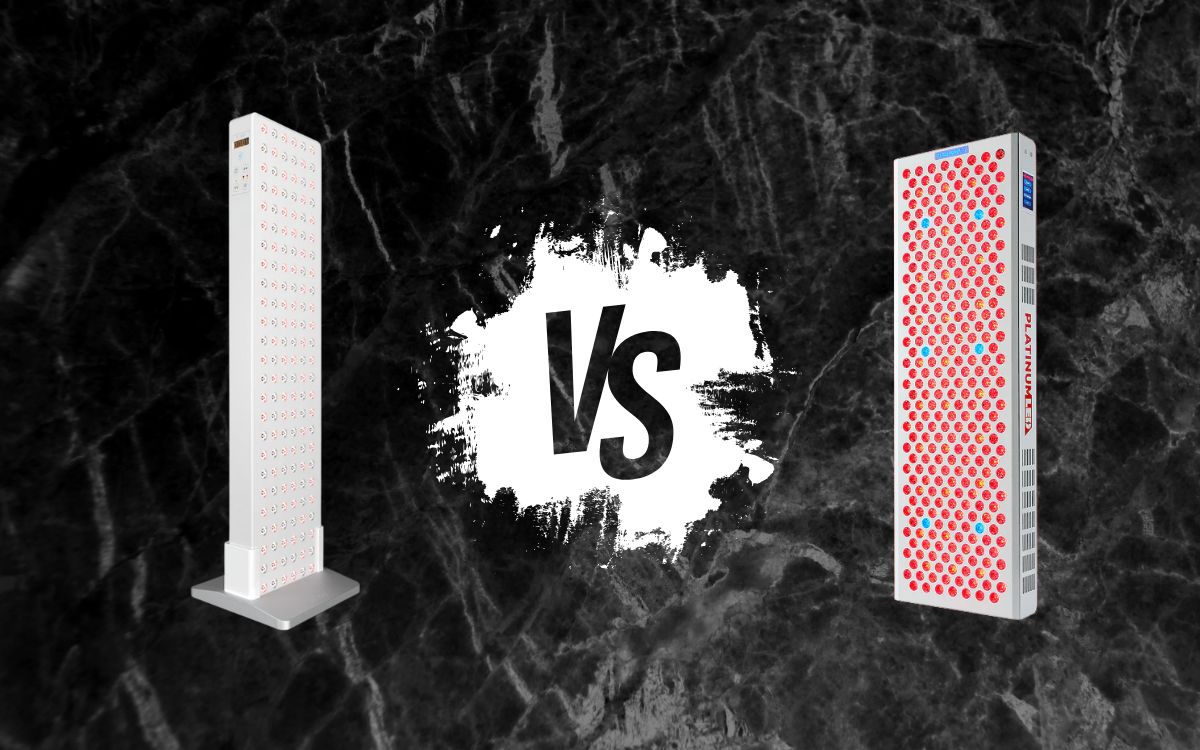
Two devices I’ve tested recently are the Joovv Solo 3.0 and the Platinum LED BioMax 300. They sit on opposite ends of the spectrum: one is a compact, handheld unit you can use anywhere; the other is a powerful panel that demands space and structure.
Both work, but they solve different problems, and picking the wrong one can lead to frustration fast.
This comparison breaks down how each device performs in real training life, not what the marketing promises. If you’re trying to figure out whether you need portable spot therapy, a stronger home setup, or something entirely different, this guide will make that decision simpler.
Quick Verdict
The PlatinumLED BioMax outperforms the Joovv Solo 3.0 on irradiance and wavelength coverage. For the best combination of clinical output and verified specs, the RLT Home TotalSpectrum Compact is the stronger choice.
Quick Verdict
The PlatinumLED BioMax edges ahead on raw irradiance and five-wavelength coverage. The Joovv Solo 3.0 wins on portability and a smoother day-to-day user experience.
Neither reaches the seven-wavelength coverage and third-party verified irradiance of the RLT Home TotalSpectrum Compact.
For anyone serious about recovery, skin, or pain relief, the TotalSpectrum Compact is the device that justifies the investment.
Comparison Table
- Performance and effectiveness: Platinum LED
- Wavelengths: Platinum LED
- Design and build Quality: Draw
- Ease of Use: Joov
- Battery: Joov
- Price: Joov
What Is the Joovv Solo 3.0?
The Joovv Solo 3.0 is a compact red light therapy device built for quick, targeted recovery. It delivers the same clinically supported wavelengths as Joovv’s larger panels using 660nm red and 850nm near-infrared, but in a handheld unit you can use anywhere.
That portability is its biggest strength. I often used it right after training, on the couch, or while working at my desk.
When your schedule is tight, having something this simple genuinely helps you stay consistent.
The build quality is excellent. The silicone grip feels stable, the LEDs are strong, and the whole device has that “premium gear” feel Joovv is known for.
For smaller areas like the knees, shoulders, elbows and neck, the Joovv Solo 3.0 delivers predictable relief.
My chronically tight left shoulder loosened up noticeably after a couple of weeks of regular use, and post-lift soreness in smaller joints dropped off faster than usual.
The limitations show up when you try to treat anything bigger than a single joint. The coverage area is small, so large muscles require multiple passes, which gets tedious.
You’re also locked into fixed 10-minute sessions with a mandatory cooldown, so you can’t speed things up when you’re in a rush. And while the app adds session tracking and mode selection, the Bluetooth connection can be hit-or-miss.
The Joovv Solo 3.0 is best for guys who want a durable, science-backed tool for spot treatment and quick everyday recovery, especially during travel or busy weeks. It’s not ideal if you want full-body coverage or the most cost-effective way to treat large areas.
Pros
- Portable, durable, genuinely easy to use
- Proven 660nm + 850nm wavelengths
- Reliable relief for small joints and tight areas
Cons
- Very small coverage area
- Fixed 10-minute sessions
- Pricey for what it covers
- App can be glitchy
What Is the Platinum LED BioMax 300
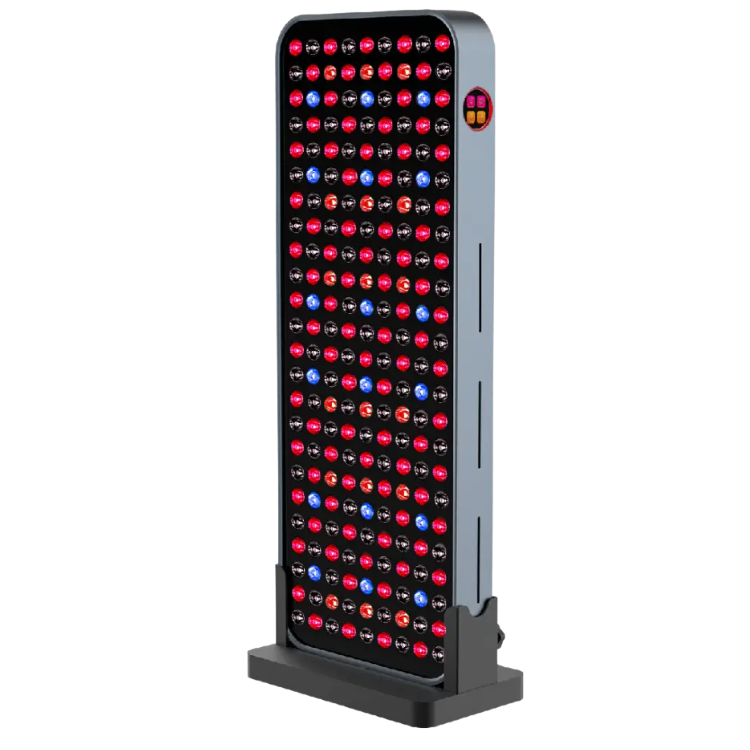
The Platinum LED BioMax 300 is a high-output red light therapy panel designed for people who want stronger intensity and broader coverage than any handheld device can provide. It uses a blend of six wavelengths: 630nm and 660nm red light, plus 810nm, 830nm, 850nm, and 1060nm near-infrared, which means it hits both surface-level tissue and deeper muscle and joint structures in the same session.
Compared to portable units, it simply delivers more power and more area at once.
You feel that difference immediately. When the panel turns on, it floods the room with light, and within a couple of minutes you can sense the warmth penetrating deeper than a small device like the Joovv Solo 3.0.
In my testing, it was especially effective on larger areas like the lower back, quads, hamstrings, and on days when I wanted more of a “full session” recovery routine rather than quick spot work. Using it consistently, I noticed smoother next-day recovery, less stiffness after heavy squat sessions, and better morning mobility in my knees.
The trade-off is commitment. The BioMax 300 weighs more, takes up space, and works best when mounted or placed in a fixed spot.
You’re not using this in the car or at your desk. You have to stand or sit still for 12–15 minutes, and that structure is either helpful or annoying depending on your routine.
It also needs to stay plugged in, so mobility is out of the question.
Where it shines is power, depth, and repeatable results. If you want clinic-level recovery at home and don’t mind dedicating space and time to it, the BioMax 300 delivers exactly that.
Pros
- Extremely strong output with broad coverage
- Six-wavelength blend for deep and surface tissue
- Durable metal housing, reliable cooling, long lifespan
Cons
- Bulky and fully stationary
- Requires dedicated space and routine
- No battery, no mobility
- Premium price with a strict return policy
Joovv Solo 3.0 vs Platinum LED BioMax 300: Main Differences
Performance and Effectiveness
When you compare these two devices strictly on performance, the difference comes down to scale and depth. The Joovv Solo 3.0 does a good job for what it is: a small, focused recovery tool you can press directly against a joint or tight muscle.
Used consistently, it reduces next-day soreness, calms inflammation, and helps stubborn areas feel more mobile. The warmth sets in quickly, and for a compact LED device, it delivers reliable relief.
But its strength is also its limitation. Because the coverage is so small, you’re treating one spot at a time.
That’s fine for ankles, elbows, and shoulders, but once you try to apply it to your quads, hamstrings, back, or hips, the sessions start to stack up. You end up spending more time repositioning the device than actually recovering.
The BioMax 300 takes a very different approach. The intensity is higher, the wavelength blend is broader, and the coverage is significantly larger.
When you stand in front of it, the warmth spreads through the tissue instead of concentrating on a single point.
In my testing, bigger muscle groups responded better to the BioMax, especially after heavy squats or long grappling nights. Recovery felt smoother, stiffness faded faster, and the overall effect was more “whole-area” rather than narrowly focused.
If your training regularly leaves multiple regions sore, the BioMax simply delivers more impact in less time. If you only need spot treatment, Joovv holds its own.
The right choice depends entirely on where you hurt and how much time you’re willing to dedicate.
Wavelengths
The Joovv Solo 3.0 locks in on two wavelengths: 660 nm (red) and 850 nm (near-infrared). Joovv explains that this pair hits the core “action window” for cellular energy production, joint recovery, and tissue repair.
For a handheld device meant for targeted use, this makes sense: streamlined, proven, and focused. The simplicity is a strength when you just want something you can pick up and aim at a problem spot.
On the other hand, the Platinum LED BioMax 300 brings a broader spectrum. Its R+|NIR+ array covers 630 nm, 660 nm (red wavelengths), and 810 nm, 830 nm, 850 nm, and 1060 nm (near-infrared), and even 480 nm blue light in some versions.
The rationale is that it hits multiple depths and tissue types (skin, muscle, joint, nerve) in one go. For larger-area recovery or multi-zone soreness, this kind of spectrum gives you more flexibility.
The caveat? When you zoom into smaller areas, the extra wavelengths don’t necessarily translate into “twice the recovery,” adding only complexity.
Design and Build Quality
Design and build quality often get overlooked in recovery tools, but from years of use, I’ll tell you that this is where you feel the difference in the long run. The Joovv Solo 3.0 is well executed: compact handheld form, solid feel, silicone grip, travel-friendly styling.
It’s the kind of tool you can toss into a gym bag or suitcase and not feel like you’re hauling a rehab machine. The construction is premium for the class, which matters because daily use means durability counts.
But compact means trade-offs. Because the Go is handheld you’ll have to set it aside or hold it during each session; there’s no built-in stand (beyond optional accessories) and you’re limited by the small surface area and fixed session time.
That’s fine when you’re focused on a shoulder, but less ideal when you’re treating large muscle groups.
In contrast, the BioMax 300 is built like a home-recovery panel, more furniture than gadget. The metal housing, cooling system, large panel size, and optional stands/mounts all tie into serious build.
This is the kind of device you commit to and set up in a dedicated space. The sturdiness shows, and for high-output sessions, it makes sense.
On the flip side, space, bulk, and setup matter. If your training room is small or you travel frequently, the panel’s footprint can become a barrier.
Ease of Use
The Joovv Solo 3.0 gets high marks for sheer convenience. You pick it up, press a button (or use the app), treat a tight area for 10 minutes, and move on.
That low friction matters. If your session fits seamlessly into your evening routine, it becomes one less thing to think about.
The device’s portability means you can use it at home, in the gym, or even in a hotel room. For someone balancing lifting, grappling, and parenting, that flexibility is gold.
The BioMax 300, by contrast, requires a little more intention. You need space to set it up, you may mount it or place it in a stand, you stand or sit for 12-15 minutes while the panel floods the room, and then you move on.
That means scheduling a dedicated slot for recovery. If you do that reliably, the payoff is bigger coverage and deeper tissue effect.
But if your evenings are all over the place, it’s easy to skip the panel because the setup feels like another chore.
Battery Life and Hardware
For a recovery tool to get used consistently, hardware reliability and ease of power matter just as much as light output. With the Joovv Solo 3.0, you get built-in battery operation (in addition to AC), meaning you’re not tethered to an outlet when you want to grab a quick session.
According to specs, it offers up to two hours of battery run time depending on mode. Charging takes about five and a half hours. The trade-off is that the device is smaller, so the irradiance and surface coverage are limited.
Also, the cooldown between sessions is built in and can’t be bypassed, which means sometimes the restriction breaks your flow if you’re moving fast.
The BioMax 300 is plug-in only with no battery option. It’s built for home-use, so you need to commit to an outlet and stay in place.
The hardware supports high power output and solid cooling, metal housing, long life expectancy (100,000+ hours), and supports intense sessions.
If you have the space and want serious coverage, this is ideal. But if you’re traveling, grabbing brief sessions, or want something portable, this lack of battery mobility is a limitation.
Price
Here’s a current look at the street pricing (late 2025) for both devices. Note that promos/discounts may apply, so these should be used as ballpark figures rather than hard guarantees.
| Device | Price (USD) |
| Joovv Solo 3.0 | ~$549 (standard listing) |
| Platinum?LED?BioMax?300 | ~$659 regular; sometimes ~$559 on sale |
My Experience With the Joovv Solo 3.0 and the Platinum LED BioMax 300
I first spent several weeks with the Joovv Solo 3.0 during a period when my training was heavier on grappling and overhead work, and my schedule was chaotic. This is where the Go showed its strength.
The portability made it easy to stay consistent, allowing 10 minutes on my shoulder while watching film breakdowns, or a quick knee session after putting the kids to bed. For small, stubborn areas, it worked reliably.
My left shoulder, which has been tight for years, responded the best.
After a few weeks of near-daily use, the morning stiffness eased and overhead mobility felt smoother. The downside appeared anytime I tried to treat my quads, hamstrings, or lower back.
The device simply doesn’t cover enough area, so those sessions became repetitive and slow.
Months later, during a training block with more heavy lifting and fewer travel interruptions, I switched to the Platinum LED BioMax 300. This panel feels like a different category altogether.
The power output is obvious the moment it turns on; the warmth spreads through a larger area, and sessions feel more “complete.”
On days after heavy squats or hard rolls, standing in front of the panel noticeably reduced next-day stiffness in my knees and back. Recovery felt less choppy and more predictable.
The catch is the commitment: the BioMax required a fixed setup and dedicated quiet time. Some weeks that was easy; other weeks it was a barrier to consistent use.
Should You Get the Joovv Solo 3.0 or the Platinum LED BioMax 300?
Choosing between the Joovv Solo 3.0 and the BioMax 300 really comes down to the kind of recovery routine you can realistically maintain, not the ideal one you wish you had. Both devices work, both are backed by solid wavelengths, and both improved recovery for me in different phases of training.
But they aren’t interchangeable.
If you need flexibility and speed, the Joovv Solo 3.0 is the better fit. It’s the kind of tool you reach for when you finish a lift, sit down on the couch, and want to hit a tight shoulder or nagging knee before the rest of the evening takes over.
That alone makes it valuable for guys who travel, train at odd hours, or just have chaotic evenings.
The BioMax 300 fits a different personality and a different lifestyle. If you train hard, have a home gym or recovery corner, and like structured sessions, the BioMax gives you more power, more depth, and more total tissue exposure.
It’s fantastic for lower-body recovery days, full back work, or any time your entire posterior chain feels cooked. The bigger the area, the more the BioMax separates itself from any handheld device.
But it requires discipline. You have to make space for it and show up consistently.
Both the Joovv Solo 3.0 and the Platinum LED BioMax 300 are capable devices, but neither matches the RLT Home TotalSpectrum Compact on wavelength coverage or independently verified irradiance.
Seven wavelengths, third-party verified output, and a price that undercuts most full-size panels make the TotalSpectrum Compact the stronger investment for serious home recovery.
Our Top Pick
RLT Home TotalSpectrum Compact
7-Band Full Spectrum Panel
Seven wavelengths with third-party verified irradiance. Outperforms both the Joovv Solo 3.0 and the Platinum LED BioMax 300 in coverage and output.
CHECK LATEST DEALS