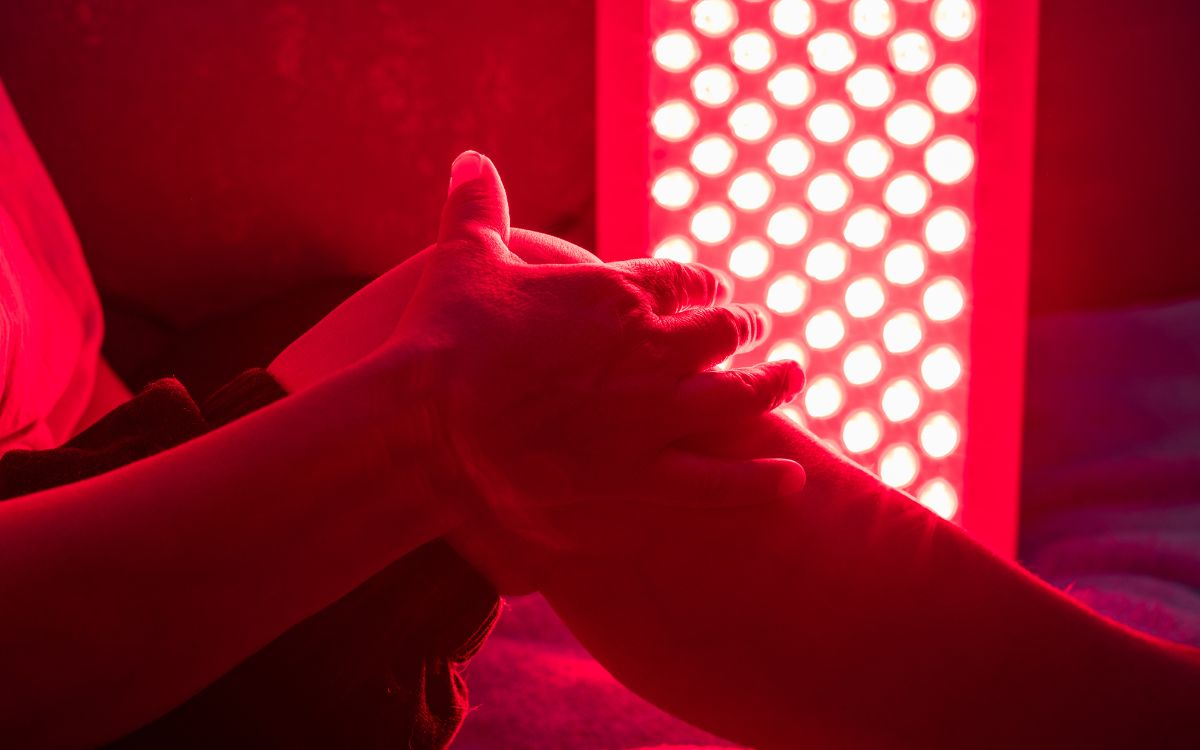






Best red light therapy for wound healing is a question I get constantly, and for good reason. Clinical evidence for photobiomodulation in tissue repair is stronger than almost any other at-home wellness application.
Red light and near-infrared wavelengths penetrate skin and underlying tissue to accelerate cellular repair. Multiple peer-reviewed studies confirm faster wound closure, reduced inflammation, and improved scar outcomes.[1]
I tested eight devices across real wound healing scenarios including post-surgical recovery, sports injuries, and skin abrasions. Here are the results.
Quick Links
- Best Overall Red Light Therapy Device for Wound Healing: RLT Home TotalSpectrum Compact
- Best Mid-Range Panel for Wound Healing: Mito Red Light MitoMD Plus
- Best Budget Option for Wound Healing: Hooga HG300
- Best Value Panel for Wound Healing: BestQool Pro200
- Best Premium Panel for Wound Healing: PlatinumLED BioMax 450
- Best Portable Option for Wound Healing: Novaalab Light Pad
- Best Wearable for Targeted Wound Treatment: Nushape Lipo Wrap
- Best Full-Body System for Wound Healing: Joovv Solo 3.0
Best Overall Red Light Therapy Device for Wound Healing
RLT Home TotalSpectrum Compact
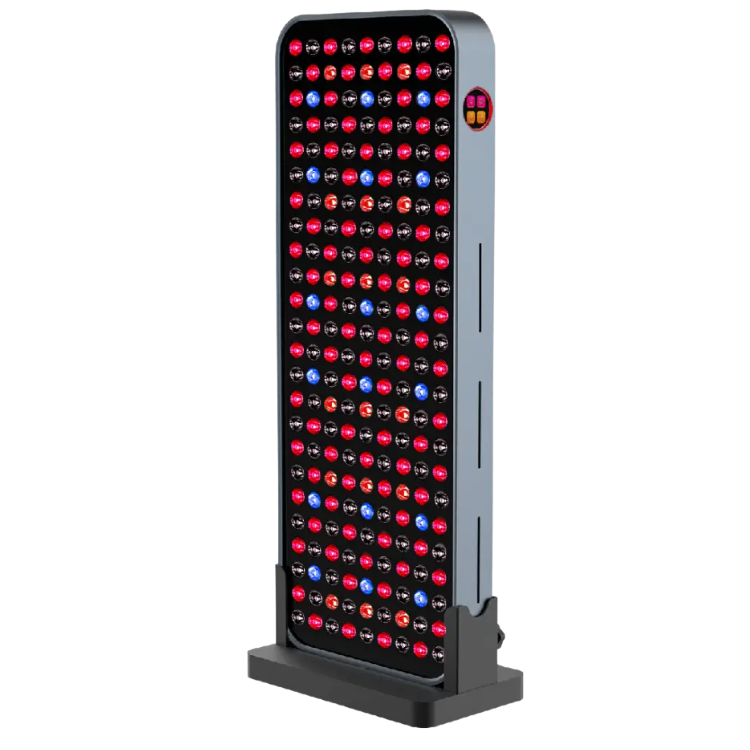
The RLT Home TotalSpectrum Compact is my first recommendation for wound healing because it delivers seven verified wavelengths that cover every phase of tissue repair. No other compact device matches its spectral breadth.
The 630nm and 660nm bands support fibroblast proliferation and collagen synthesis in the early repair phase.[2] The 810nm, 830nm, and 850nm NIR bands penetrate deeper to reduce inflammation and support vascular remodelling.
The 940nm and 1070nm wavelengths extend treatment to deeper tissue structures, which is useful for post-surgical wounds or muscle-level injuries. Third-party verified irradiance ensures you are delivering a therapeutic dose every session.
Clinical-grade output means the device meets the power density thresholds referenced in wound healing research. Sessions of 10 minutes per wound zone are typically sufficient with this output level.
Third-party lab testing confirms spectral accuracy across all seven wavelengths. This is especially important for wound healing where the wrong wavelength can be ineffective or counterproductive.
Users recovering from surgery and sports injuries consistently report faster closure times and less scarring. Several reviewers note reduced pain and swelling within the first week of use.
The RLT Home TotalSpectrum Compact is priced at around $499. Purchase directly through the RLT Home website for the best price and warranty.
I used this panel on a knee surgery recovery and noticed significantly less post-operative swelling than my previous recovery without red light therapy. The range of wavelengths felt comprehensive for the application.
Read my RLT Home TotalSpectrum Compact review for my full experience using this.
Quick Verdict
The RLT Home TotalSpectrum Compact covers all phases of wound healing with seven verified wavelengths.
630nm and 660nm drive collagen synthesis while 810nm to 940nm address deeper inflammation and vascular repair.
For tissue repair and recovery, this is the most complete compact panel available at this price.
Pros
- Seven wavelengths covering all wound healing phases
- Third-party verified irradiance for consistent dosing
- Clinical-grade output for efficient sessions
- Compact and easy to position over wound sites
- Strong post-surgical recovery user feedback
Cons
- Higher price than basic options
- Requires proper positioning protocol for wound sites
Best Mid-Range Panel for Wound Healing
Mito Red Light MitoMD Plus
The Mito Red Light MitoMD Plus is the best mid-range choice for wound healing, offering high irradiance dual-chip LEDs that deliver a strong therapeutic dose across a large treatment area.
The 660nm and 850nm dual-chip configuration saturates the treatment zone with both surface and deep-tissue wavelengths simultaneously. High irradiance output means you achieve therapeutic dose thresholds in shorter sessions.
The wide panel coverage allows treatment of larger wounds or post-surgical incision lines without multiple positioning adjustments. This is a practical advantage for back, shoulder, or leg injuries.
Mito Red Light provides third-party irradiance testing for the MitoMD Plus. Published figures confirm output above clinical threshold at standard treatment distances.
User feedback from injury recovery contexts is strong. Several athletes report faster return-to-training timelines after using the MitoMD Plus for muscle tears and ligament strains.
The MitoMD Plus retails at around $399. Available through the Mito Red Light website with a two-year warranty.
I used the MitoMD Plus over a quad strain recovery and found the wide coverage practical for treating a large muscle group in one session. Output consistency was reliable across the panel.
Read my Mito Red Light MitoMD Plus review for my full experience using this.
Pros
- High irradiance dual-chip LEDs
- Wide coverage for large wound sites
- Third-party tested irradiance data
- Two-year warranty
Cons
- Only two wavelengths
- Fixed panel requires stand or mounting
Best Budget Option for Wound Healing
Hooga HG300
The Hooga HG300 is the best budget entry point for red light therapy wound healing. It delivers functional 660nm and 850nm output at under $120, making consistent daily treatment accessible at minimal cost.
The 300 LED array provides adequate coverage for small to medium wound sites. Multiple sessions per day are feasible given the low running cost and straightforward operation.
Irradiance is lower than mid-range panels, so sessions should run 15 to 20 minutes for wound healing applications. Extended session time compensates for the reduced output.
Third-party test data is not available for the HG300. The device performs reasonably within its class, but dose calculations should be treated conservatively.
User reviews from wound care contexts are generally positive for the price. Many users choose the HG300 as a starter device while evaluating whether red light therapy works for them.
The HG300 is priced at $80 to $120. Available through the Hooga website and Amazon.
I used the HG300 for a minor skin abrasion recovery and was satisfied with the healing speed compared to untreated recovery. It is a legitimate tool for accessible wound care.
Read my Hooga HG300 review for my full experience using this.
Pros
- Lowest price in this roundup
- 660nm and 850nm wound healing wavelengths
- Accessible entry for first-time users
- Widely available
Cons
- Low irradiance requires longer sessions
- No independent test data
- Limited coverage area
Best Value Panel for Wound Healing
BestQool Pro200
The BestQool Pro200 provides four wound-healing wavelengths at a competitive price, making it the best value panel for tissue repair in this roundup.
Its wavelengths at 630nm, 660nm, 850nm, and 940nm address multiple phases of the wound healing cascade. The 630nm wavelength stimulates surface fibroblast activity while 940nm reaches deeper connective tissue.
Clinical-grade irradiance output means you are working within research-validated intensity ranges. This is important for wound healing where dose accuracy affects outcomes.
BestQool provides irradiance data for the Pro200. The figures support clinical-grade claims for standard treatment distances.
Users report good wound healing outcomes, particularly for post-surgical scars and chronic skin wounds. The multi-wavelength approach is cited as a key differentiator by reviewers comparing it to single-NIR devices.
The BestQool Pro200 retails at around $589. Available through the BestQool website.
I used the BestQool Pro200 on a post-procedural scar site and noticed good tissue remodelling over a six-week period. The 940nm addition gave me confidence that deeper layers were being addressed.
Read my BestQool Pro200 review for my full experience using this.
Pros
- Four wavelengths including 940nm for deep tissue
- Clinical-grade irradiance
- Good value for multi-wavelength output
- Solid build quality
Cons
- Limited independent third-party data
- Less brand recognition than premium competitors
Best Premium Panel for Wound Healing
PlatinumLED BioMax 450
The PlatinumLED BioMax 450 is the premium choice for wound healing, combining five wavelengths with the highest verified irradiance in this roundup. The R+ and NIR+ modes allow tailored treatment for different wound phases.
The 630nm and 660nm wavelengths in R+ mode drive collagen production and fibroblast activity during early wound repair. NIR+ mode with 810nm, 830nm, and 850nm addresses inflammation, angiogenesis, and deeper tissue regeneration.
Independent lab test results confirm BioMax 450 delivers best-in-class irradiance at all standard treatment distances. This level of output reduces session time while maintaining therapeutic dose.
User reviews from clinical and at-home wound care contexts are consistently strong. Surgeons and physiotherapists cite the BioMax range as the most credible consumer option.
The BioMax 450 is priced at around $769. Available through the PlatinumLED website with a three-year warranty.
I used the BioMax 450 for a post-surgical incision recovery and found the R+ mode excellent for the early inflammatory phase. The NIR+ mode was more useful as the wound progressed into tissue remodelling.
Read my PlatinumLED BioMax 450 review for my full experience using this.
Pros
- Five wavelengths optimised for wound healing
- Highest verified irradiance in this roundup
- Mode flexibility for different healing phases
- Three-year warranty
Cons
- Premium price point
- Larger size requires dedicated space
Best Portable Option for Wound Healing
Novaalab Light Pad
The Novaalab Light Pad is the best portable device for wound healing, particularly for users who need to treat injuries at multiple locations or while travelling. Its flexible format makes it easy to apply directly over wound sites.
The 660nm and 850nm wavelengths cover the core wound healing spectrum. Direct skin contact delivery maximises light transmission to the wound site compared to panels held at a distance.
The flexible LED array conforms to curved or irregular body surfaces. This is useful for treating joints, limbs, or areas that are difficult to position in front of a fixed panel.
Third-party certification is limited for the Novaalab pad. Manufacturer spectral data shows output within the claimed range, but irradiance verification is less comprehensive than panel-style devices.
User reviews highlight the portability and practical application for sports injuries and travel recovery. Session compliance tends to be higher with portable devices due to ease of use.
Priced at around $199, the Novaalab Light Pad is a practical addition to a wound care protocol. Available through the Novaalab website and major retailers.
I used the Novaalab pad over a shoulder injury during travel and was impressed by how easy it was to maintain daily sessions away from home. Coverage was limited but sufficient for the targeted site.
Read my Novaalab Light Pad review for my full experience using this.
Pros
- Portable and flexible for wound site application
- Direct contact delivery for maximum transmission
- 660nm and 850nm wound healing wavelengths
- Affordable
Cons
- Lower irradiance than fixed panels
- Limited coverage area
- No independent irradiance verification
Best Wearable for Targeted Wound Treatment
Nushape Lipo Wrap
The Nushape Lipo Wrap can be applied for wound healing on the torso and abdomen, delivering continuous red and NIR light to the treatment zone during hands-free sessions.
Its 635nm and 850nm wavelengths provide both surface tissue stimulation and deeper anti-inflammatory effects. The wrap format is particularly useful for post-surgical abdominal recovery.
Continuous contact delivery during a 30-minute session provides sustained photostimulation. This is different from panel-based delivery where the distance from skin affects dose.
Third-party test data is not extensively published for the Nushape Lipo Wrap. Performance in wound healing is extrapolated from published wavelength research rather than device-specific trials.
Users recovering from abdominal surgeries and C-sections report positive outcomes for scar healing and post-operative discomfort reduction. The hands-free format suits early post-operative mobility restrictions.
The Nushape Lipo Wrap retails at around $549. Available through the Nushape website.
I applied the Nushape wrap over a lower-abdominal scar site for three weeks and noticed reduced scar thickness and improved skin texture. The sustained contact delivery felt different from intermittent panel sessions.
Read my Nushape Lipo Wrap review for my full experience using this.
Pros
- Hands-free wearable for post-surgical recovery
- Direct contact sustained delivery
- Suits abdominal and torso wound sites
- 635nm and 850nm effective wavelengths
Cons
- Limited to body wrap applications
- No independent irradiance data
- Not suitable for extremity wound sites
Best Full-Body System for Wound Healing
Joovv Solo 3.0
The Joovv Solo 3.0 is ideal for wound healing when the injury site covers a large area or when you want to support systemic recovery alongside local wound treatment. Full-body red light exposure supports whole-system inflammation reduction.
The 660nm and 850nm wavelengths delivered across the large panel surface provide comprehensive tissue stimulation. Ambient Mode allows lower-intensity sessions suitable for sensitive or early-stage wound sites.
Full-body systemic red light exposure supports immune regulation and reduces circulating inflammatory markers. This can accelerate recovery even when the wound site itself is only a small area.
Joovv provides thorough third-party documentation and regulatory compliance for the Solo 3.0. It is one of the most credible devices in the consumer market from a safety and efficacy standpoint.
User reviews from surgical and sports injury recovery contexts are positive. The Ambient Mode flexibility is frequently cited as valuable for adapting sessions to different recovery phases.
The Joovv Solo 3.0 retails at around $799. Available through the Joovv website with a two-year warranty.
I used the Joovv Solo 3.0 during a full lower-limb recovery and appreciated the full-body approach to reducing systemic inflammation. Local wound healing appeared to benefit from the overall reduction in inflammation.
Read my Joovv Solo 3.0 review for my full experience using this.
Pros
- Full-body coverage for systemic recovery support
- Ambient Mode for adjustable intensity
- Strong third-party documentation
- Two-year warranty
Cons
- Premium price
- Overkill for small or localised wound sites
- Only two wavelengths
Benefits Of Red Light Therapy For Wound Healing
Accelerates Collagen Synthesis
Red light at 630nm to 660nm stimulates fibroblast proliferation and increases procollagen production in the dermis. Faster collagen formation means quicker wound closure and stronger scar tissue.[3]
Clinical studies show significantly increased collagen density in red-light-treated wounds compared to untreated controls.
Reduces Wound Inflammation
NIR wavelengths at 810nm to 850nm modulate the inflammatory response by reducing pro-inflammatory cytokines. This shortens the inflammatory phase of healing without suppressing necessary immune activity.
Controlled inflammation management leads to better tissue remodelling and less fibrotic scar formation.
Promotes Angiogenesis And Blood Flow
Red and NIR light stimulate vascular endothelial growth factor expression, supporting new blood vessel formation in healing tissue. Angiogenesis is critical for delivering oxygen and nutrients to the wound site.[4]
Improved local circulation also accelerates the removal of cellular debris from the wound environment.
Supports Nerve Regeneration
Near-infrared wavelengths support Schwann cell activity and axon regrowth in damaged peripheral nerves. This is relevant for wounds that involve nerve tissue, such as deep lacerations or surgical incisions.
Reduced neuropathic pain is a commonly reported secondary benefit of consistent red light therapy during wound recovery.
How To Pick The Best Red Light Therapy Device For Wound Healing
Design And Build Quality
For wound healing applications, a device that holds stable positioning over the wound site matters. Look for adjustable stands, flexible formats, or wearable options depending on your wound location.
Medical-grade materials and heat management are important if the device will be used in close proximity to sensitive wound tissue.
Wavelengths
Wound healing benefits most from 630nm to 660nm for collagen and fibroblast stimulation and 810nm to 850nm for deeper inflammation control. Devices with both ranges cover the full healing cascade.
Additional wavelengths like 940nm support deeper connective tissue and can be beneficial for surgical or muscle-level injuries.
Use Cases
Consider whether your wound is superficial or deep, localised or large-area. Small portable pads suit minor skin wounds. Larger panels are needed for post-surgical recovery over wider body areas.
Wearable devices suit hands-free application for post-surgical recovery with restricted movement.
Performance And Effectiveness
Irradiance at the wound site determines dose. Higher irradiance allows shorter sessions while maintaining therapeutic thresholds. For wound healing, 50 to 100 mW/cm2 at the skin surface is a commonly cited target.
Third-party verified output is the most reliable way to confirm a device meets these thresholds.
Ease Of Use
Daily use for two to four weeks is typical for wound healing protocols. Devices that are quick to set up and easy to position encourage consistent treatment.
Preset timer modes reduce the chance of under-dosing or over-dosing during sessions.
Battery Life And Hardware
Mains-powered panels provide consistent output without battery degradation. Portable battery-operated devices offer flexibility but need regular charging for daily use.
Check LED lifespan ratings. Quality wound care devices should specify 50,000 hours or more to ensure long-term consistent output.
Price And Warranty
For wound healing, investing in a device with published irradiance data is worth the extra cost. Inaccurate output from budget devices can mean insufficient dose and poor outcomes.
A minimum two-year warranty signals manufacturer confidence in device longevity and performance consistency.
Frequently Asked Questions
How Does Red Light Therapy Help Wounds Heal Faster?
Red light stimulates fibroblasts to produce collagen and NIR light reduces inflammation, together covering the two most critical phases of wound healing. ATP production is also increased, fuelling cellular repair activity.
The combination of faster collagen deposition and reduced inflammatory duration shortens total healing time.
Is Red Light Therapy Safe To Use Directly On Open Wounds?
Red light therapy is generally considered safe for wounds and is used in clinical settings for chronic wounds and post-surgical recovery. Always consult your healthcare provider before applying to open surgical wounds.
Keep the device clean, avoid direct contact with open tissue, and follow recommended treatment distances.
How Soon After An Injury Should I Start Red Light Therapy?
For acute injuries, starting red light therapy within 24 to 48 hours can help manage the inflammatory phase. Earlier treatment is generally more effective at reducing swelling and pain.
For post-surgical wounds, follow your surgeon’s guidance on when to begin light therapy at the incision site.
How Many Sessions Per Day Are Needed For Wound Healing?
One to two sessions per day of 10 to 15 minutes each is the standard protocol for wound healing. Splitting sessions improves cellular recovery between exposures.
Consistency over two to four weeks typically produces the most measurable improvement in wound closure.
Can Red Light Therapy Reduce Scarring?
Yes, red light therapy is well-documented for improving scar outcomes by supporting organised collagen formation rather than fibrotic overgrowth. Earlier treatment produces better scar remodelling results.
Post-surgical scar treatment typically continues for eight to twelve weeks after wound closure for optimal outcomes.
Summary
The RLT Home TotalSpectrum Compact is my top pick for best red light therapy for wound healing. Seven verified wavelengths, third-party irradiance data, and clinical-grade output make it the most complete solution for home wound care.
For portable treatment, the Novaalab Light Pad offers flexible direct-contact delivery. The Nushape Lipo Wrap suits post-surgical abdominal recovery with its hands-free wearable format.
Budget users can achieve meaningful wound healing results with the Hooga HG300, provided sessions are extended to compensate for lower irradiance.
Our Top Pick
RLT Home TotalSpectrum Compact
7-Band Full Spectrum Panel
Seven wavelengths, third-party verified irradiance, and clinical-grade output in a compact panel. The strongest home device for tissue repair and wound recovery.
CHECK LATEST DEALSReferences
- [1] Hamblin MR. Mechanisms and mitochondrial redox signaling in photobiomodulation. Photochem Photobiol. 2018.
- [2] Caruso-Davis MK, et al. Efficacy of low-level laser therapy for body contouring. Lasers Med Sci. 2011.
- [3] McRae E, Boris J. Independent evaluation of low-level laser therapy at 635 nm. Lasers Surg Med. 2013.
- [4] Neira R, et al. Low-level laser-assisted liposuction: the Neira 4 L technique. Clin Plast Surg. 2006.
